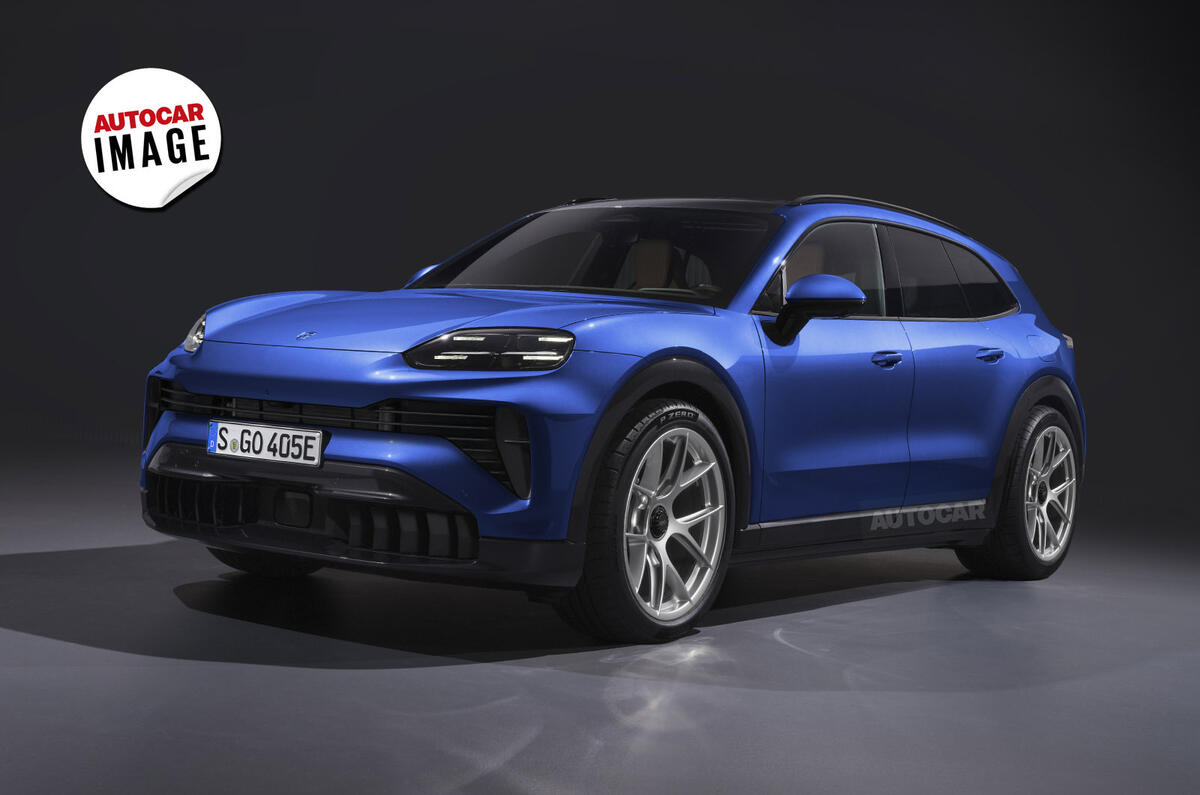

Porsche’s incoming seven-seat flagship SUV will now be twinned with the forthcoming Audi Q9 and offered with high-powered V8 and V6 powertrains after the firm cancelled plans to launch it as a bespoke electric car.
The range-topper, described by Porsche as a D-SUV and known internally under the codename K1, will occupy a market position previously not touched by the brand. It is tentatively scheduled for a UK launch in 2028.
The K1 is expected to be offered in a wide range of configurations, including four-, five- and seven-seat layouts. Its size, seating options and technical spec will enable it to challenge the likes of the BMW X7 and Mercedes-Benz GLS, Autocar has been told.
It will sit on parent Volkswagen Group’s Premium Platform Combustion (PPC) architecture, in line with its Q9 sibling. Audi is developing the seven-seat Q9 as a high-end range-topper, primarily focused on markets such as the US, the Middle East and China.
The K1’s move to the PPC follows Porsche’s significant shift in its electric strategy last year as a result of growing financial pressures. Indeed, the decision to base the K1 on the same underpinnings as the Q9 – which Audi has yet to officially confirm – is seen as a key factor in helping Porsche to offset the high cost of developing its new electric models, sources have told Autocar.
The PPC has been engineered to use a range of six- and eight-cylinder petrol engines, as well as a next-generation plug-in hybrid system. As a result, the K1 is expected to be launched with a choice of set-ups centred on twin-turbo 4.0-litre V8s and 3.0-litre V6s, with power covering a similar spread to the smaller Cayenne’s 348bhp-730bhp offering.
Earlier plans had earmarked the K1 as a purely electric model based on the Volkswagen Group’s Scalable Systems Platform. However, delays in that architecture’s engineering, especially its software, and a slowdown in EV interest (centred on a rapid decline in Taycan sales) have pushed Porsche to instead launch it with combustion power.
Nevertheless, an eventual launch of an electric K1 is still planned, Porsche has confirmed to Autocar. The first K1 models, with petrol and plug-in hybrid power, are expected to be launched around 12 months after the first Q9 models, which are due next year. While the UK is expected to be one of the new Porsche SUV’s largest markets in Europe, both the US and China are considered critical to its long-term success.
The K1 is expected to be built on the same lines as the Q9 at the Volkswagen Group’s Bratislava plant in Slovakia. The Cayenne EV is also built there, suggesting production potential for the electric K1. The EV was originally earmarked for Porsche’s Leipzig plant but rising manufacturing costs in Germany have forced the car maker to look for a cheaper alternative.