
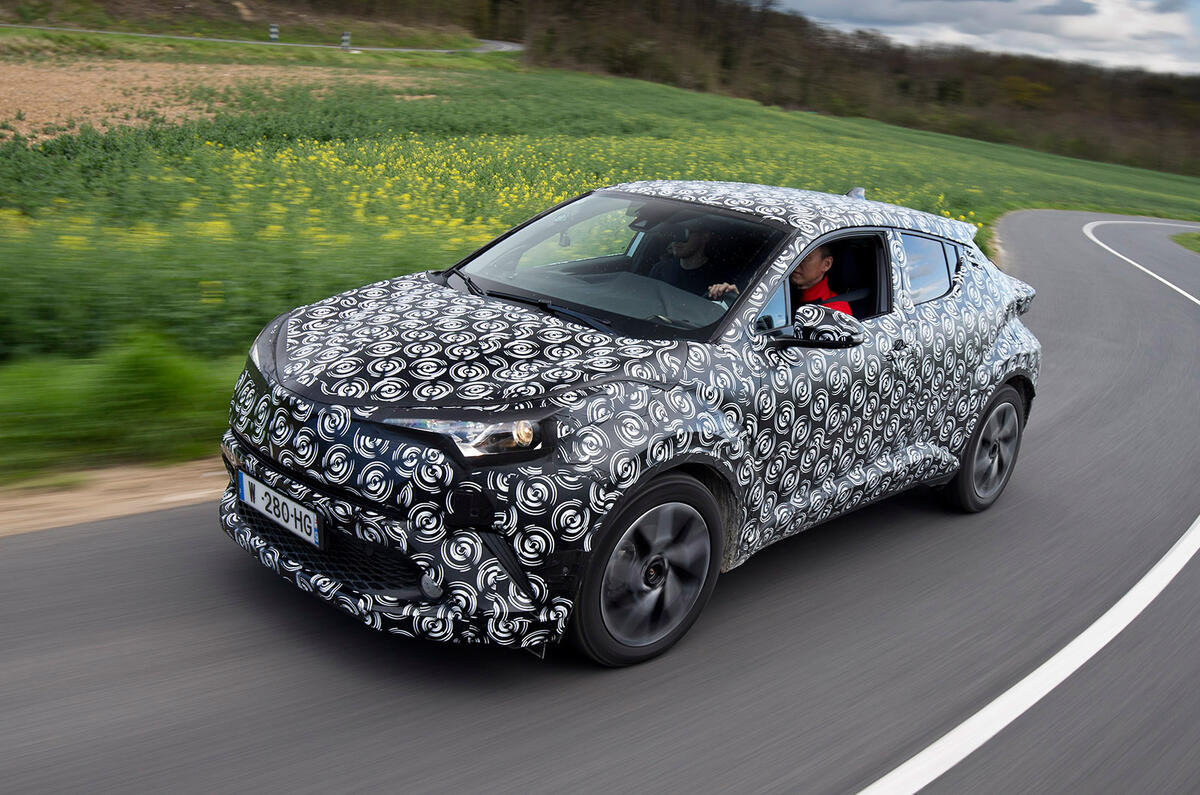
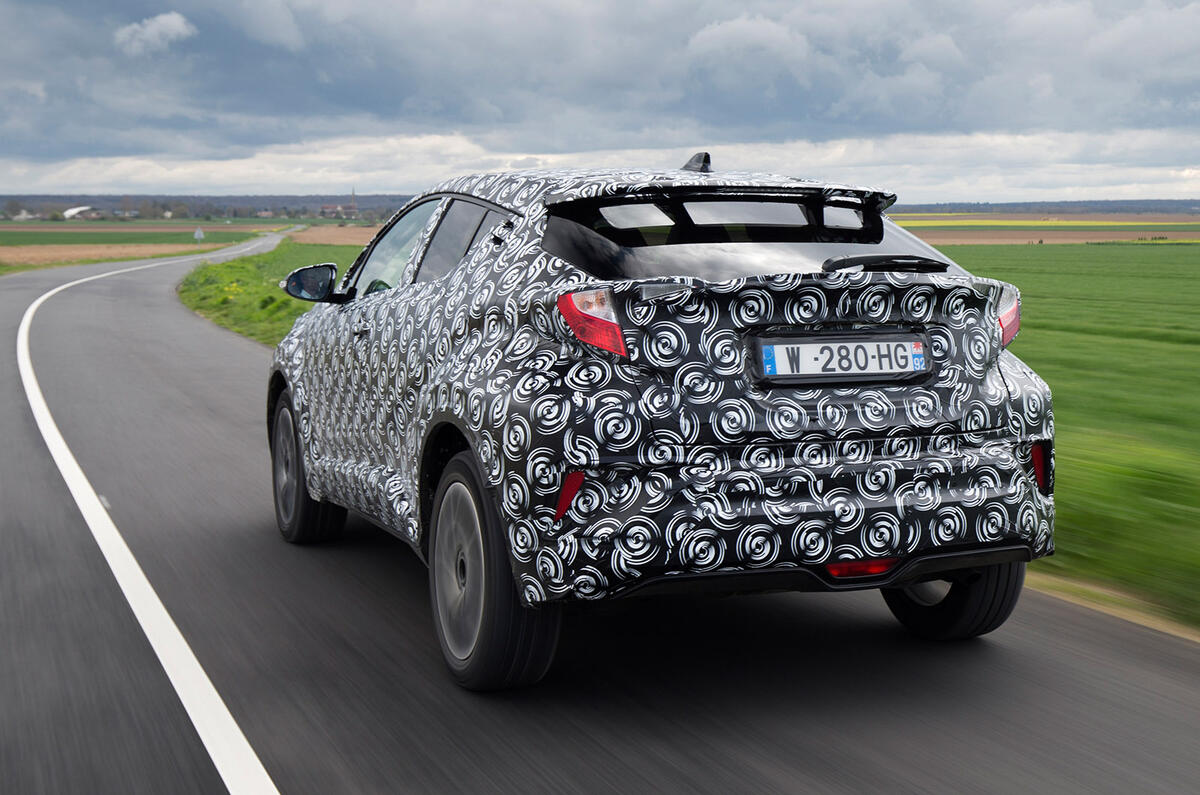
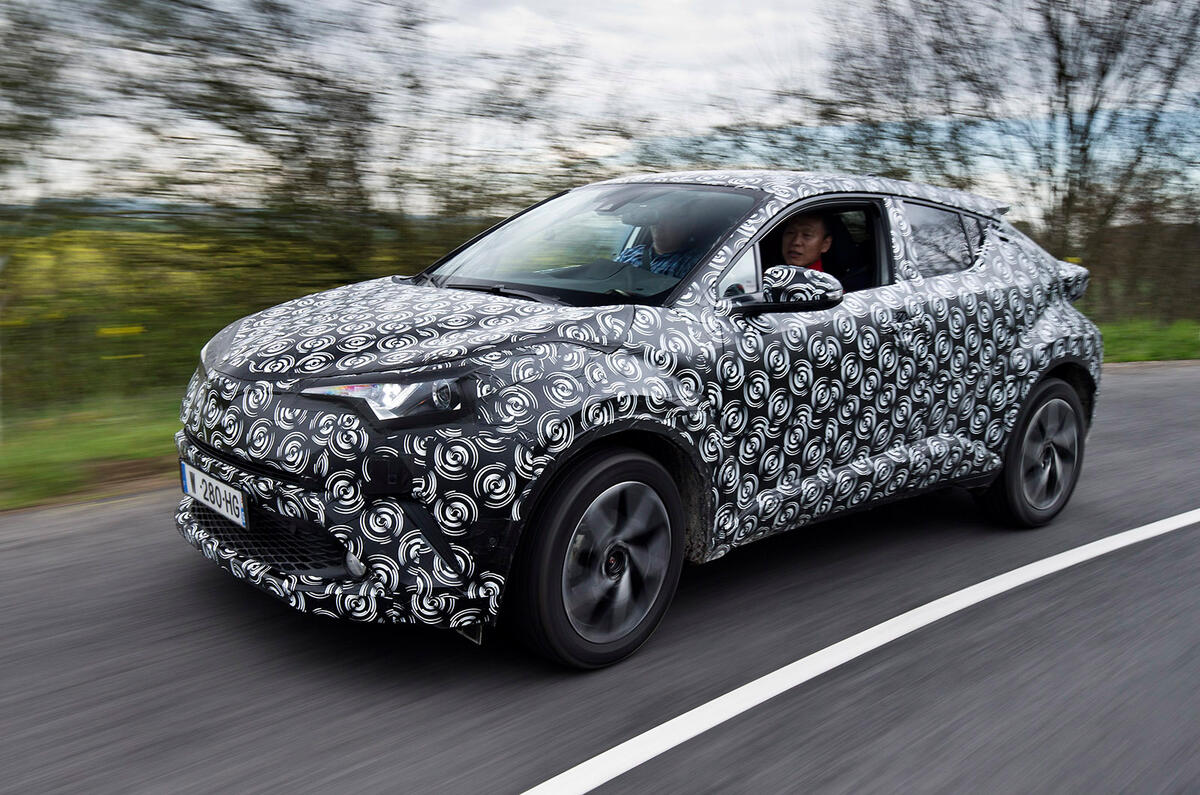
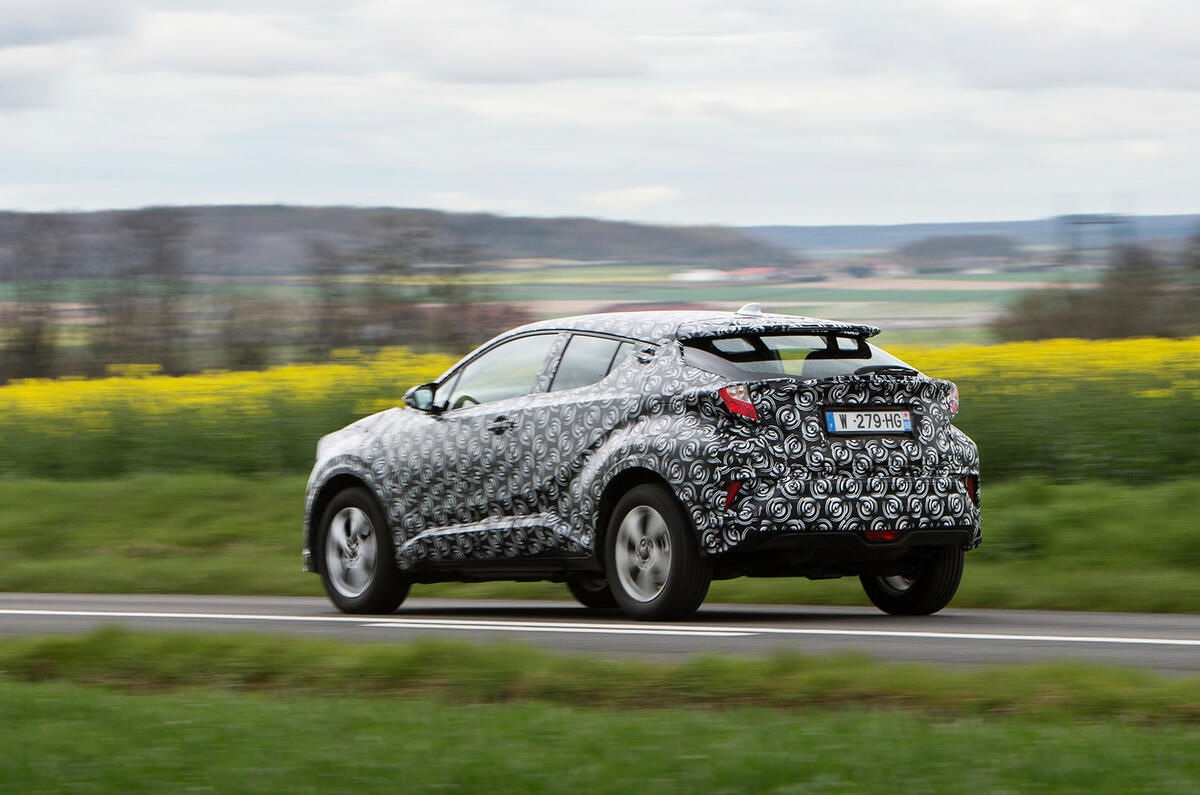
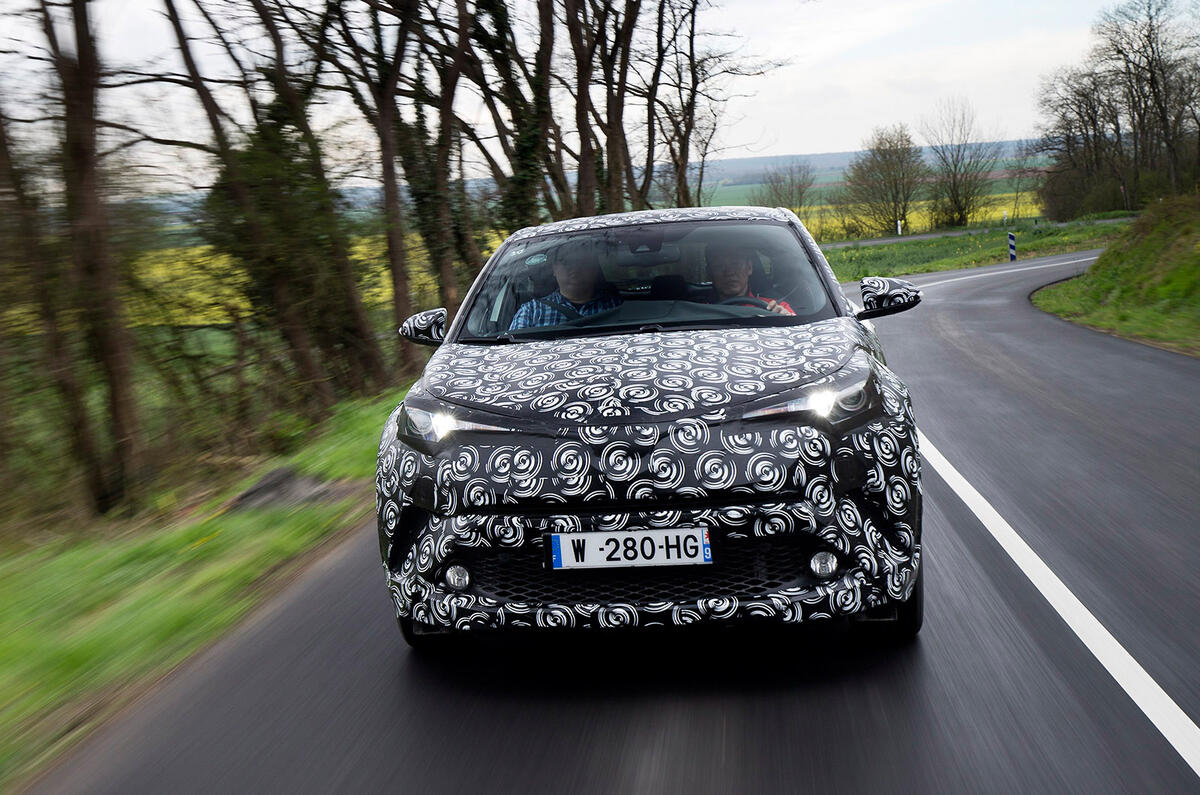
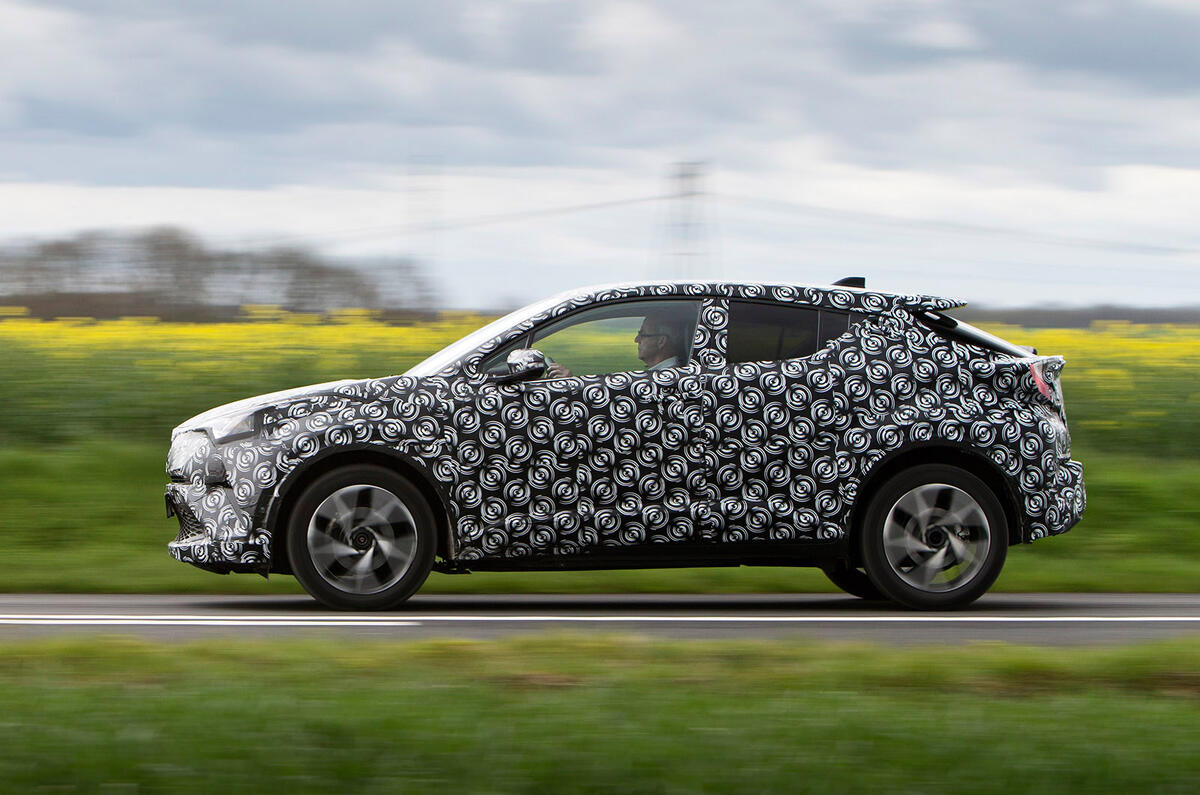

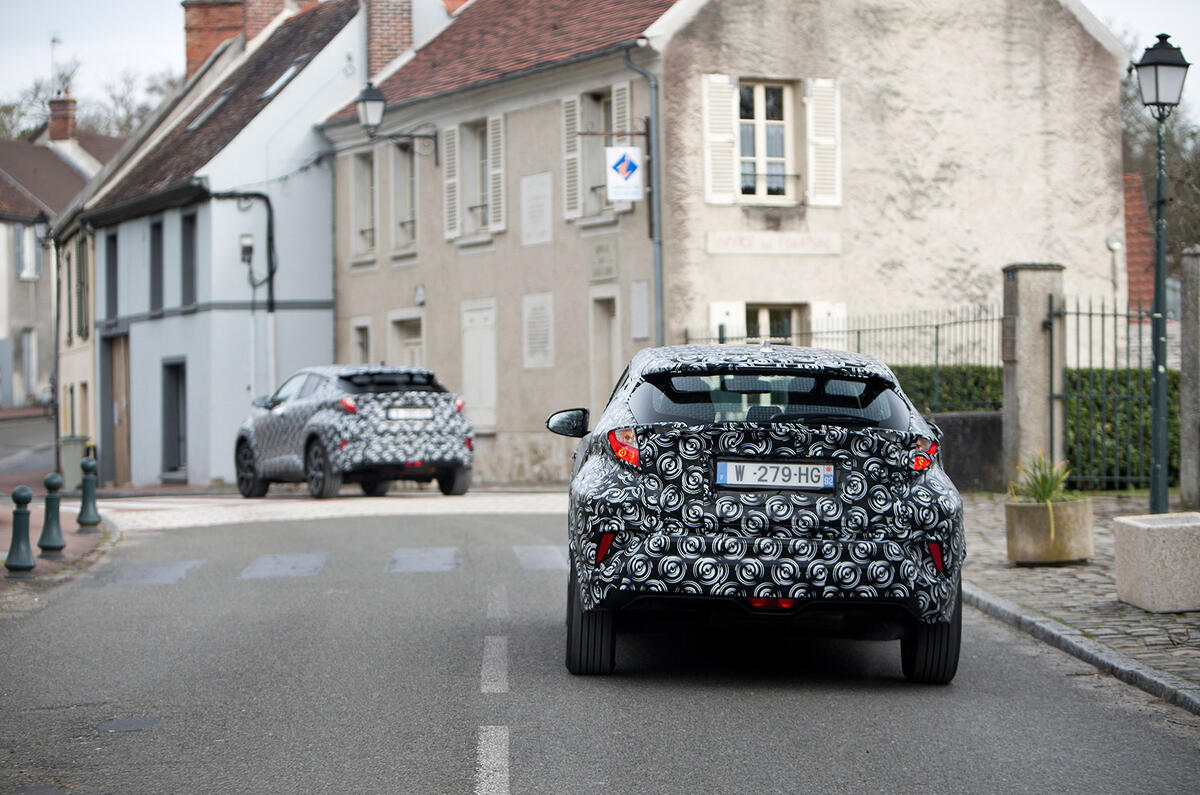
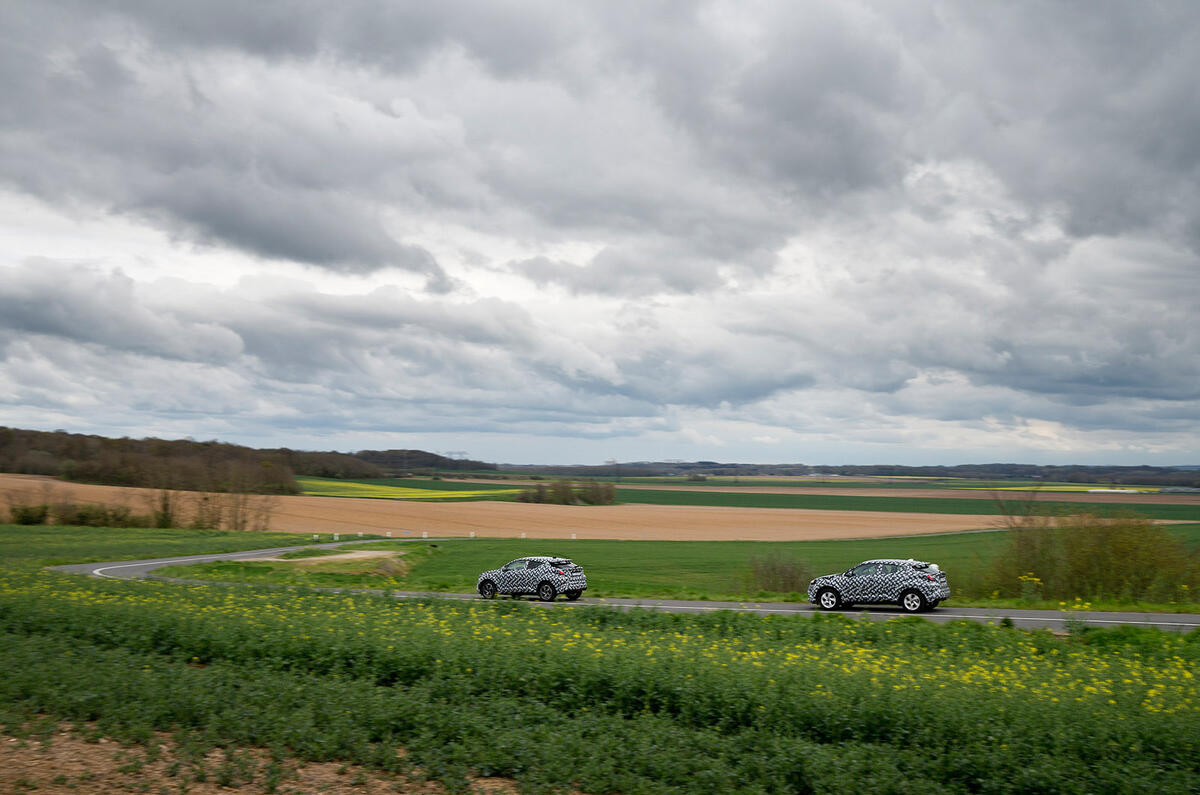
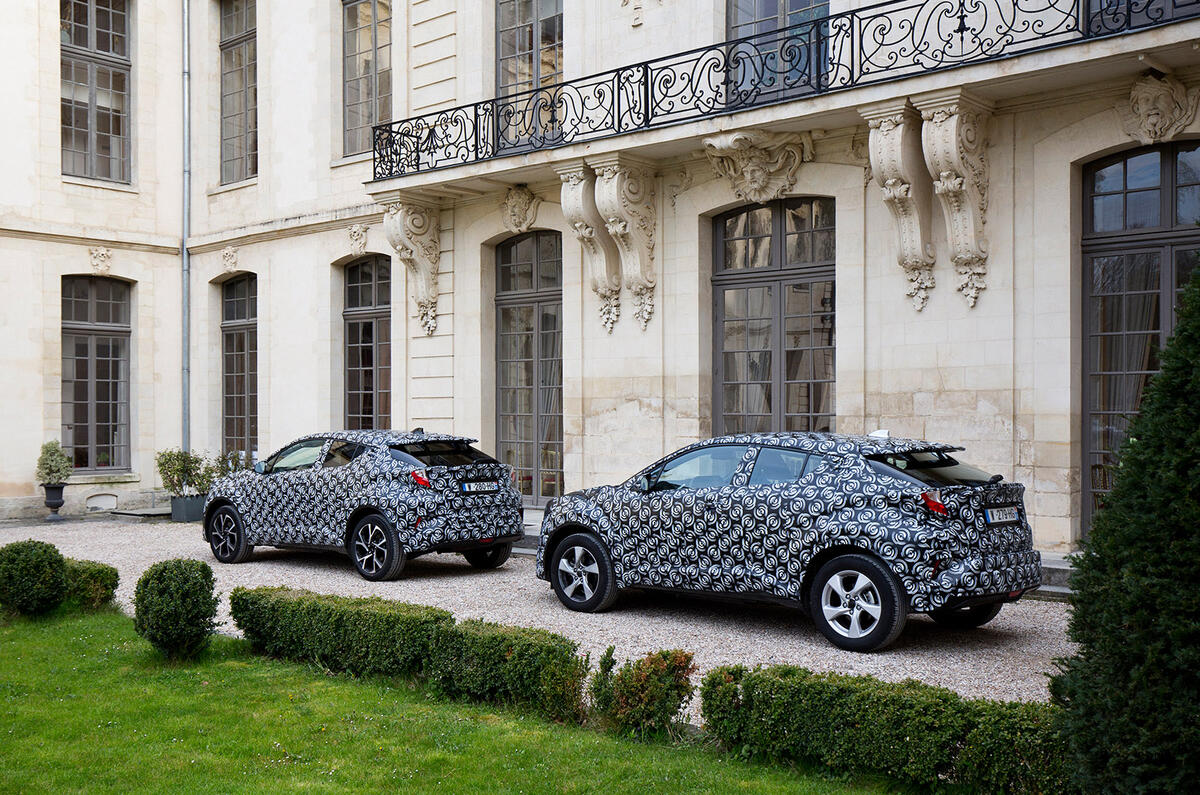












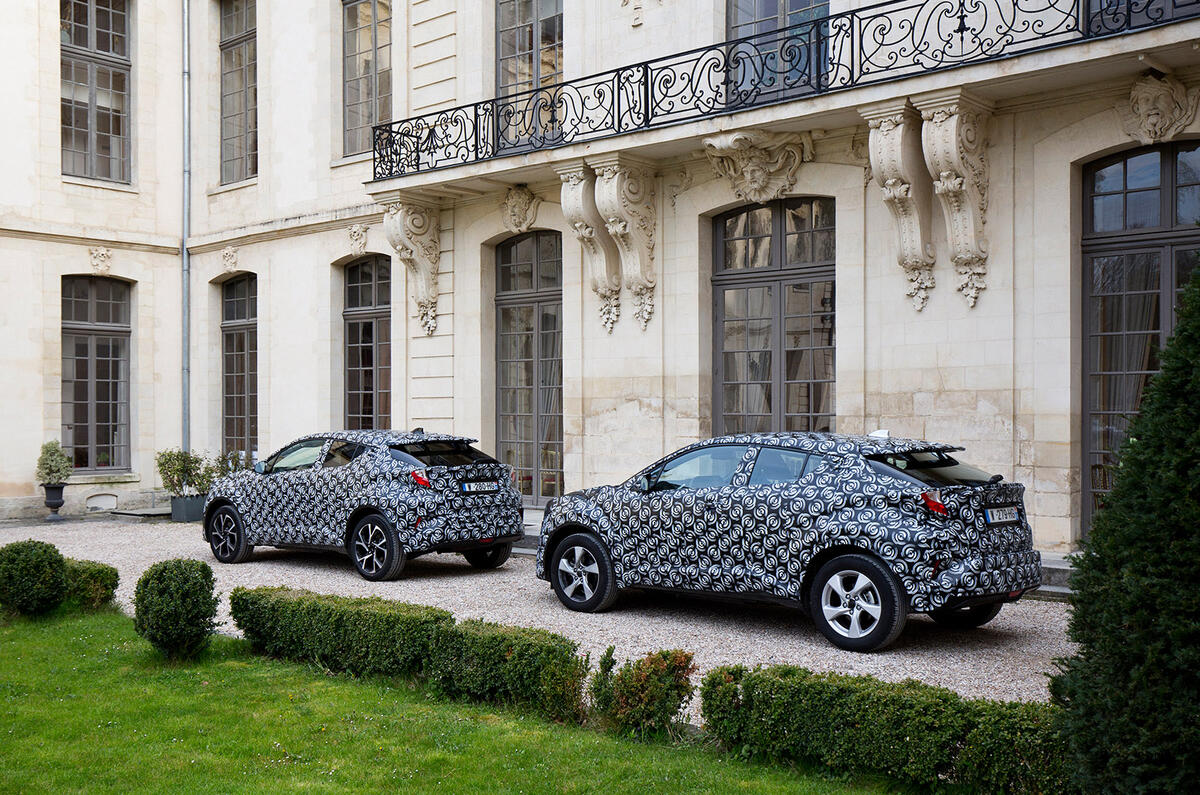
It’s impossible to avoid the striking looks of Toyota's latest crossover, the C-HR. It stands out amongst its rivals, and it's clear that from the outset, the C-HR was designed to look different to any other Toyota on sale.
Read more - Toyota C-HR on sale from £20,995
It does that job well, to the point that some of the current Toyota range – in particular the larger Toyota RAV4 – now look antiquated.
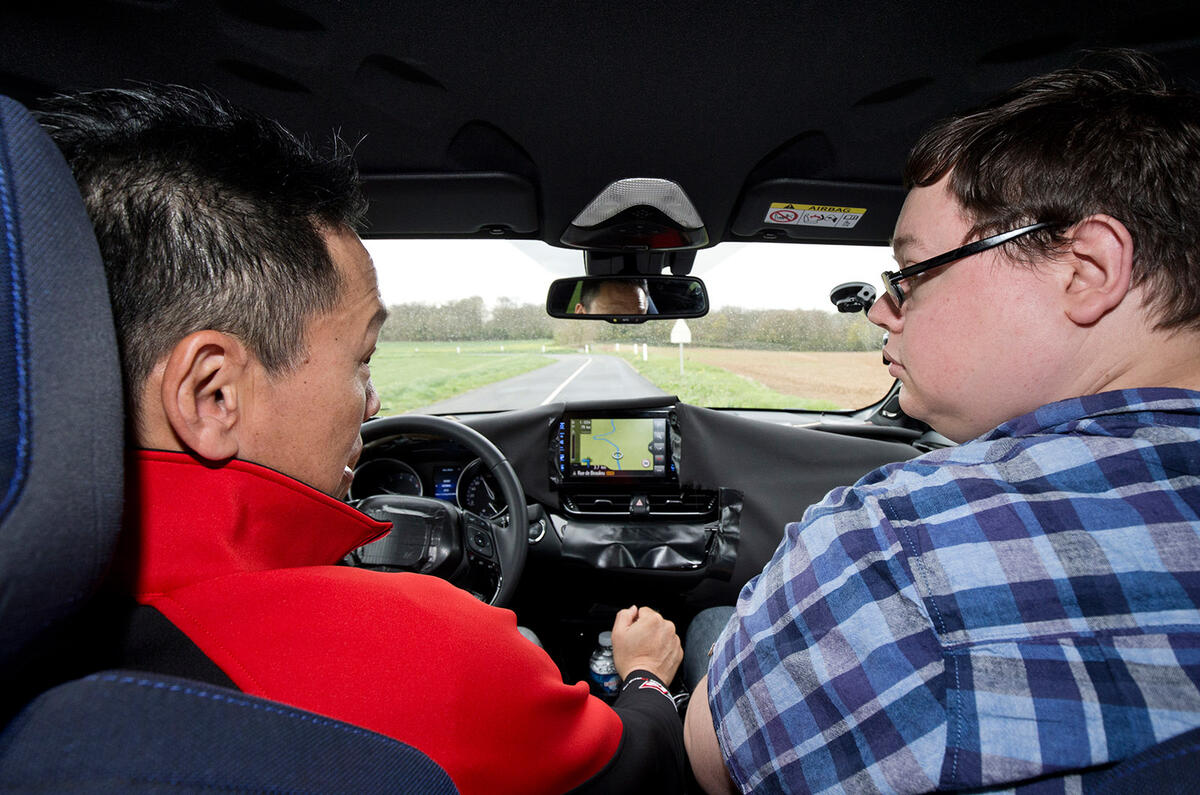
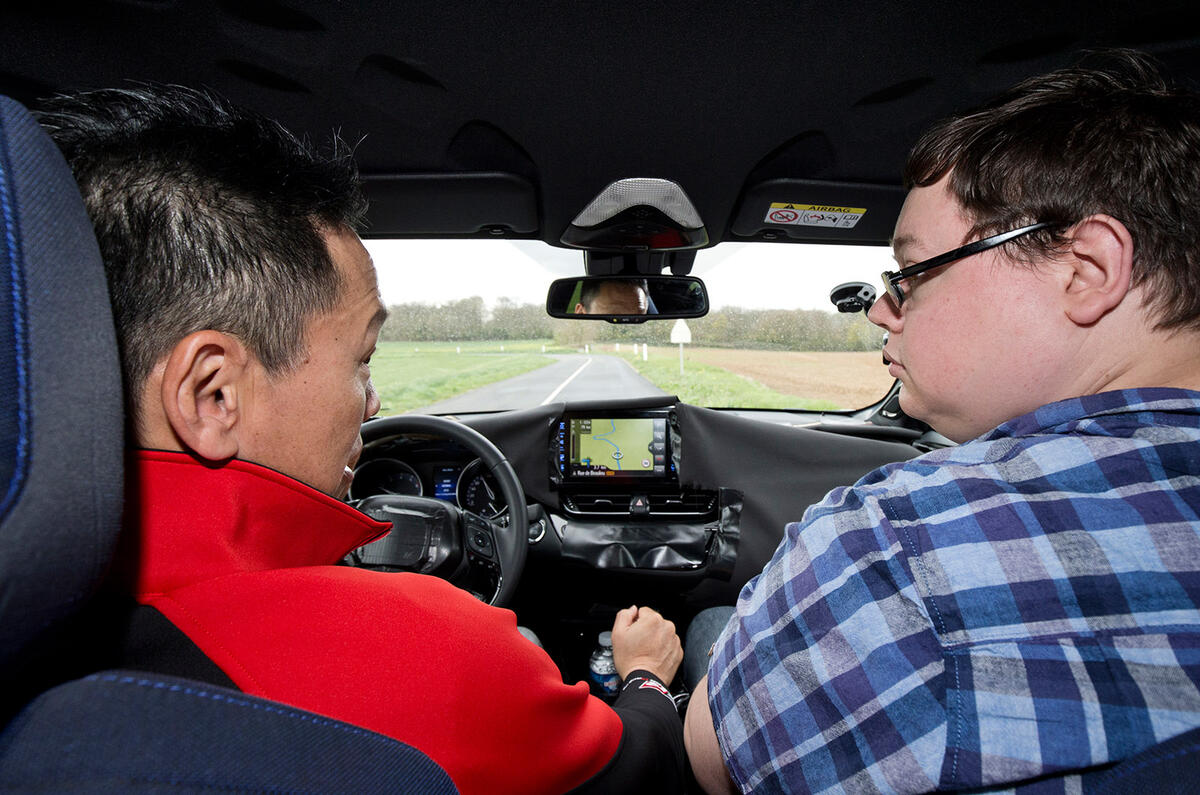
Most of the car’s interior is under wraps for now, because final development on it is ongoing. However, a new, large central infotainment screen mounted high on the dashboard is hard to miss.
The seats are comfortable, and there’s the same high seating position and good all-round visibility we’ve come to expect from SUVs. From the rear seats, there’s plenty of legroom for adults, although taller passengers may well find themselves brushing against the car’s sloping roof.
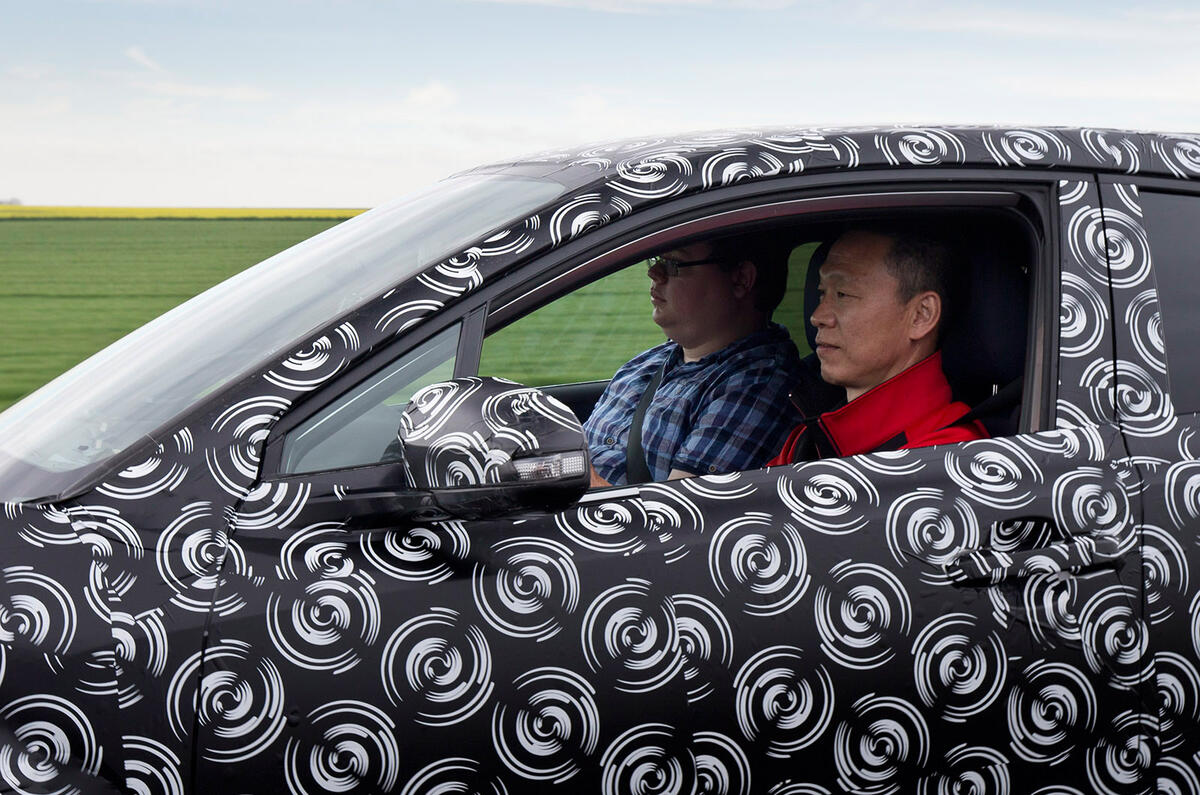
The C-HR's lead engineer, Hiro Koba, sets off in this manual, two-wheel drive 1.2-litre petrol model. This model is expected to be the second most popular C-HR after the 1.8-litre hybrid. A larger 2.0-litre version will be offered in markets like Russia, where displacement and overall reliability are prized over fuel economy, but Toyota isn’t bringing that engine to the UK because of its high CO2 emissions.
A plug-in hybrid version – based on the same technology which already features in the Prius – is apparently possible, but isn’t part of Toyota’s immediate plans.
Benchmarked against the VW Golf
The driving dynamics of this prototype are 90% representative of the final car, Koba says. Toyota’s development team have benchmarked the car against a variety of key cars, including the Audi Q3 and Volkswagen Golf, while steering feel was modeled on that of the Skoda Yeti.
Our route takes in country roads and cobbled urban streets. The C-HR feels well planted on the road, with a tight turning circle considering its size. There’s still work to be done when it comes to NVH (noise, vibration, and harshness), Koba admits, and certainly there’s more than a fair share of wind noise in the cabin – not helped by the camouflage wrapping applied to our test car.
Koba puts the 1.2-litre engine through its paces on the open road. It whines a little, but feels strong enough to pull the C-HR without too much effort, at least at moderate speeds. Koba says he wants to see higher capacity engines, including a turbocharged 2.0-litre variant, make their way into the C-HR at some point.
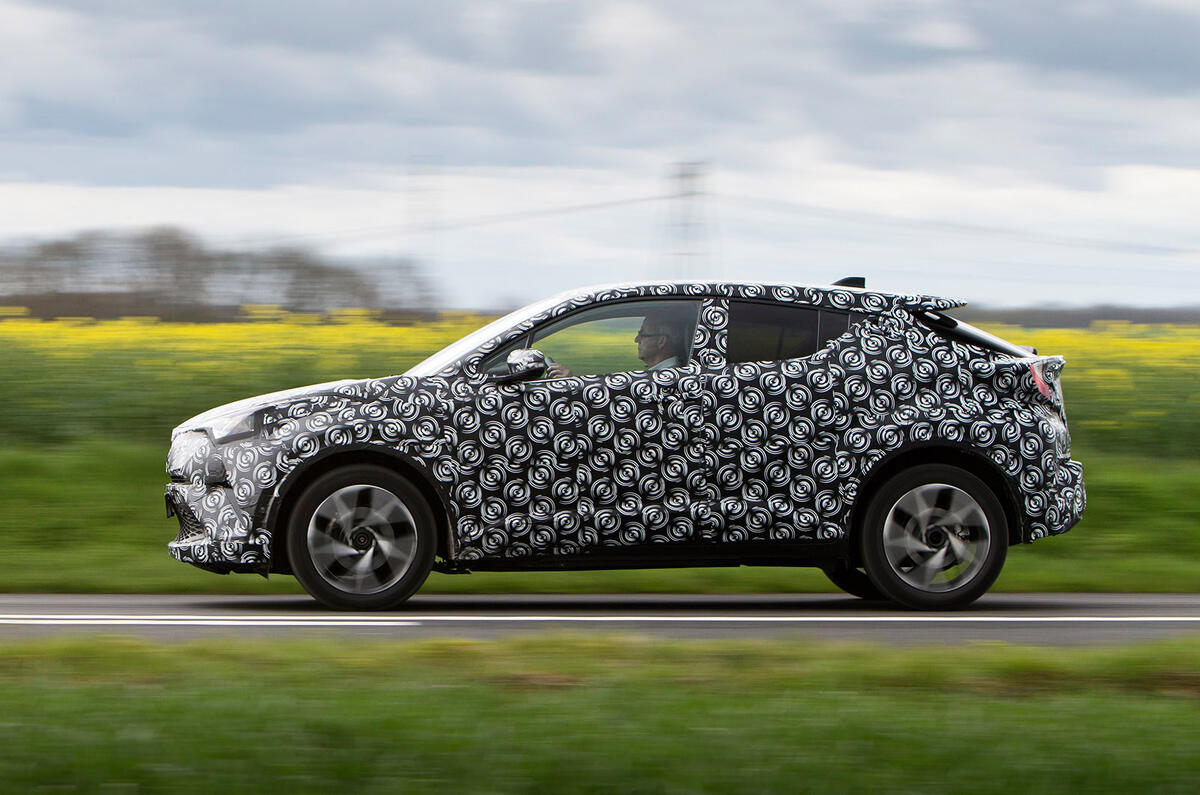
As we reach a particularly fine set of bends, Koba puts his foot down, and it’s clear this area of performance is where Toyota’s engineers have focused. The C-HR feels as capable here as any hatchback, and as we ascend the French hillside, the C-HR turns into corners well, feeling balanced and well controlled.
The braking force comes quickly and evenly, and the ride is supple and comfortable even over broken surfaces. Our test car has 18in alloy wheels – again, this is likely to be the best-selling option in the UK – although smaller 17in wheels will also be available.
Manual preferred
We also try a model with the same 1.2-litre engine in combination with a CVT transmission. Toyota engineers insist on sticking with CVT units, even though traditional automatics and dual-clutch automatic gearboxes can be smoother. While it feels more at home in the C-HR than it does in an Auris hatchback, we’d still recommend the manual. Indeed, that’s Koba’s preference too.
As we get out, I take the chance to open the boot. Buyers will be able to choose from a lower boot floor or a higher option here, and there’s 370 litres of space on offer with the rear seats in place - more than a Nissan Juke’s 354 litres but some way off the Nissan Qashqai’s 430 litres. The rear sets can also drop forwards to increase the load space.
It's arguable that the C-HR has some of the best driving dynamics of any modern Toyota. It feels remarkably like a hatchback – a compliment for any model in this class.
The only trouble is, the rest of the Toyota fleet , in particular ageing models like the RAV4, will struggle to live up to its standard.



Join the debate
Add your comment
Nasty nasty
No mention of its obvious rival
Toyota
As for the 1.2 engine I don't know. Don't think it'll have the grunt to hall it around. Read online that the real world mpg of the Ford 1ltr turbo triple is 35mpg. So this probably won't be far off.