7

Big-selling small SUV has a new look. Does it have a new purpose too?

It’s a sign of the times how important SUVs have become to the business of German premium car maker Audi. Among all of its model lines, its Q-badged cars now have the most global success. And, now entering its third model generation, the little Audi Q3 has become one of its most strategically important.

Only the Audi Q5 and Audi A6 commercially outperformed this car in 2024. In 2026, as this third-generation version spreads its wings and registers its first full calendar year of sales, it could well turn out to be the most popular Audi of them all. The production lines at Ingolstadt are, in fact, all teed up to provide extra capacity over and above the circa-250,000 annual volume that the car's long-standing base at Gyor, Hungary, can churn out.

The Q3 comes to us bigger than ever, and is the first car in its line to pass 4.5m in length. It retains a range of engines broad enough to include four-cylinder petrol and diesel units, as well as a plug-in hybrid, and offers both default front-wheel drive and Audi-heartland Quattro all-wheel drive. Electric model aside, that's the full house. It's the product of a recently redefined Audi design language, too, and brings new and improved suspension and powertrain technology, and a reappraised secondary control layout replete with newfangled indicator stalks. The stops have been pulled out here: Audi is betting large on small. So what it is so confident about?

Advertisement

DESIGN & STYLING

8
Audi Q3 road test review 2026 002

Audi's design team has been under the direction of chief creative officer Massimo Frascella, formerly of JLR, for a little over 18 months now, and in that time cars like the Audi Q6 E-tron and Audi A6 E-tron have served as signposts towards a new way to visually communicate its famous 'progress through technology' mantra. Frascella himself has said that he wants a more simple, timeless look about Audi's cars, and fewer superfluous decorations - to design with clearer intent.

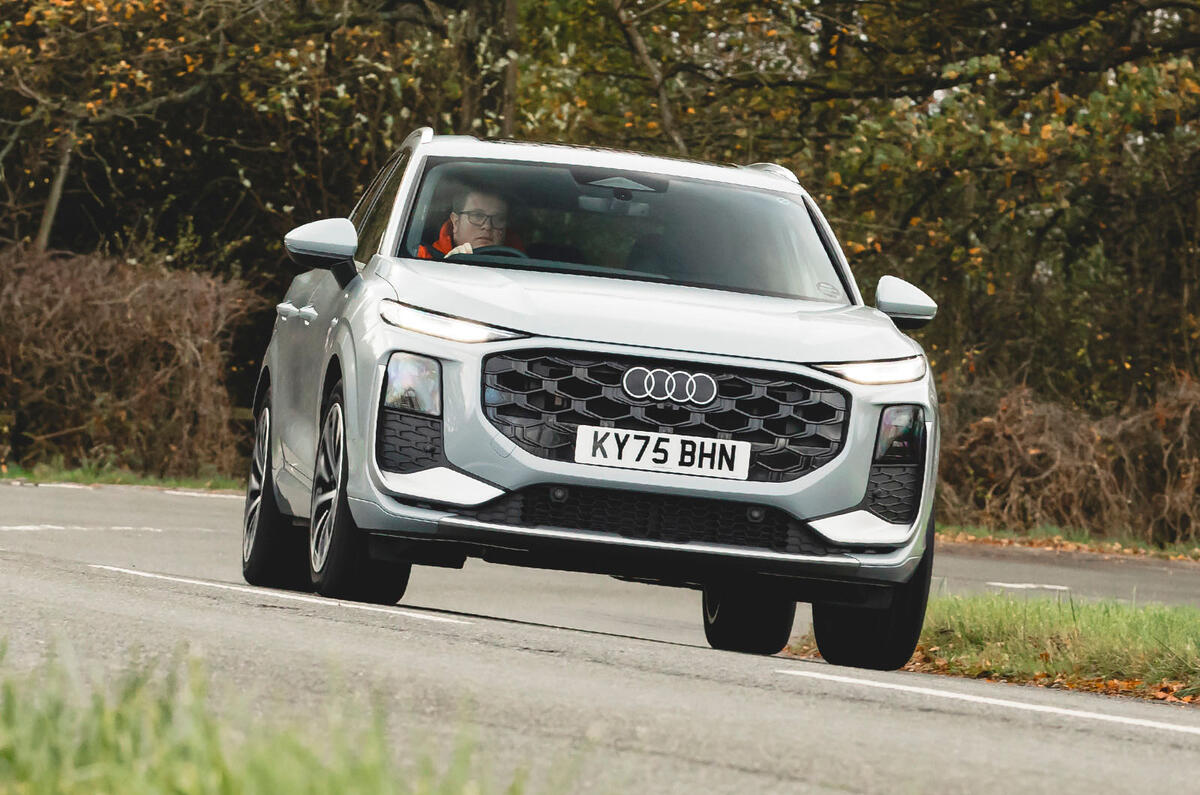
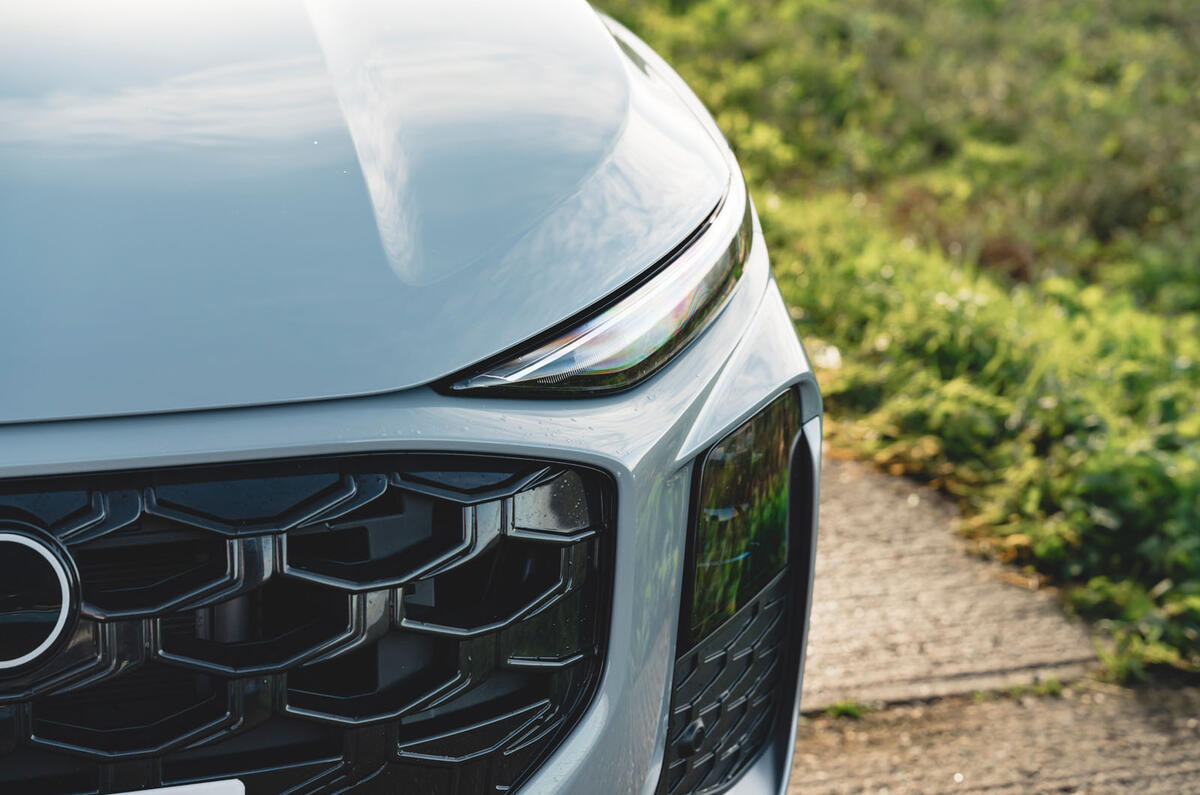
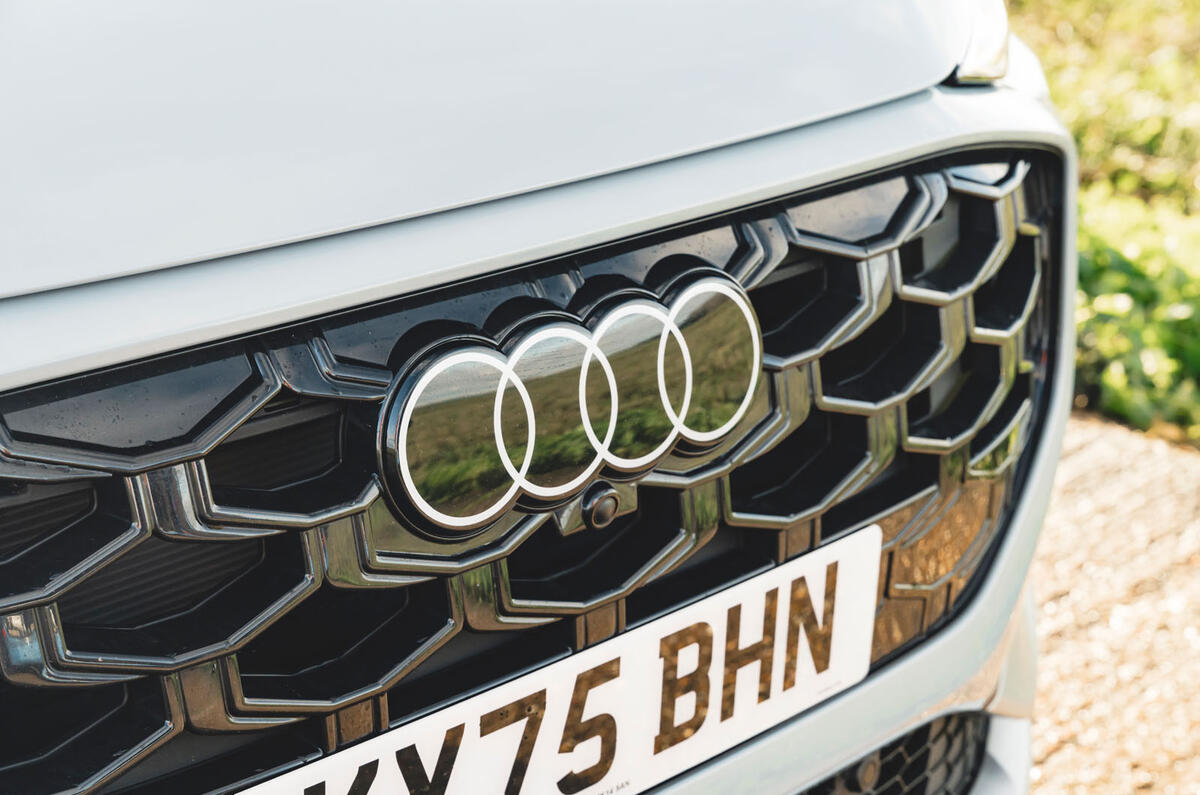
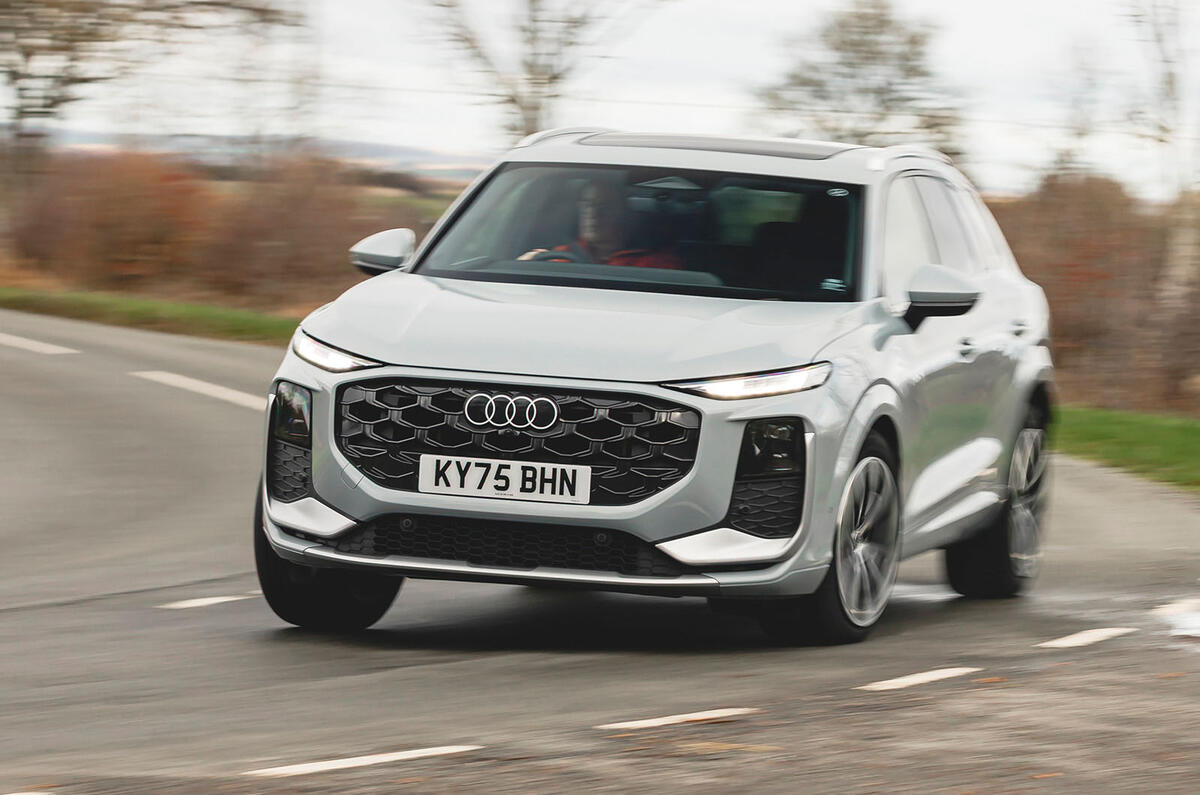
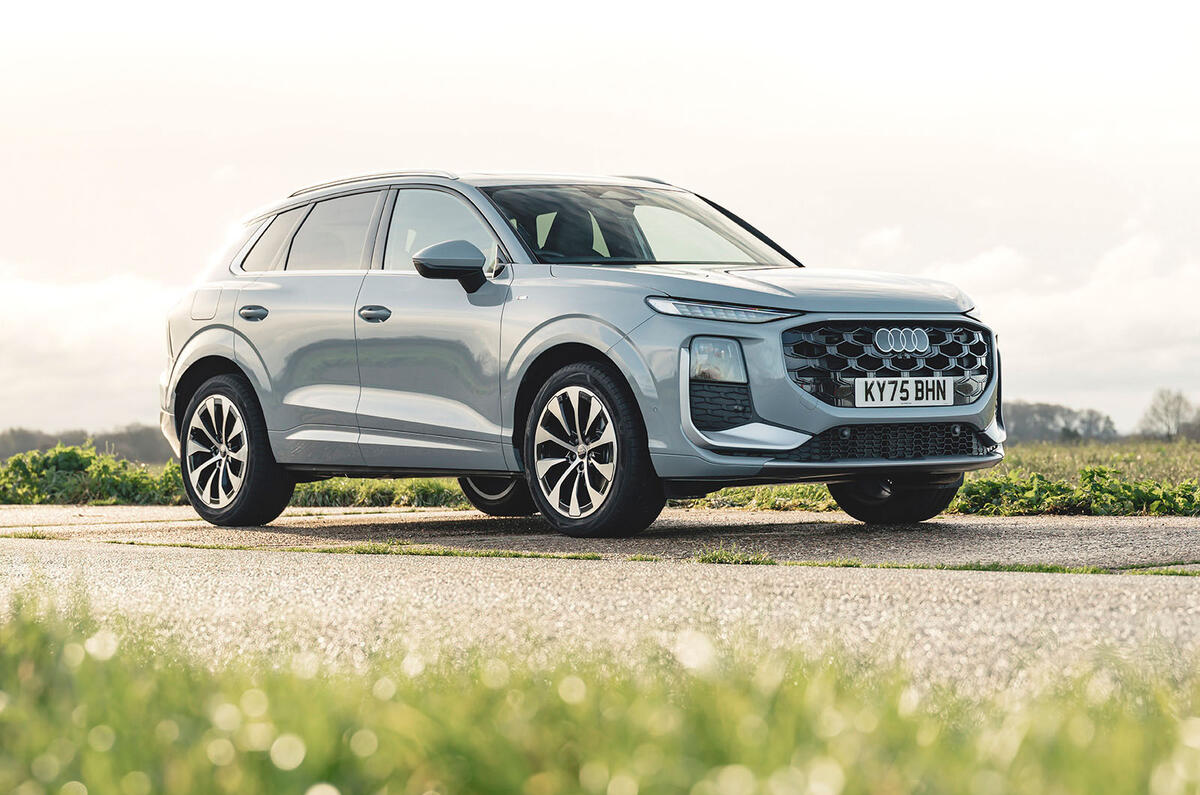
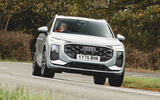
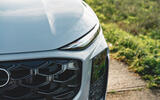
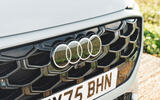
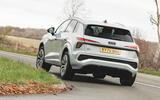
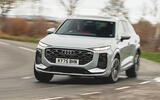
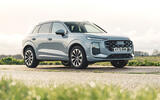
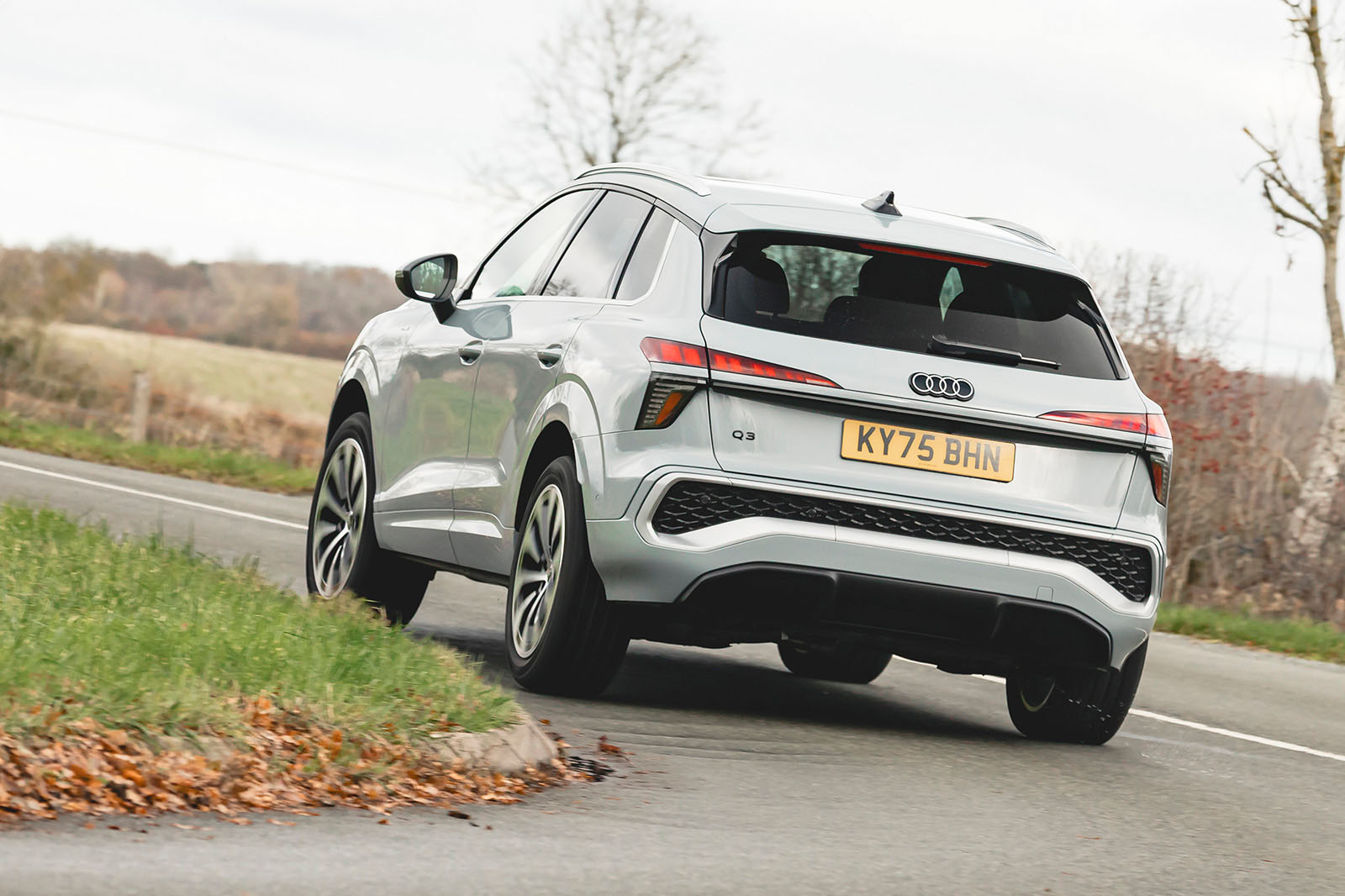
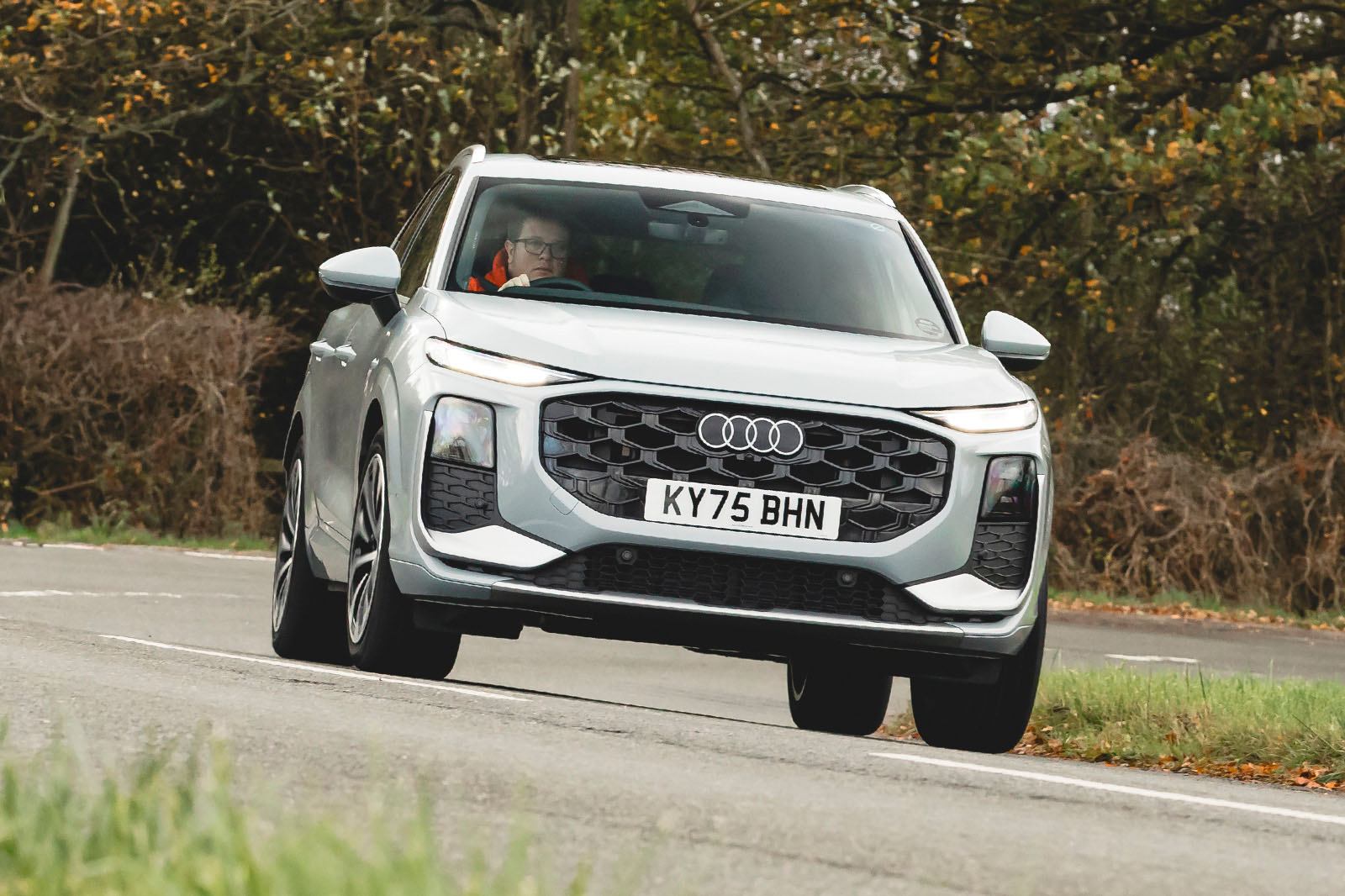
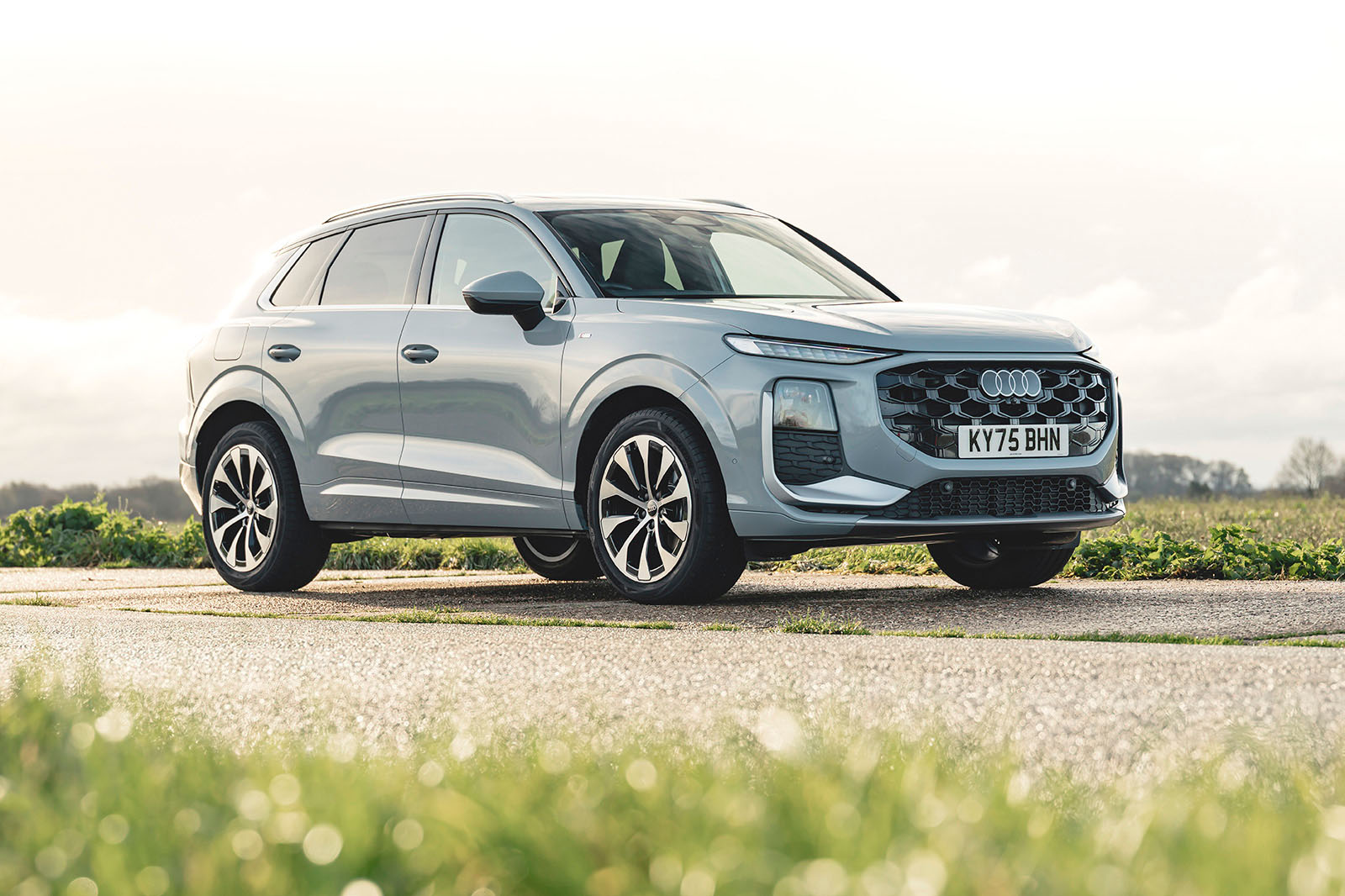
To judge by the Q3, you would say this philosophy is certainly becoming more apparent. This car clearly returns to something closer to the 'fuselage' look of 1990s Audis but uses the firm's famously precise and sharply drawn accent lines and sculptural forms as a sort of visual punctuation - one deployed to greater overall effect on a purer canvas. The Q3's strikingly open-looking front end has lots of visual impact, and its thin positioning lights and sunken main beams are in turn also intended to look like founding parts of the car's aerodynamic design.

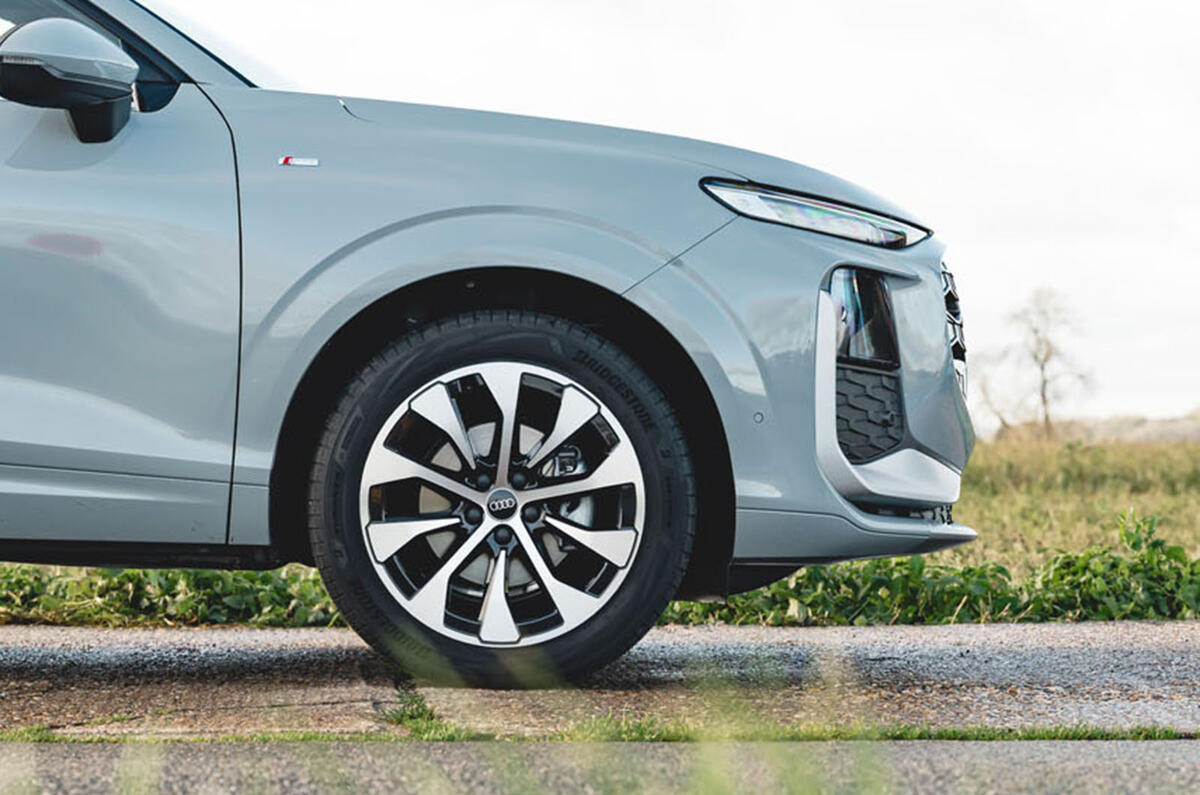
The Q3’s front end has a more ‘aero-heavy’ look than on other recent Audis. The way the main headlamps hide in the implied lateral intakes, and the daytime-running lights wrap around the body as if shaped by the wind, shows this clearly.

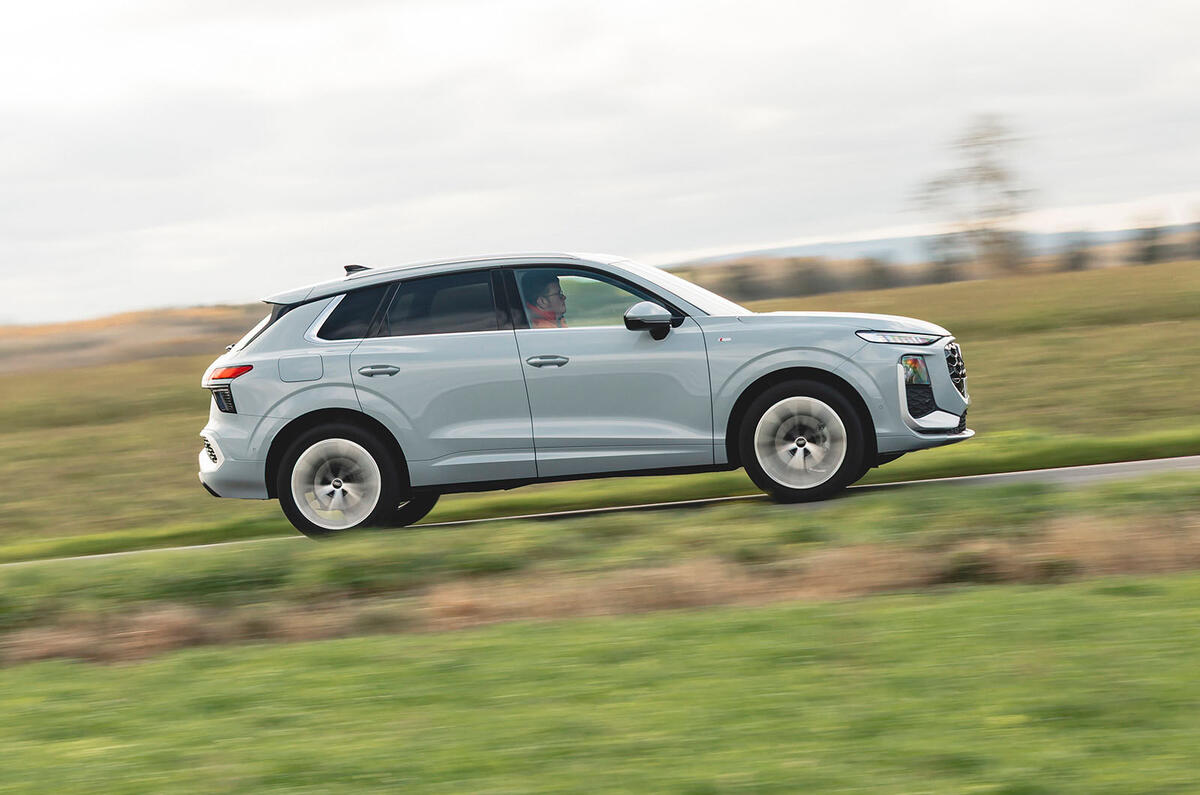
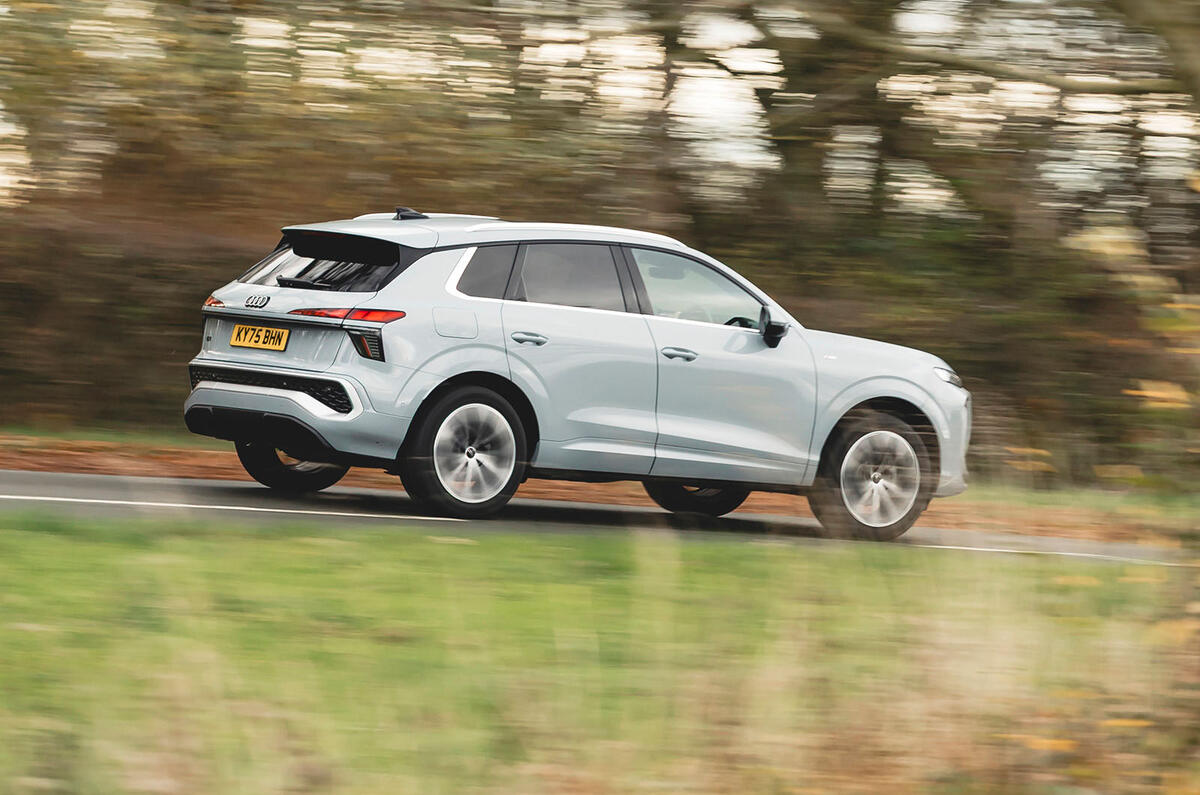
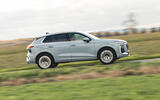
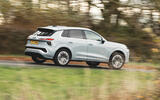
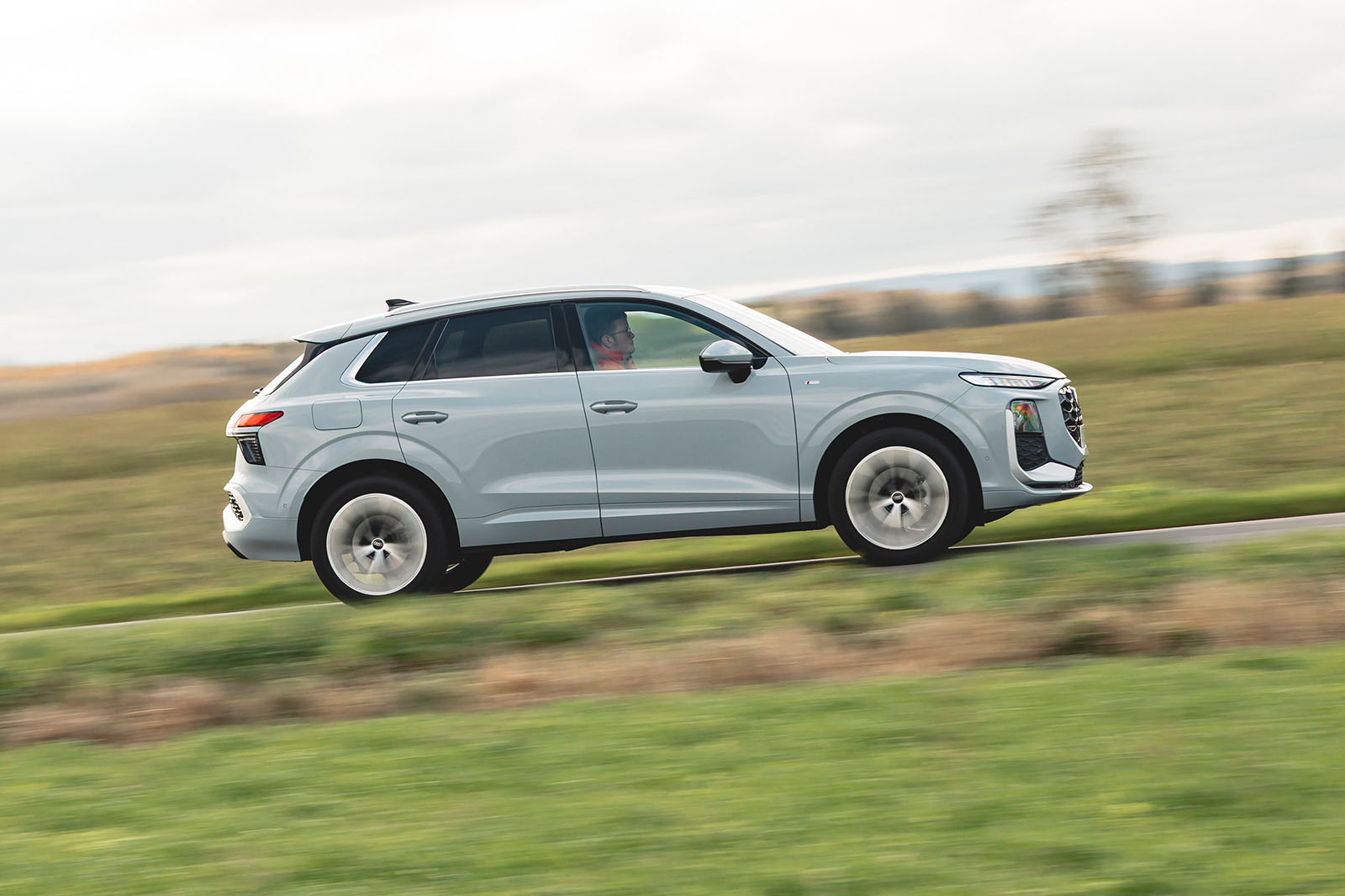
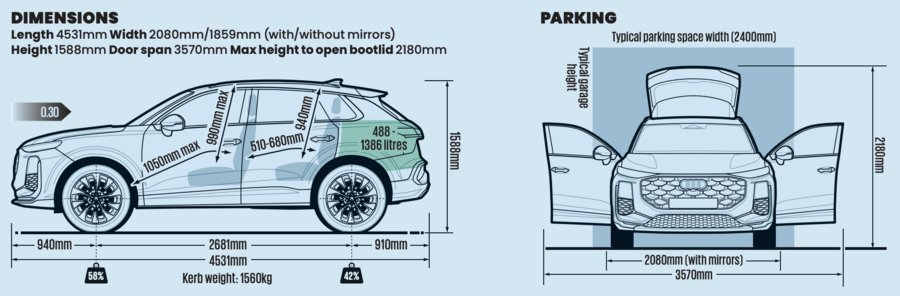
Built on the MQB Evo platform shared with the Volkswagen Tiguan, Skoda Kodiaq and Cupra Terramar, and coming principally from the same factory as the Cupra in Hungary, the Q3 has grown in every dimension but not ballooned or altered its proportions. It remains a relatively compact five-seat SUV, and one without a particularly high-rising roofline even in its standard-body form (there remains a swoopier Sportback version if you want something even less chunky).

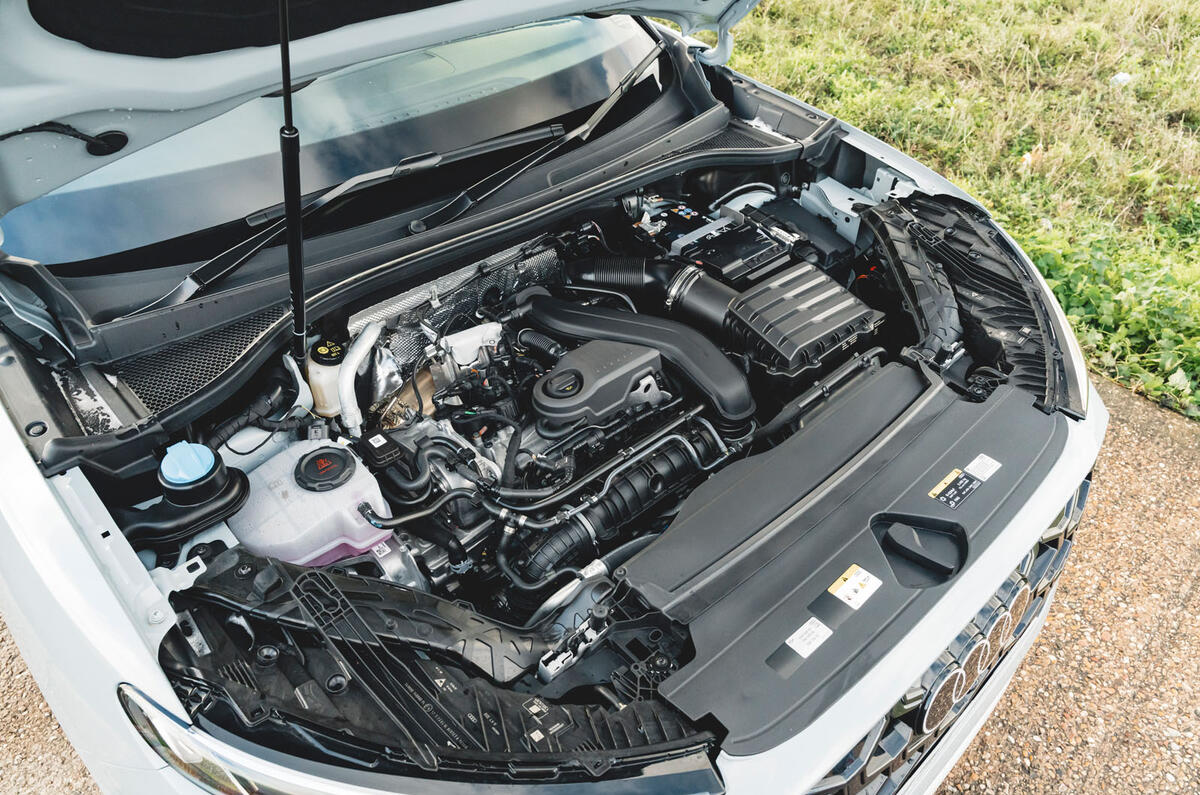
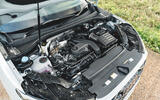
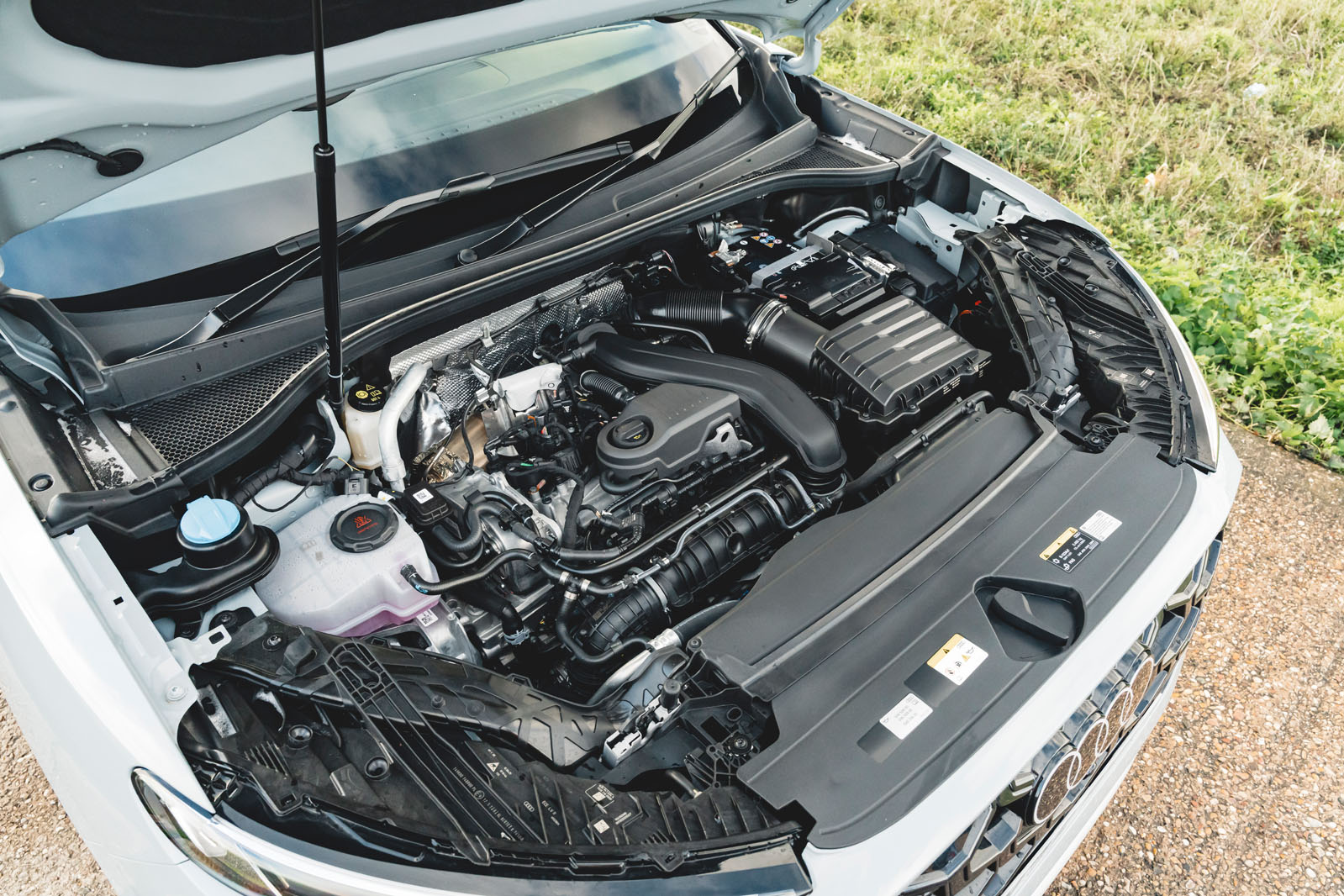
As it always has and is class typical, it utilises transverse-mounted four-cylinder engines, from 1.5 to 2.0 litres in cubic capacity and with a choice of petrol or diesel power. There is also a 1.5-litre plug-in hybrid model offering an eye-catching 70-73 miles of electric range. The bigger petrol engines bring clutch-based intelligent all-wheel drive into the mix (Quattro can’t be had on the diesel or the PHEV) and all models use either six- or seven-speed dual-clutch gearboxes. We elected to test the entry-level, 148bhp 1.5-litre TFSI petrol, which is the only one with e ffi ciency-boosting mild-hybrid and cylinder-shutdown technology.

All Q3s have fully independent axles front and rear. 'Comfort' suspension, made of coil springs and fixed-rate dampers, is fitted to Sport and S Line cars, while lowered and stiffened 'sport' suspension is standard on range-topping Edition 1 models. Two-valve adaptive dampers and ‘progressive’ variable-rate steering are optional on S Line and Edition 1 cars. Our mid-spec S Line test car had the latter but not the former.

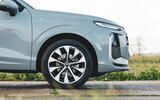
S Line models also get larger, more aggressive front and rear bumpers. Wheels range from 18in to 20in. Audi’s trick matrix lighting sounds gimmicky but offers some useful features, such as showing a chevron in the lights ahead of you should you venture out of your lane on the motorway.

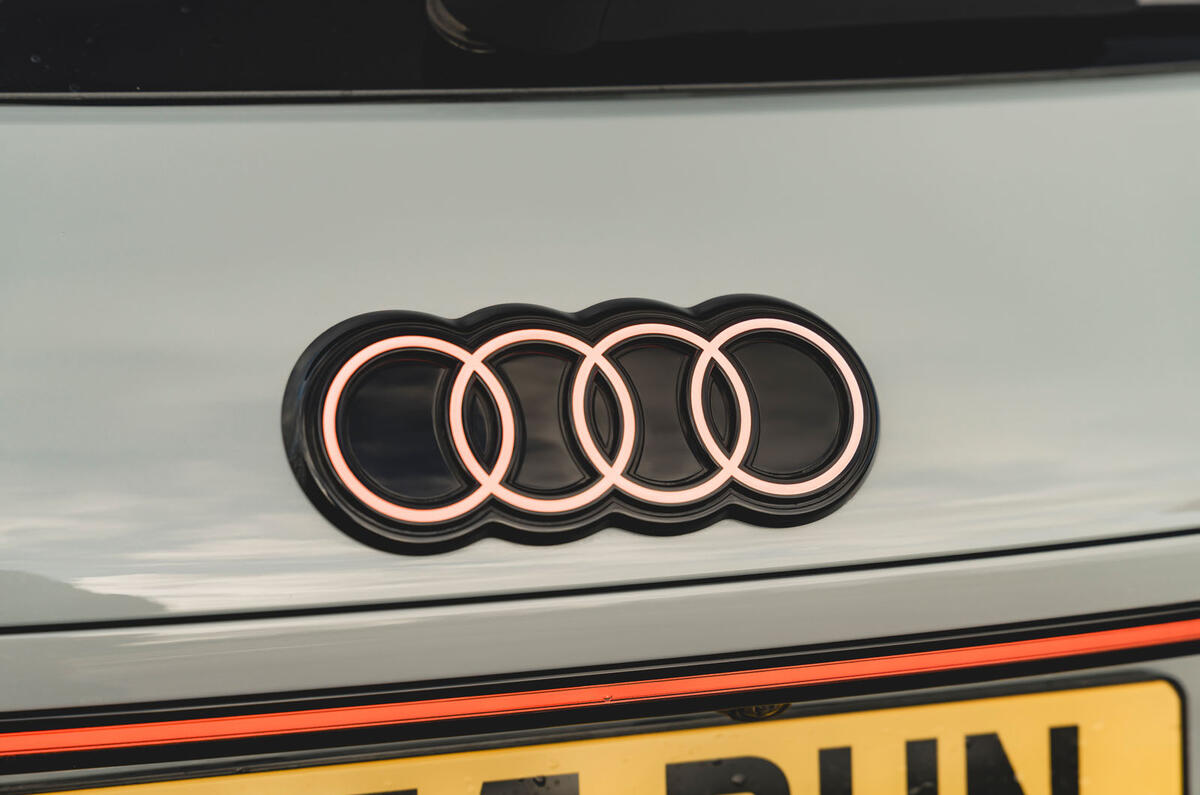
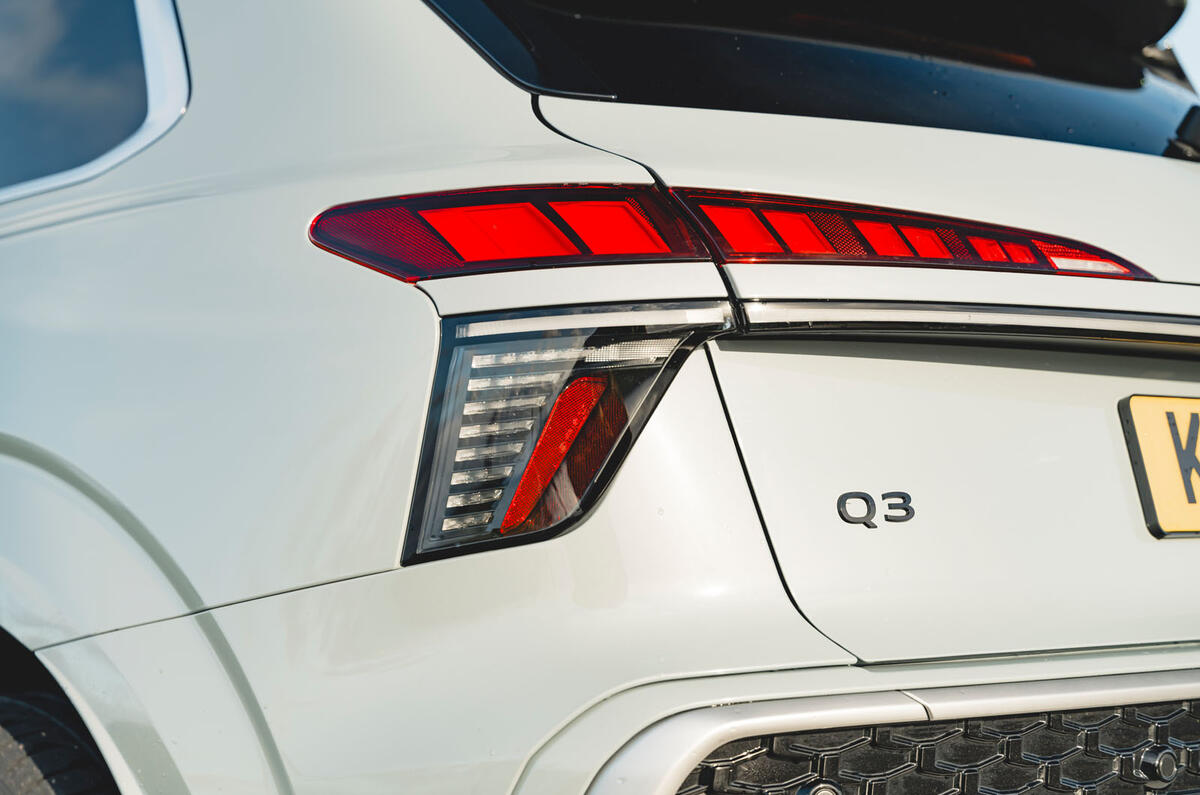
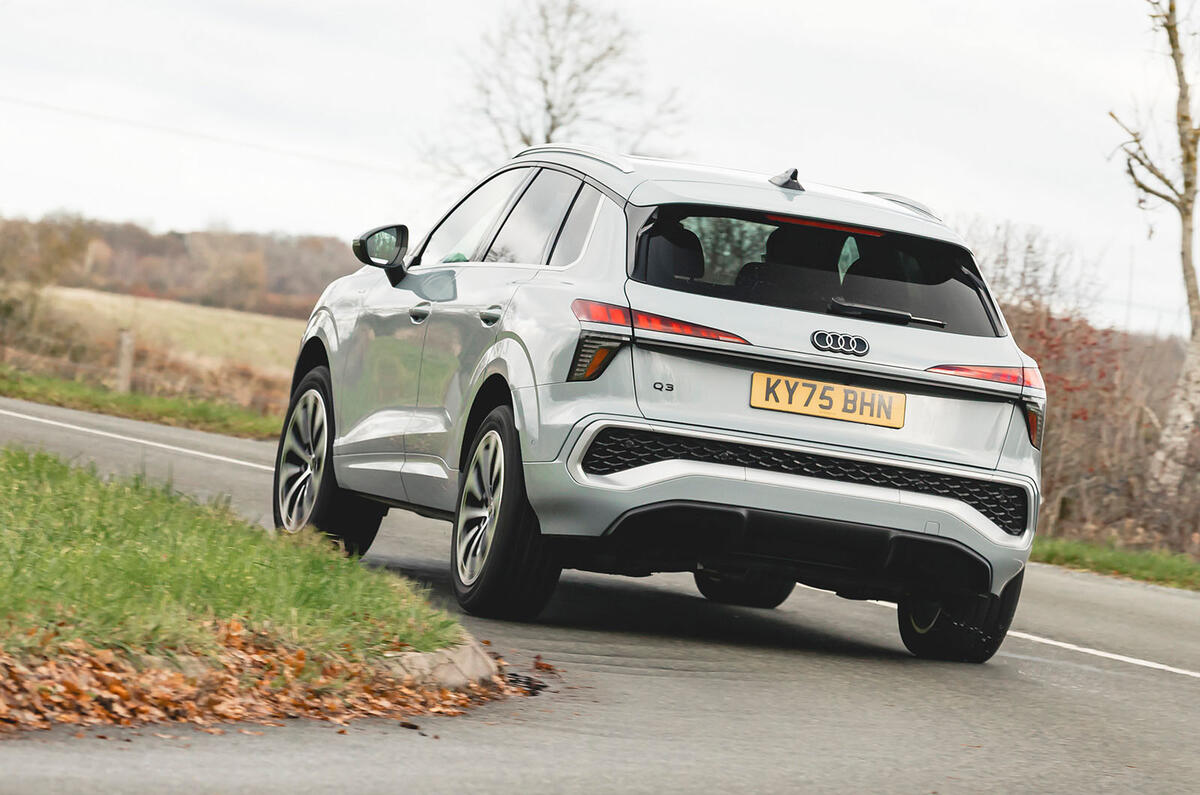
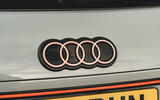
It also lights up the lane that you’re about to move into, assuming you’ve bothered to indicate. Higher-trim cars get digital OLED rear lights featuring illuminated Audi rings. 

INTERIOR

7
Audi Q3 road test review 2026 009

The Q3's roofline is lower than on some cars in its class - and so, in terms of both length and width, it continues to present a slightly more elfin take on the premium small SUV concept, trading on big-car space and character in a compact, manageable package.

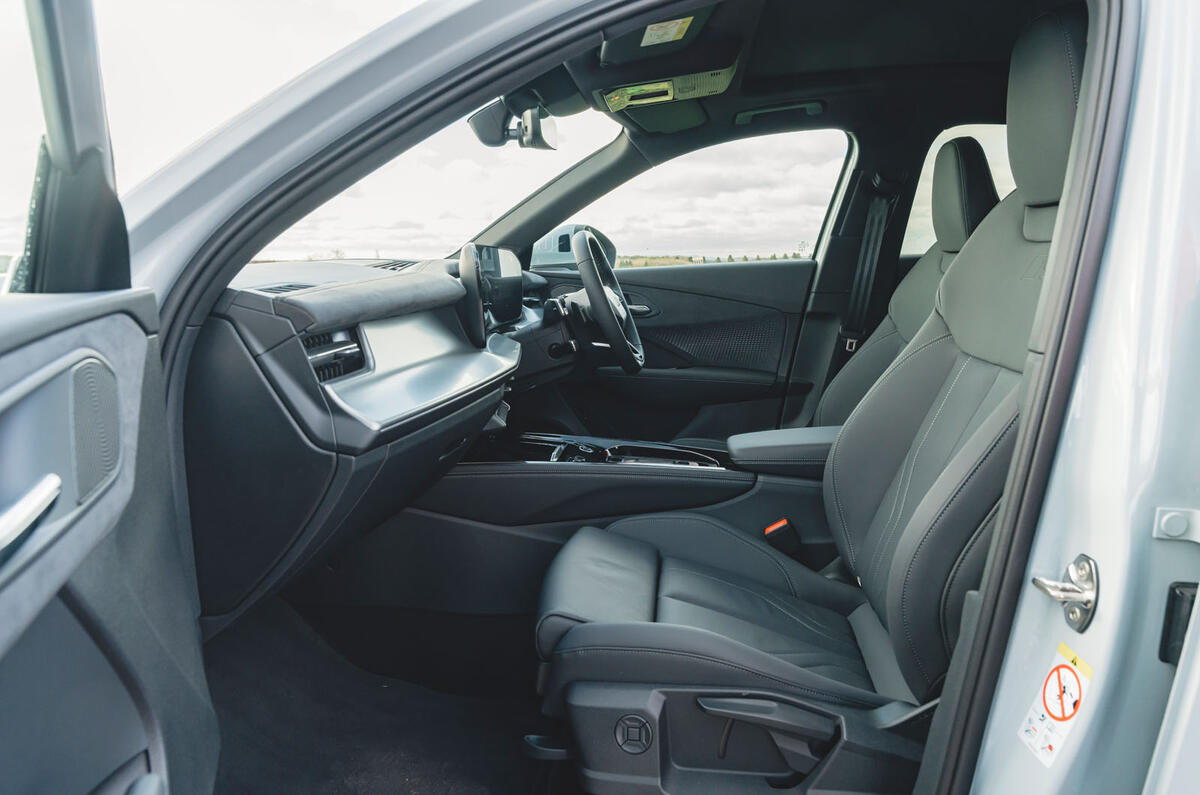
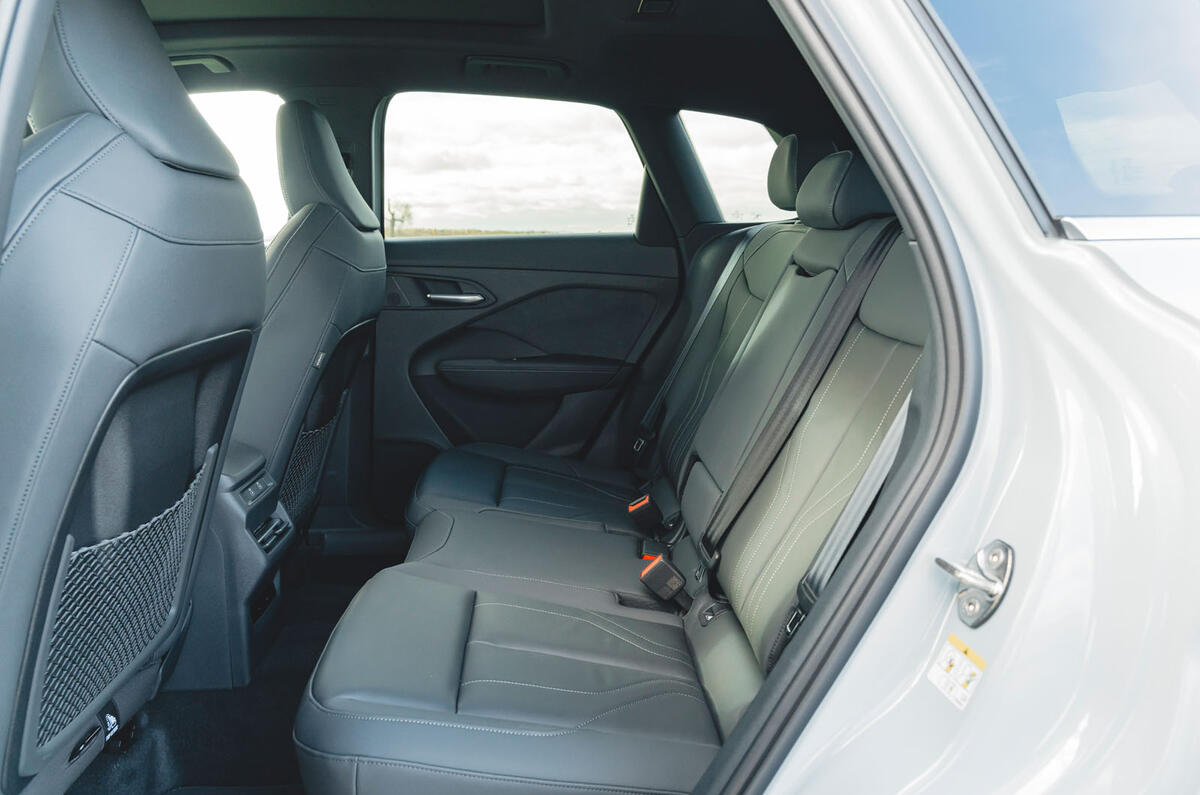
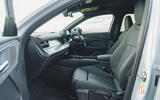
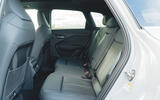
It gives up a little passenger space relative to some rivals as a result of that positioning, but not much. In the front row, there's plenty of outright leg room, some fine, adjustable, supportive seats and 990mm of head room. In the back—where you might be surprised to find that sliding seats come as standard—leg room can be extended to 680mm. A BMW X1 has 7% more front-row head room and 10% more second-row leg room; a Volkswagen Tiguan has more space back there still.

S Line cars also get the suede and leather trim panelling, quartic-adjacent sports steering wheel, leather sports seats, steel pedals and privacy glass.

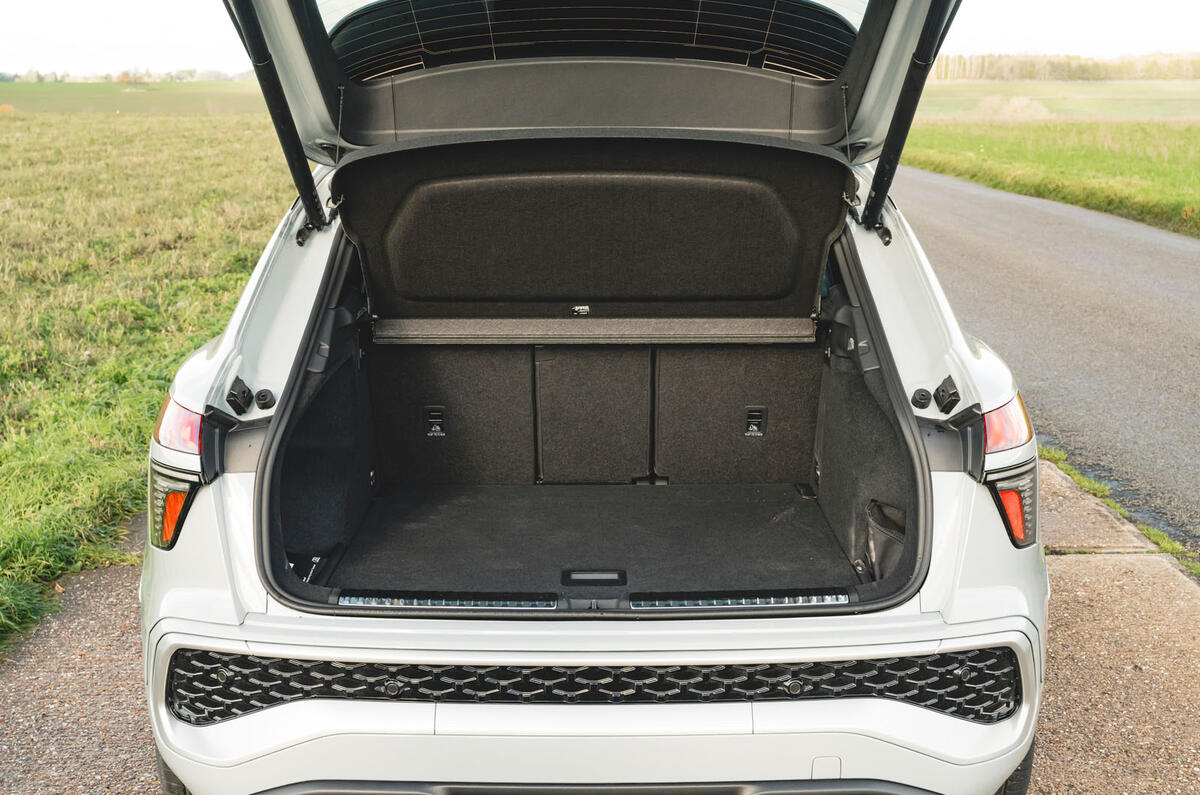
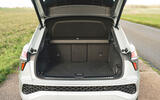
So, despite its growth, this car still comes with a bit of a practicality compromise, though it may not be a very relevant one. With Isofix child-seat anchorages fitted on the front passenger seat as well as the outer rear ones, it's younger families being targeted here, as well as drivers who appreciate a car that's both wieldier and easier to park than some rivals. As if to prove as much, boot space is more competitive than before: about level with the X1 on seats-up loading length and more generous on outright width.

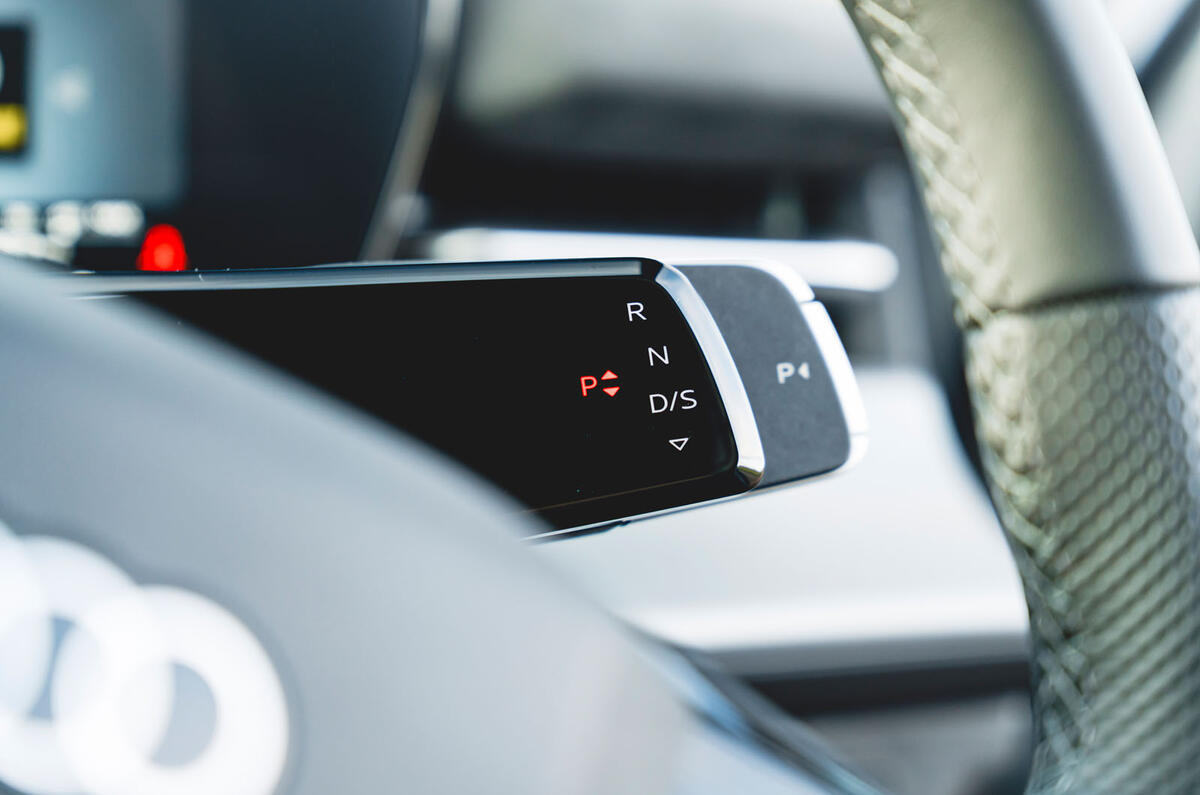
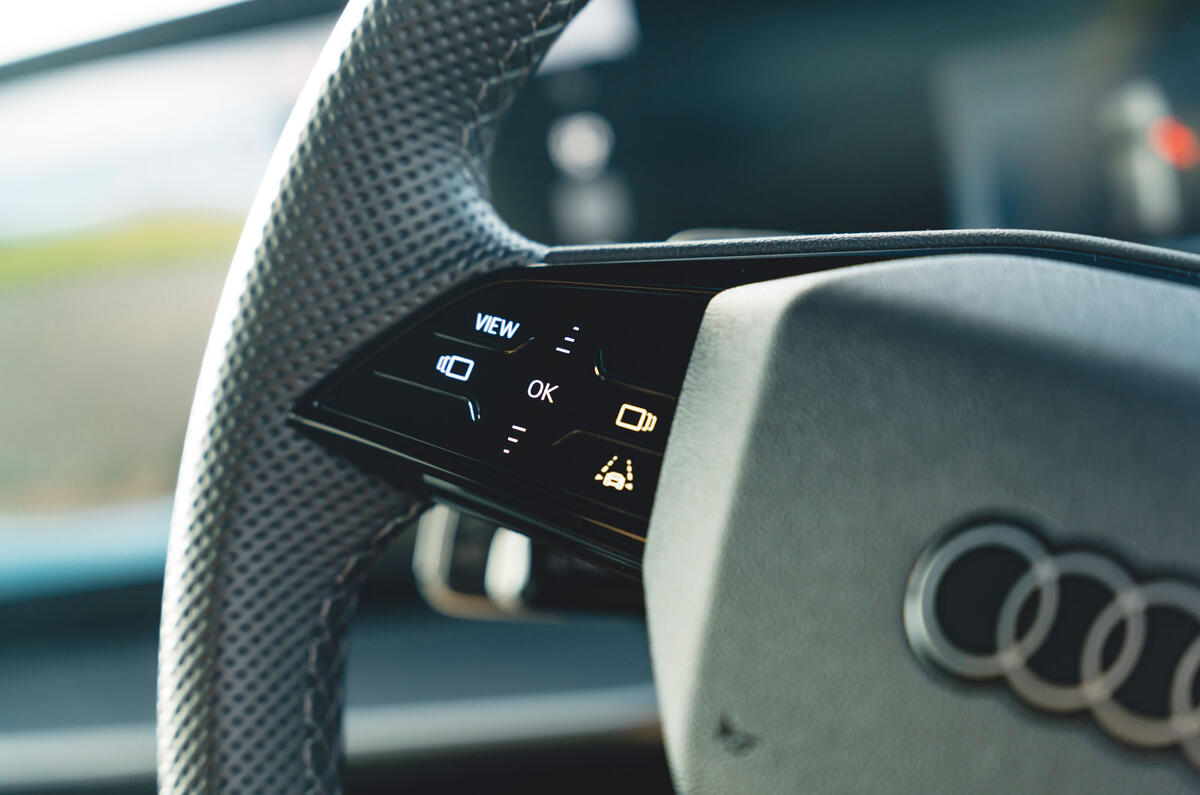
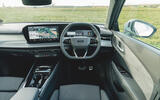
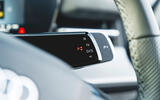
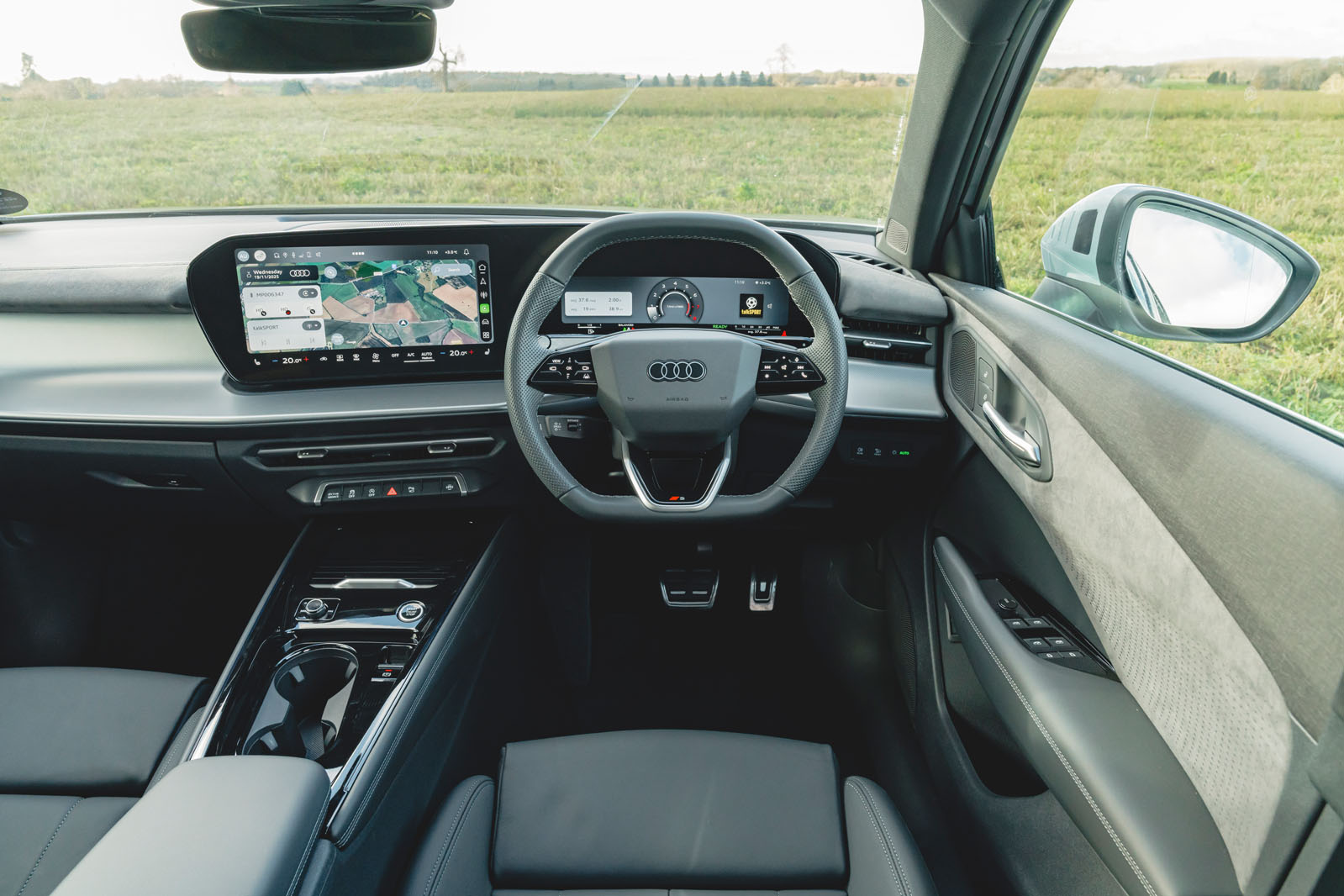
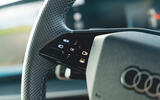
The Q3 does away with traditional indicator stalks and light switches. It instead deploys a single control unit behind the steering wheel for the indicators, wipers and lights.

The indicators are controlled via switches that you flick up or pull down. The windscreen wipers are on a click wheel. The lights are on buttons. It feels a touch clumsy at first, but it would become second nature before long. Whether you think you should have to learn new ways of doing things that have worked perfectly well for decades is another matter.

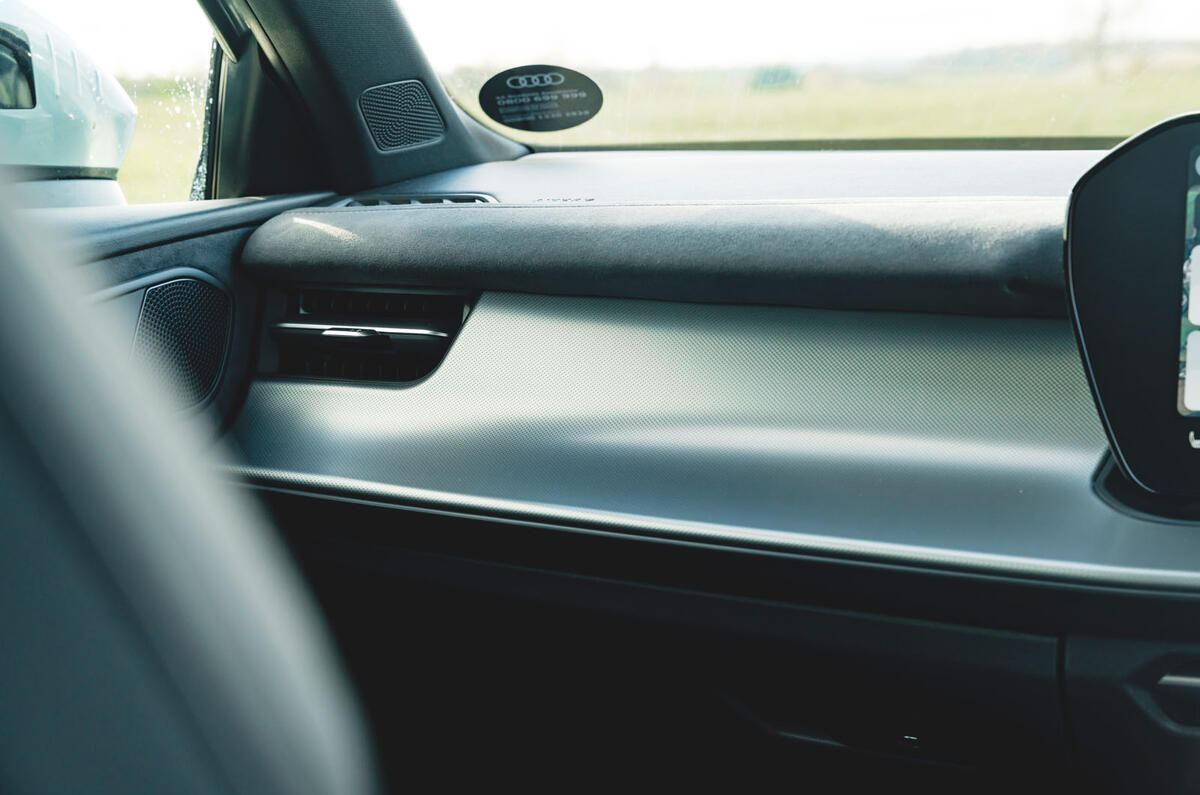
The S Line trim of our test car brought with it plenty of quite plush-looking Dinamica suede on the door panels and dashboard. Leather trim padding elsewhere also lifts the ambience – only for Audi’s now-familiar smudgy piano black plastic trim to knock it down here and there.

Some quite subtle ambient lighting has a positive effect, but ultimately the verdict here is mixed: the cabin is quite hefty-, pudgy- and expensive-feeling in some places, but cheaper and scratchier in others, and the perceived quality  is not quite consistent enough to lift the Q3 above its competitors.

Multimedia

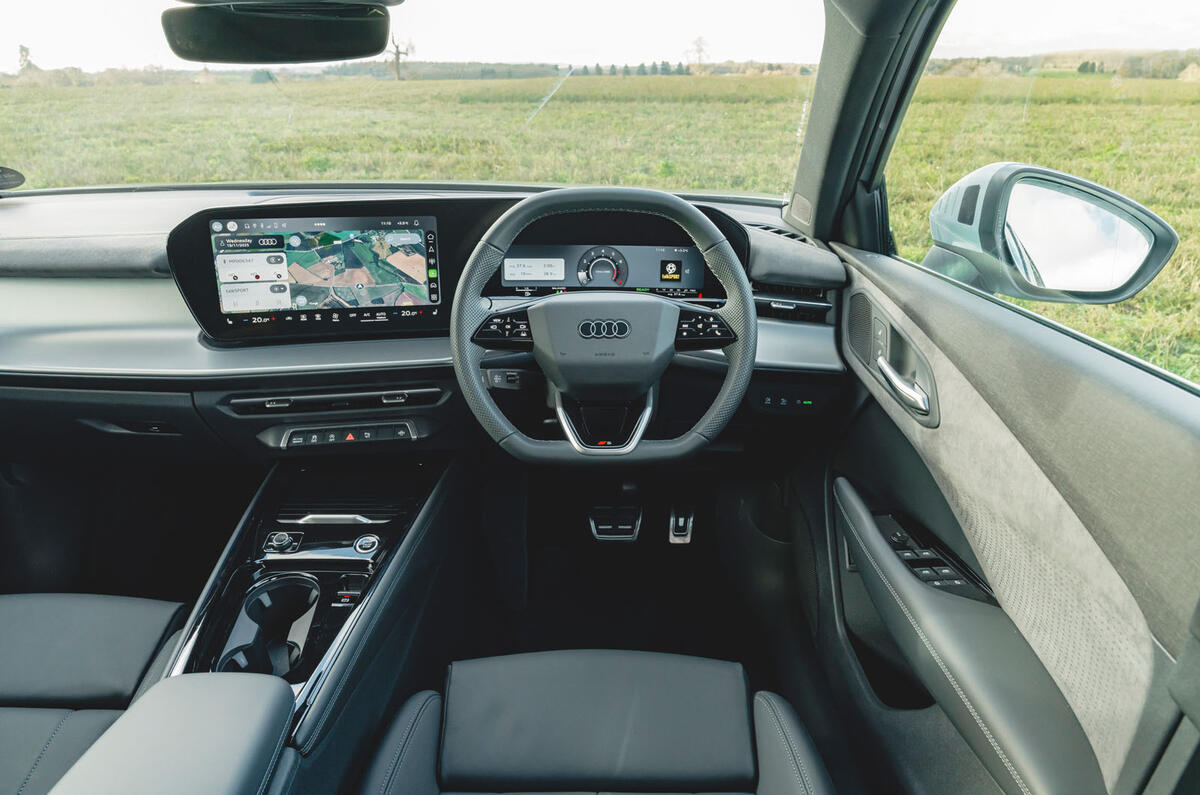
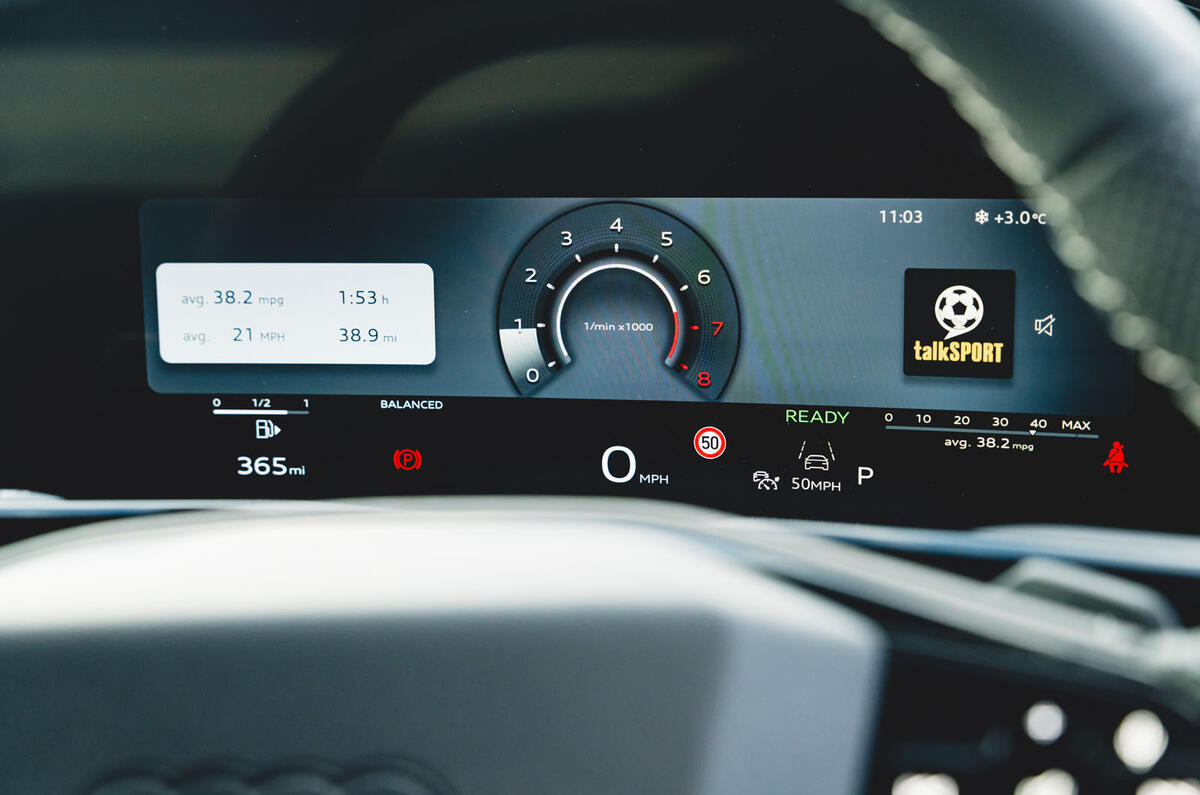
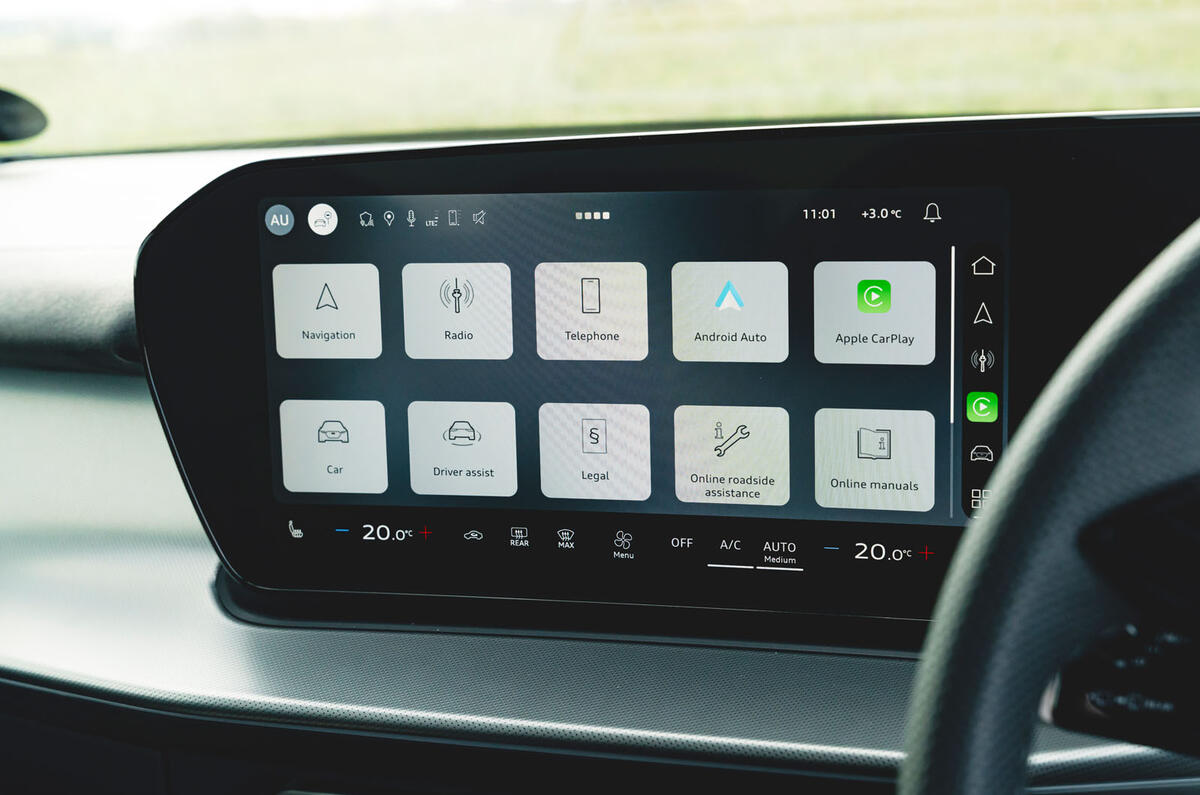
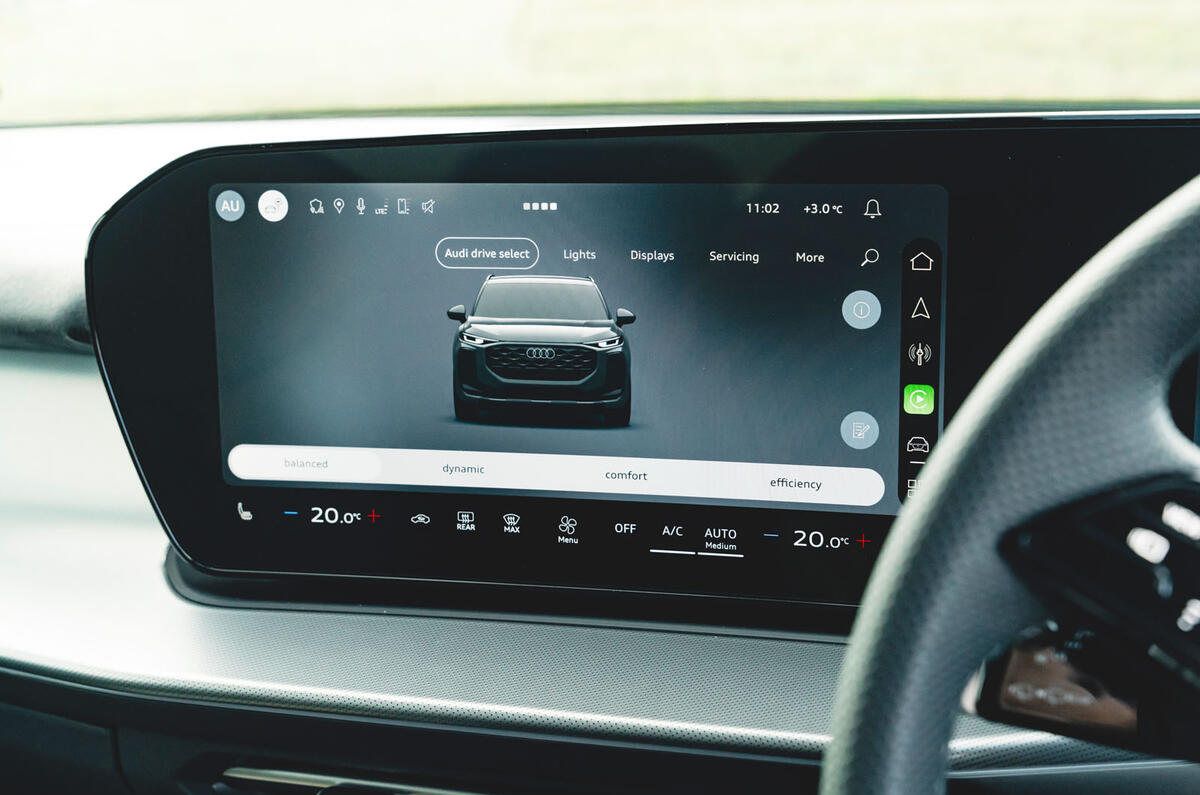
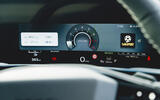
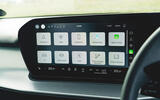
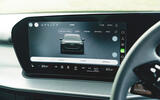
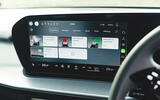
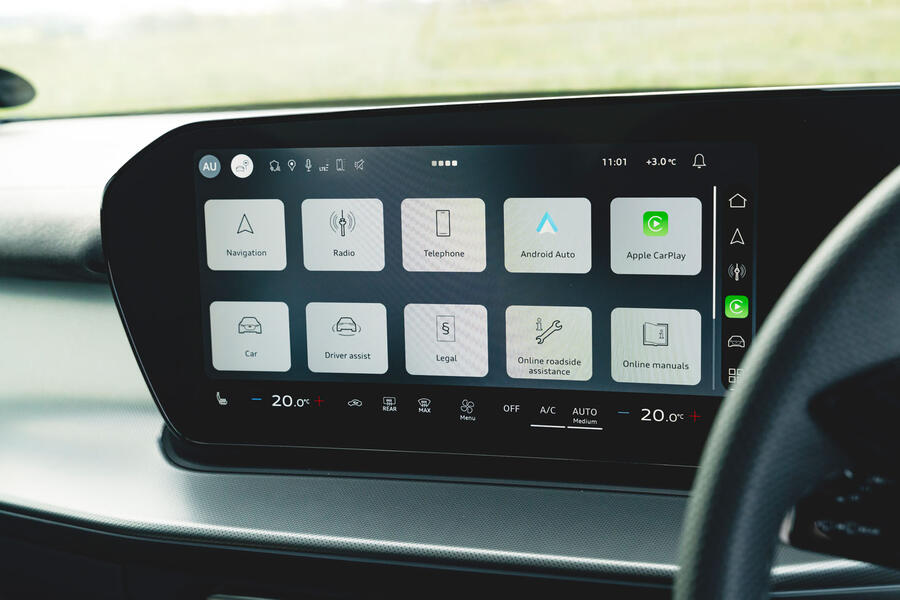
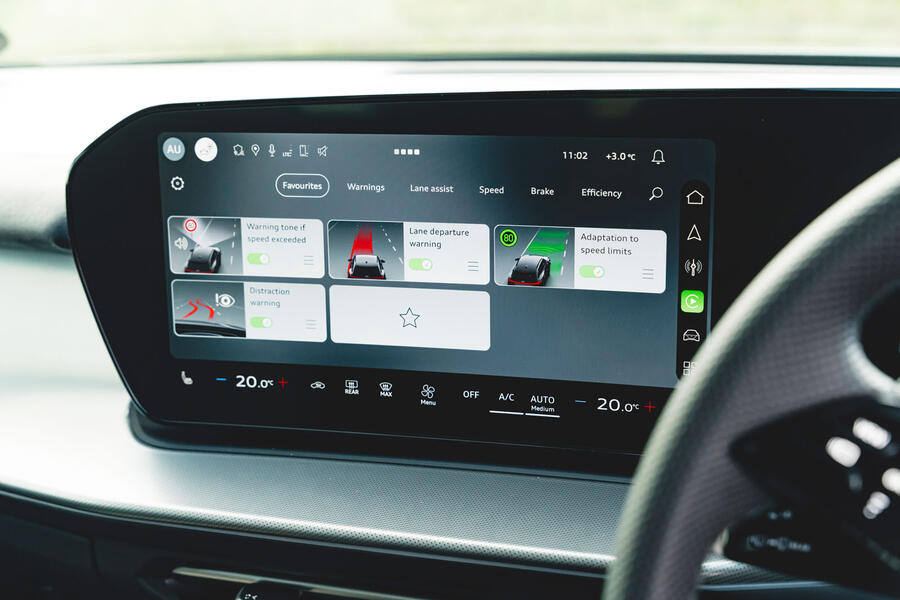
The Q3's 12.8in multimedia system is tacked onto the side of the same console as the digital instruments, and presented as if it were one installation—as is becoming increasingly common. It's set quite high and far back on the fascia, so it can be a bit of a stretch for your left arm, but there's plenty of space around its periphery to anchor a finger while you're prodding and swiping, as you inevitably have to do without any physical input device to scroll a cursor around with.

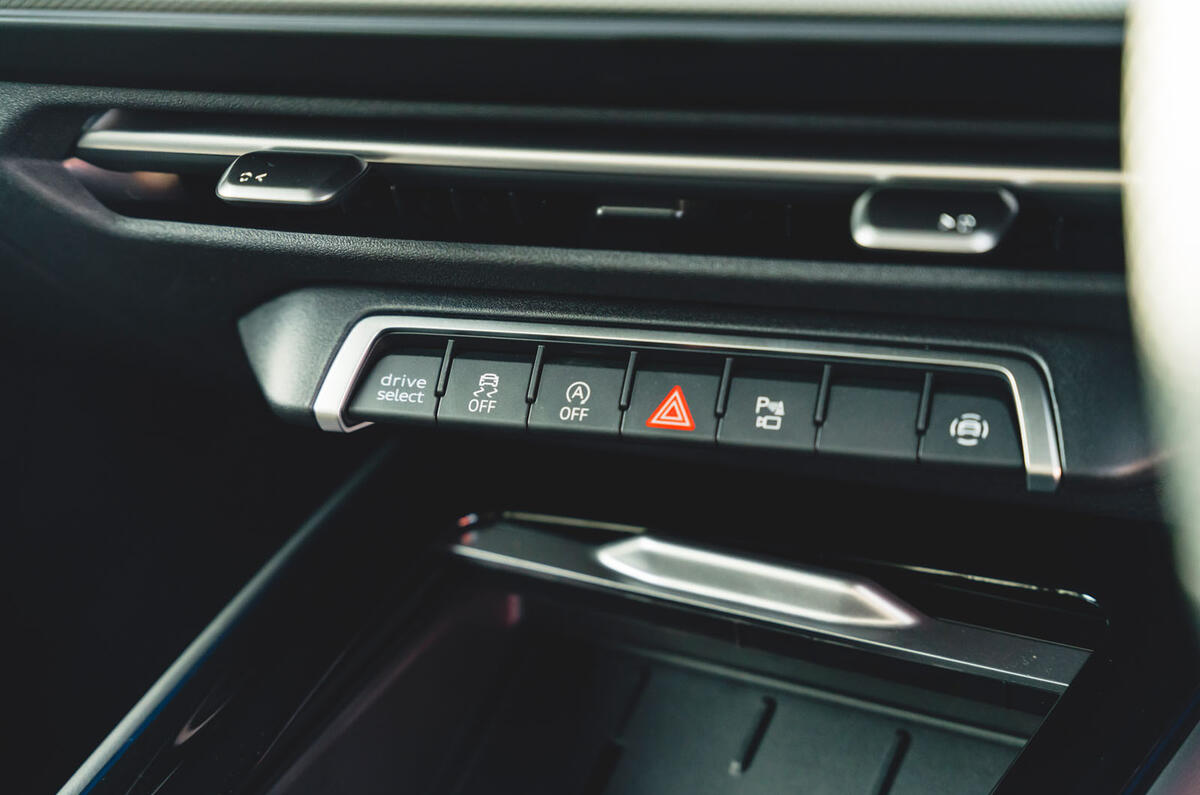
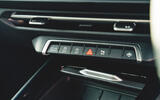
Below the main screen, a row of physical buttons allows you to directly change the drive modes or deactivate the ADAS functions, and there's a volume/on-off knob for the stereo. Heater controls are on the screen itself, permanently displayed across its base, which isn't ideal but works acceptably well. A right-hand nav bar and top-margin shortcut row between them make usability and general navigation quite easy.

The Android-based system is crisp and responsive, and established a reliable wireless smartphone-mirroring connection with an Apple phone for us without a problem.

ENGINES & PERFORMANCE

7
Audi Q3 road test review 2026 021

It may be defined as a compact SUV - and the lightest-available version, at that - but this Q3 still weighed just over 1.6 tonnes on the proving ground scales. Is 148bhp and 184lb ft enough to move that mass in a suitably premium-feeling way? The answer isn’t clear-cut – and may say as much about your expectations as it does this car – but is worth exploring anyway.

The four-cylinder turbocharged petrol sets about its task well enough. Torquey from low revs, it gets the car moving and up to urban speeds without needing big dabs of power, working in tandem with a smooth-shifting dual-clutch automatic gearbox that times its actions fairly well. At low and medium revs it remains quite hushed and well mannered.

But out of town - and when you have more demands to make of it, bigger speeds to reach and gaps in traffic to squeeze into - you find the limits of the engine's potency fairly regularly. The engine doesn't rev very willingly beyond 4000rpm, and begins to feel a little gutless when you need assertive roll-on acceleration beyond 50mph. Here the gearbox seems slightly slow and hesitant when kicking down, and acceleration begins to feel quite noisy and laboured. 

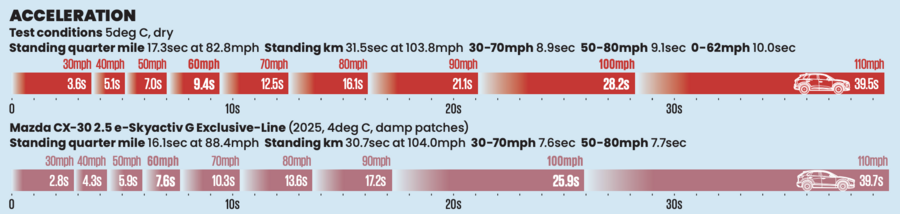
That subjective sense was made manifest in an undistinguished 0-60mph of 9.4sec, and 30-70mph in 8.9sec. The latter makes the Q3 slightly quicker than the identically engined Volkswagen Tiguan we tested in 2024 (whose laboured performance we also criticised). But the 138bhp Mazda CX-30 e-SkyActiv G mild hybrid - a compact SUV about 75% of the Audi's price that we tested last year - was 1.3sec quicker from 30-70mph and 1.4sec quicker from 50-80mph.

We also noted, when attempting to record in-gear acceleration benchmarks, a slightly wilful streak about the car’s automatic transmission that refuses to hold a selected ratio under full power when you have selected a gear using the paddle shifters but rather kicks down autonomously – even when you’re careful not to push past the pedal’s kickdown detent. This ultimately seems like an attempt to cover for a powertrain that feels a little bit unworthy – and prevents the interested driver from exercising the full control he or she might prefer.

Elsewhere in the range, the 2.0-litre ‘EA888’ engine (as made famous by the Volkswagen Golf GTI) comes in two states of tune here: 201bhp and 261bhp. Both come with a Quattro four-wheel drive system. Both feel quick, with the latter more urgent as you would expect. In-gear acceleration is particularly impressive. The gearbox responds quickly to paddle pulls too. Broadly this engine is a bit tricky to place in the model range, though. The more powerful of the two feels brawny enough to kind of work as a junior SQ3, but the less powerful 2.0-litre is a bit of a halfway house that no one really asked for. 

There’s also a front-driven 2.0-litre diesel. This same TDI unit is used in a load of Volkswagen Group cars, from the Skoda Octavia to the Audi A3. It’s expected to take less than 10% of Q3 sales, which is a shame. It’s a bit chattery on start-up, but It’s quiet enough on the move and can completely be left to its own devices with the gearbox. There’s even enough power for you to tease out a bit of torque steer.

The PHEV comprises a 1.5-litre turbo petrol engine, a 19.7kWh (usable) battery and an electric motor, making 269bhp in total. It’s quick, although acceleration is quicker and more succinct in gear than off the line. The transition from electric to petrol power is smooth. Even when there’s no charge in the battery it’s an effortless thing to use, and you don’t feel hugely short-changed by the drop in performance. The all-important electric-only range has been increased from the previous generation’s 30-ish miles to 70-ish miles, which effectively changes the remit of its EV driving capacity from handy for some to useful for many.

There are a few quirks with the PHEV, mind you. You have to push past a proper ‘golf ball’ in the accelerator travel in order to unlock all of its potential on the throttle, and the brakes are spongy. I found that I needed to push a lot harder on the pedal compared with the ICE cars. And as with all PHEVs, you will pull away from a roundabout at some stage, foot hard to the floor, not quite entering the flow as fast as you would have liked, because you’re waiting for the engine to kick in. Other than that, it’s pretty smooth sailing. 

RIDE & HANDLING

6
Audi Q3 road test review 2026 023

The past 24 months have brought plenty of new metal from Ingolstadt, and one of the key trends that has emerged – from everything from the Q6 E-tron to the A6 E-tron, via the A5, Q5 and A6 – tells a story of Audi sticking to its well-worn, fidgety dynamic groove.
In lots of cases, these mid-spec Audis have begun riding a bit like M Sport BMWs. Except for where expensive optional air suspension or adaptive dampers are fitted, they have tended to ride in a particularly firm and recalcitrant fashion, even when described as having ‘comfort’ suspension. When lowered sport springs are in the mix, the situation typically gets even firmer.

The Q3, rather predictably, follows the herd. Despite having Audi’s standard ‘comfort’ suspension, and 19in fitted alloy wheels no larger than the standard ones it might otherwise have been on, it felt decidedly tetchy on UK roads. A clear sense of terseness and a refusal to absorb inputs at  low speeds was transformed into  a wooden feel at higher speeds.  As a result of that wooden feel, the Q3’s ride became slightly restless and excitable on country roads – albeit calmer on motorways and well-surfaced trunk roads – but it mostly just felt like a slightly aloof and detached car to drive, rather than an energised or engaged one.

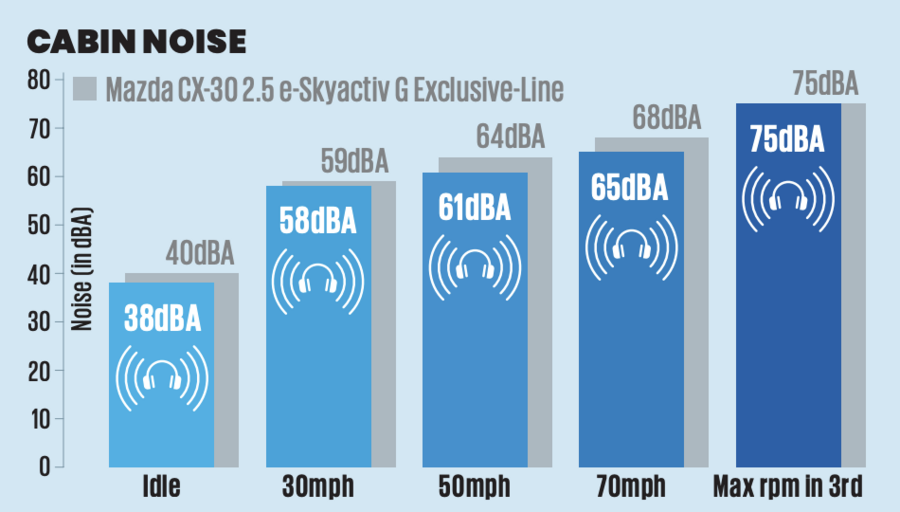
As our noise meter bore witness, however, ride isolation is much better. We recorded 61dBA of cabin noise at 50mph, compared with a more class-typical 64-65dBA. And so, however simplified an argument it may be, Audi is able to say that ride refinement is quite good here.

Meanwhile, thanks to those firm springs and a progressive steering rack with just 2.1 turns between locks, handling is level and keen by class standards. The Q3 resists rolling and lolling to the extent of the average compact SUV, and is made to feel smaller and more immediate in its responses.

It stops well short of any kind of involving driving experience, sure. But if you like to be able to hustle your higher-rise family car along easily and without  much effort, being well protected from mishap all the while by  such businesslike body control  and lots of latent chassis stability – if you like muted reassurance at speed, rather than interactivity and a rewarding experience, in other words – this car should suit you well.

The 2.0-litre models get firmer springs and a different suspension tune to smaller-engined petrols, and they do feel quite different to drive. There’s a more solid, settled feel to the way they ride compared with the 1.5-litre and PHEV models.

Meanwhile, the limited experience we have of the car's twin-valve adaptive dampers suggests they're well worth the outlay; as, indeed, would the ride of the standard Q3. These are an optional extra that can be specced as part of the Sound and Vision Pack Pro (£1300). They use seperate adjustment valves for compression and rebound. And they work really well: somehow flexible and slightly elastic while containing movement, but still allowing for a bit of body roll.

Assisted Driving

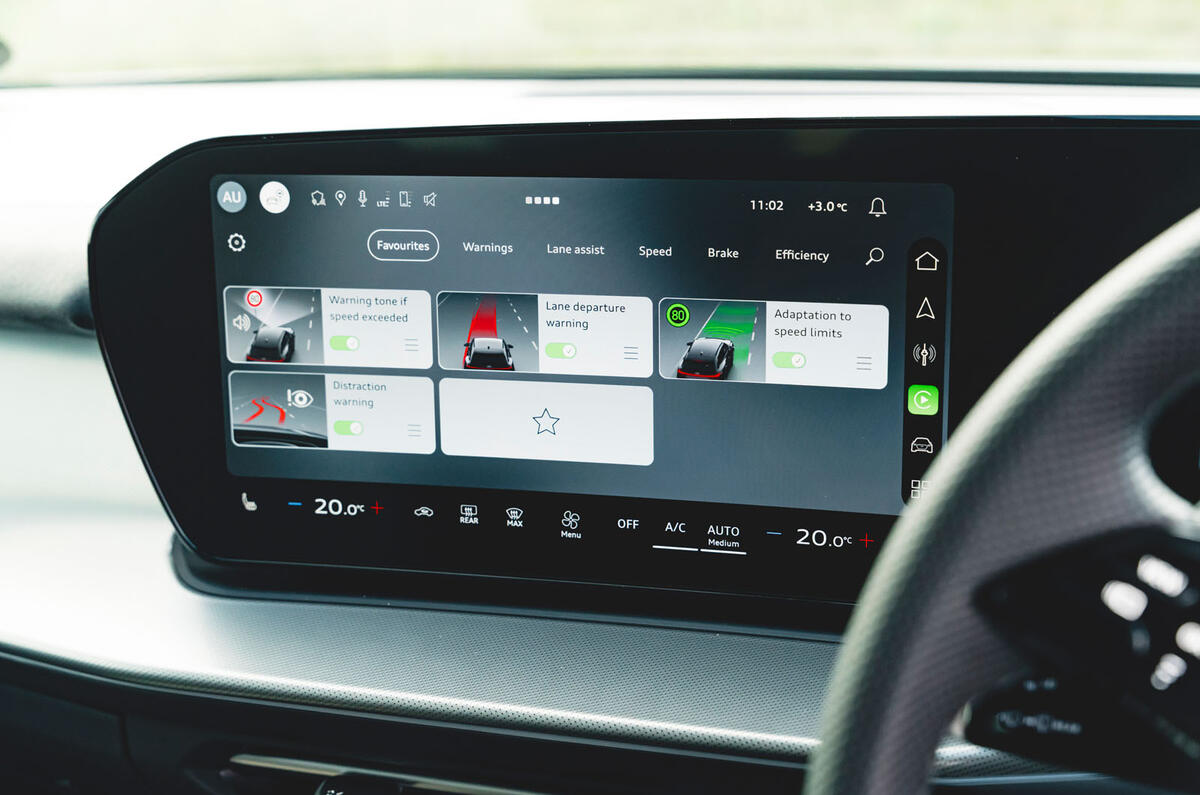
The Q3’s most important driver aids – its autonomous emergency braking and driver monitoring systems, which you would be loath to turn off anyway unless they really irked you – seem well tuned and unintrusive. The others are tolerable, broadly, to take or leave as you choose – but none is difficult to disable.

A deactivation ‘button’ for the speed limit detection and warning system is permanently displayed in the top left corner of the multimedia display, and one press of the physical button underneath the screen takes you directly to the car’s main ADAS menu screen where its lane departure warning and other systems can be easily deactivated.

Adaptive cruise control is standard on all models, but exit assist (where the car monitors your blindspot to warn you before opening the door into danger) and rear cross-traffic assist (which monitors traffic approaching at 90deg while reversing) only comes on upper-trim models.

MPG & RUNNING COSTS

7
Audi Q3 road test review 2026 001

Audi has priced the Q3 rather competitively. Premium models are the new volume, of course, and Ingolstadt knows it needs to reach beyond its classic German competitors to find really major commercial success. But, priced as this car is from a little over £38,000 in its entry level guise, it might just do that. The BMW X1 and Volvo XC40 are closely ranked, but there's no Mercedes GLB available for less than £40,000, and no Range Rover Evoque for less than £44,000.

Even base-level Sport models aren't meanly treated for equipment, featuring the same infotainment system, heated sports seats, and three-zone air conditioning, a wireless phone charging pad and a reversing camera, and the 18in wheels the car comes on might even soften its ride slightly.

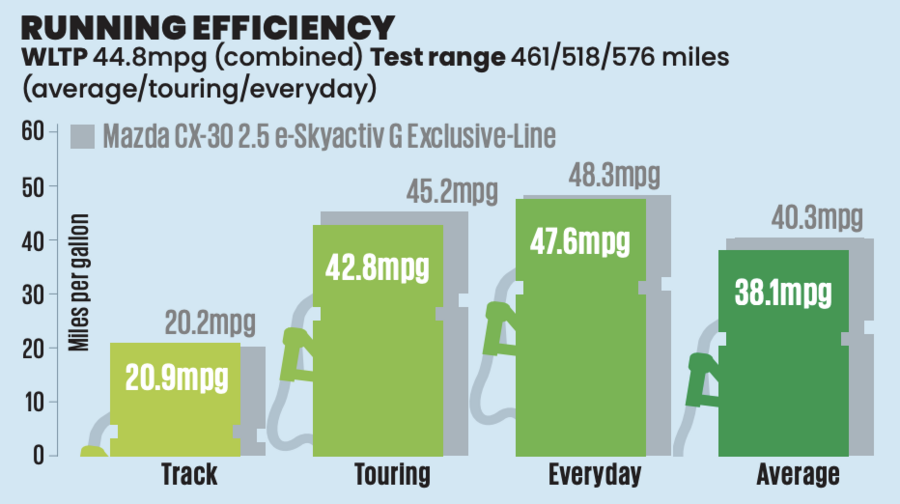
Our test car recorded 42.8mpg on our touring economy test. That return was a little underwhelming considering the identically engined Volkswagen Tiguan did slightly better in its road test, but respectable enough.

The plug-in hybrid, meanwhile, offers up a (WLTP) 73-mile electric range, meaning for company car users, a 6% BIK rate. It can charge at up to 50kW DC - a 10-80% charge takes 30 minutes.

VERDICT

7
Audi Q3 road test review 2026 024

Audi feels like a brand striving to redefine itself; and so too, as a car, does the Q3 – but not quite boldly enough to stand apart from the cars that came before it.

Given the centrality of design to the appeal of Audis in recent years, there is certainly something new and interesting here. The way that Ingolstadt is referencing its past but also focusing on Audi-typical progress and function with the look of its new cars is clearly steering it in the right direction.

You don’t expect sliding back seats in something like this, but the smaller the car, the clearer the case for them becomes. On those occasions when every available inch of boot space matters, the Q3 would have you covered.

The next step should be for the engineers to follow the designers’ lead, and work in bolder strokes than the Q3’s slightly noisy and undernourished-feeling entry-level petrol engine or its aloof-feeling ride and handling seems to represent. As it is, the Q3 is a typically refined, contained and precise car to drive – but also quite an unforthcoming one.

Murray Scullion

Murray Scullion
Title: Digital editor

Murray has been a journalist for more than a decade. During that time he’s written for magazines, newspapers and websites, but he now finds himself as Autocar’s digital editor.

He leads the output of the website and contributes to all other digital aspects, including the social media channels, podcasts and videos. During his time he has reviewed cars ranging from £50 - £500,000, including Austin Allegros and Ferrari 812 Superfasts. He has also interviewed F1 megastars, knows his PCPs from his HPs and has written, researched and experimented with behavioural surplus and driverless technology.

Murray graduated from the University of Derby with a BA in Journalism in 2014 and has previously written for Classic Car Weekly, Modern Classics Magazine, buyacar.co.uk, parkers.co.uk and CAR Magazine, as well as carmagazine.co.uk.

Matt Saunders

Matt Saunders Autocar
Title: Road test editor

As Autocar’s chief car tester and reviewer, it’s Matt’s job to ensure the quality, objectivity, relevance and rigour of the entirety of Autocar’s reviews output, as well contributing a great many detailed road tests, group tests and drive reviews himself.

Matt has been an Autocar staffer since the autumn of 2003, and has been lucky enough to work alongside some of the magazine’s best-known writers and contributors over that time. He served as staff writer, features editor, assistant editor and digital editor, before joining the road test desk in 2011.

Since then he’s driven, measured, lap-timed, figured, and reported on cars as varied as the Bugatti Veyron, Rolls-Royce PhantomTesla RoadsterAriel Hipercar, Tata Nano, McLaren SennaRenault Twizy and Toyota Mirai. Among his wider personal highlights of the job have been covering Sebastien Loeb’s record-breaking run at Pikes Peak in 2013; doing 190mph on derestricted German autobahn in a Brabus Rocket; and driving McLaren’s legendary ‘XP5’ F1 prototype. His own car is a trusty Mazda CX-5.