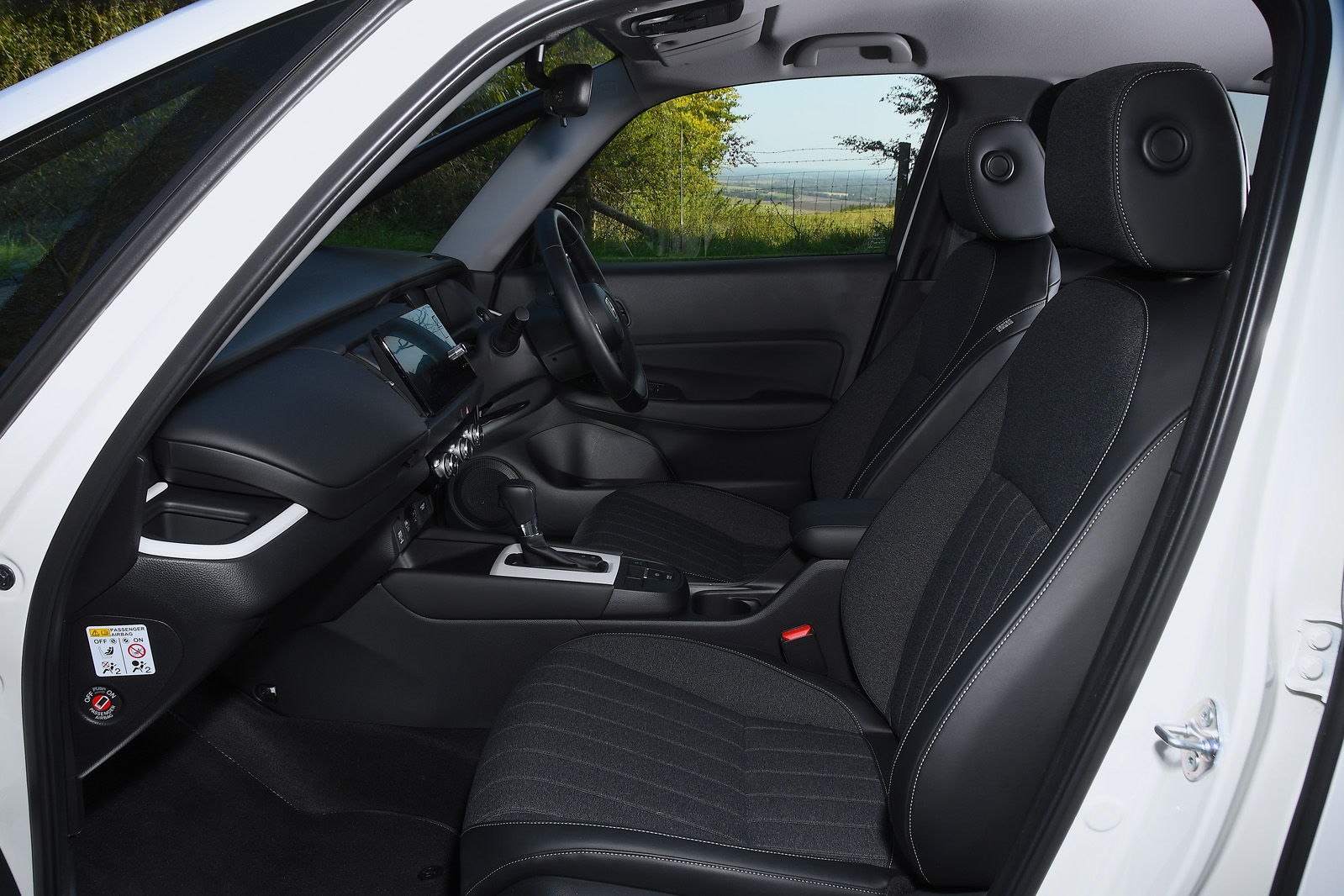
The Jazz doesn’t score many points here for visual appeal. By the standards of bolder, more colourful supermini interiors, this cabin is a pretty plain, slightly dull place to be.
Dark, soft-touch surface treatments lend it a lifeless monochrome ambience, as does the grey cloth on the seats and the contrasting white panelling around the gear selector, on the steering wheel and around the dash-top cupholders.
However, as pedestrian as the Jazz’s interior might be from a visual point of view, it does at least feel very well built and the focus on ease of use is readily apparent. All of your primary points of contact – be they the drive selector, the controls for the air-con system, or even the buttons on the 9.0in dashboard-mounted infotainment screen – are within close reach and they all convey a satisfying sense of solidity and sturdiness to the touch.
Where the Jazz really comes into its own is with the flexibility of its interior. With the second-row ‘Magic seats’ in place, rear passengers will find they’re treated to generous leg room (we recorded a typical figure of 760mm, which some executive saloons couldn’t equal) and 910mm of head room isn’t too bad for the class, either.
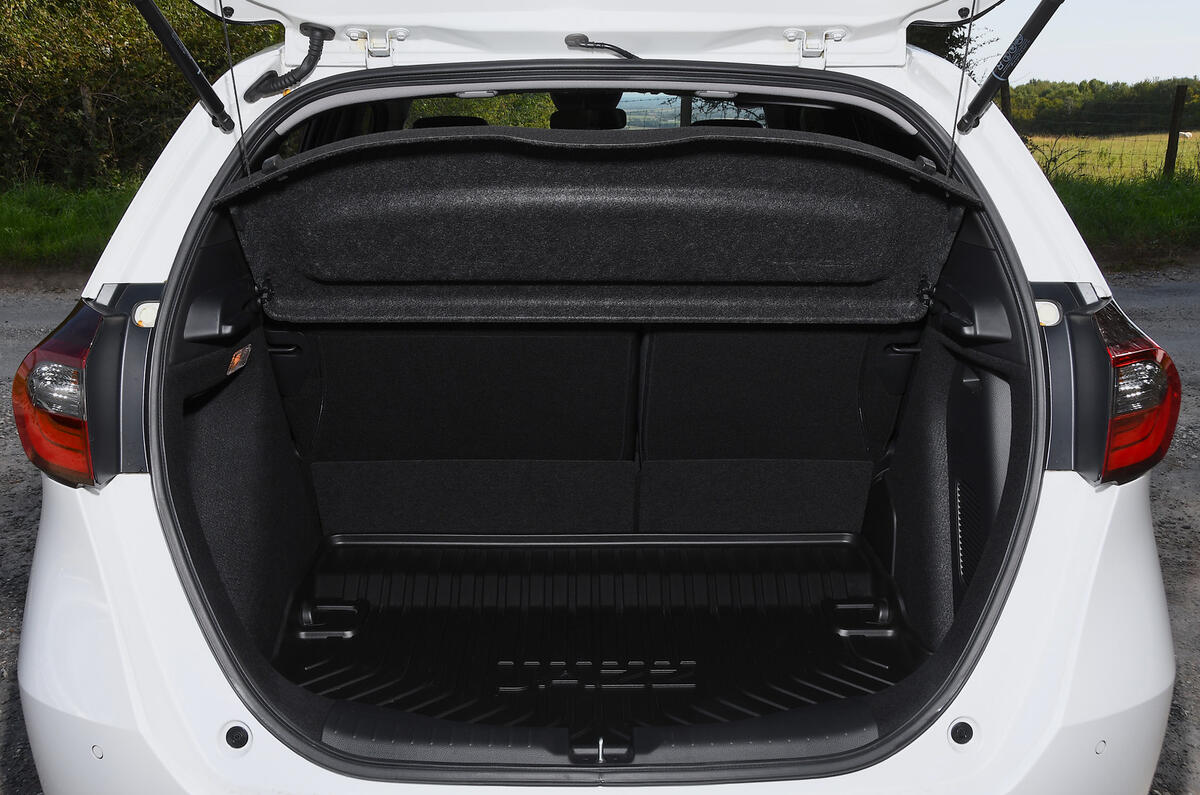
Boot space comes in at a respectable if not quite class-leading 304 litres. But as far as storage goes, that’s just the beginning of the story. The Jazz’s back seats can be collapsed completely flat – effectively right down to the floor – to open up 844 litres of storage space to the window line, or 1205 litres to the roof. You can also fold the rear seat cushions upwards independently from one another, which allows you to make use of the Jazz’s flat rear cabin floor and turn the second row into a secondary boot of sorts that’s handy for taller or bulky items, be they pot plants or kids’ bicycles.
For those reasons and others, it would be hard to argue that the Jazz deserves to be recognised as anything other than the most practical car in its class.
Honda Jazz infotainment & sat-nav
Honda has really come a long way in its approach to in-car infotainment. Our Jazz test car has a new 9.0in touchscreen that runs a similar operating system to that found in the high-tech Honda E electric car and it features Garmin-powered satellite navigation in range-topping EX models.
Admittedly, that sat-nav set-up is relatively basic, but with wireless Apple CarPlay connectivity and Android Auto as standard in SR models and above, it’s unlikely that many owners will rely on the Garmin system anyway.
The rest of the operating system is impressively slick. There’s minimal latency and the general design of the interface works well. Handy shortcut buttons are sited conveniently for the driver and there are numerous USB charge ports. However, it’s a bit odd that Honda hasn’t included a wireless smartphone charging pad. Given that you can connect to Apple CarPlay wirelessly, this seems like an oversight.