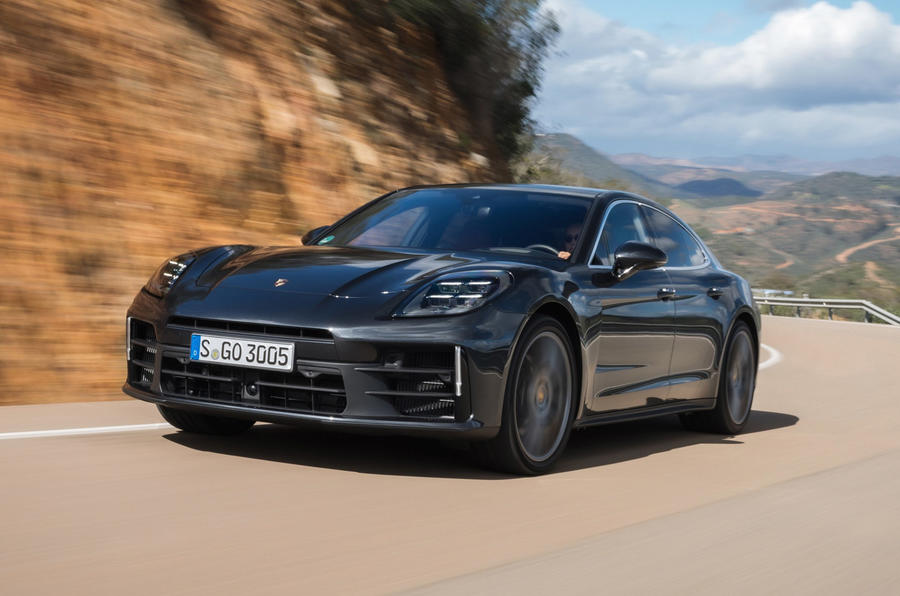
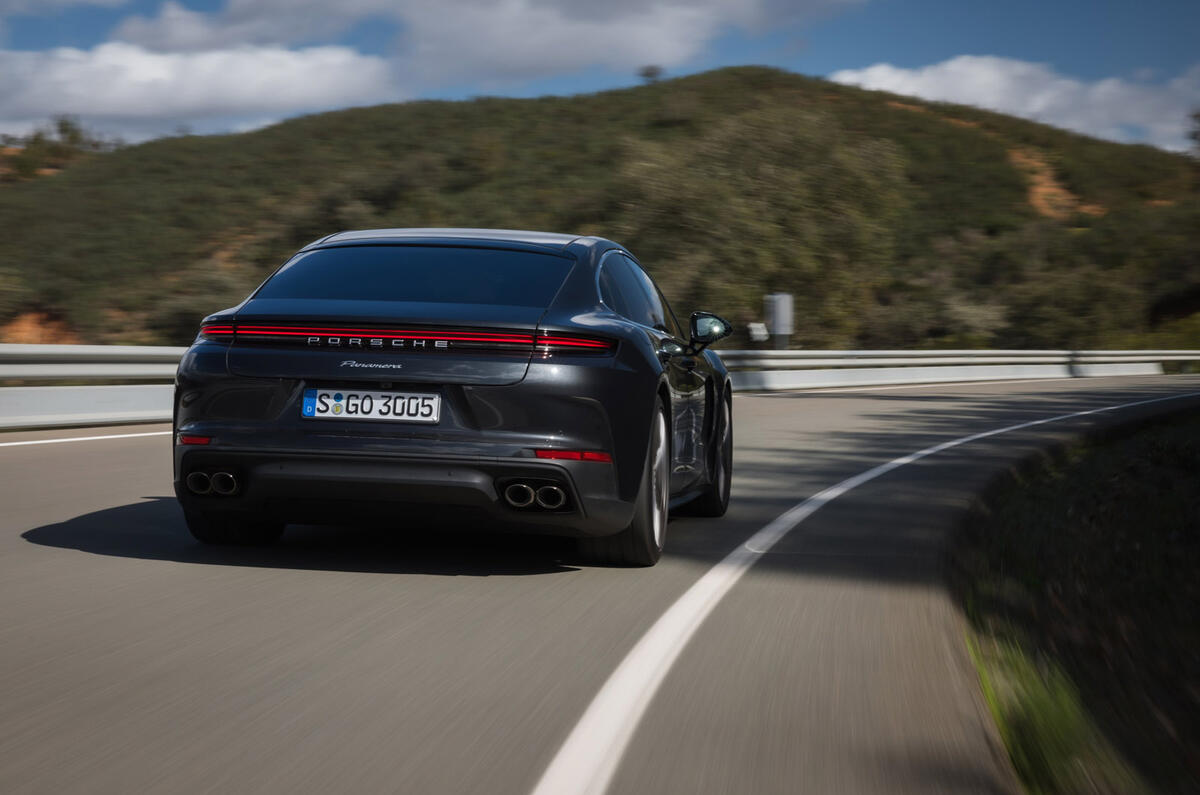
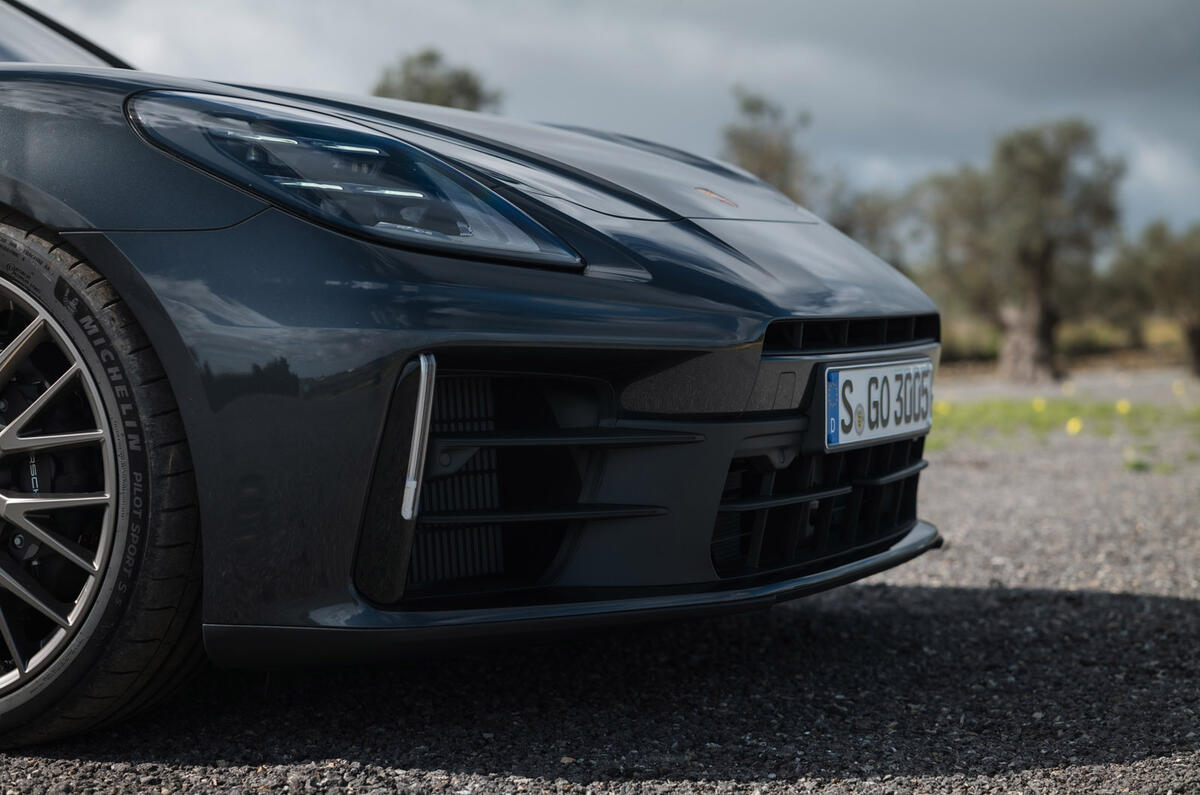
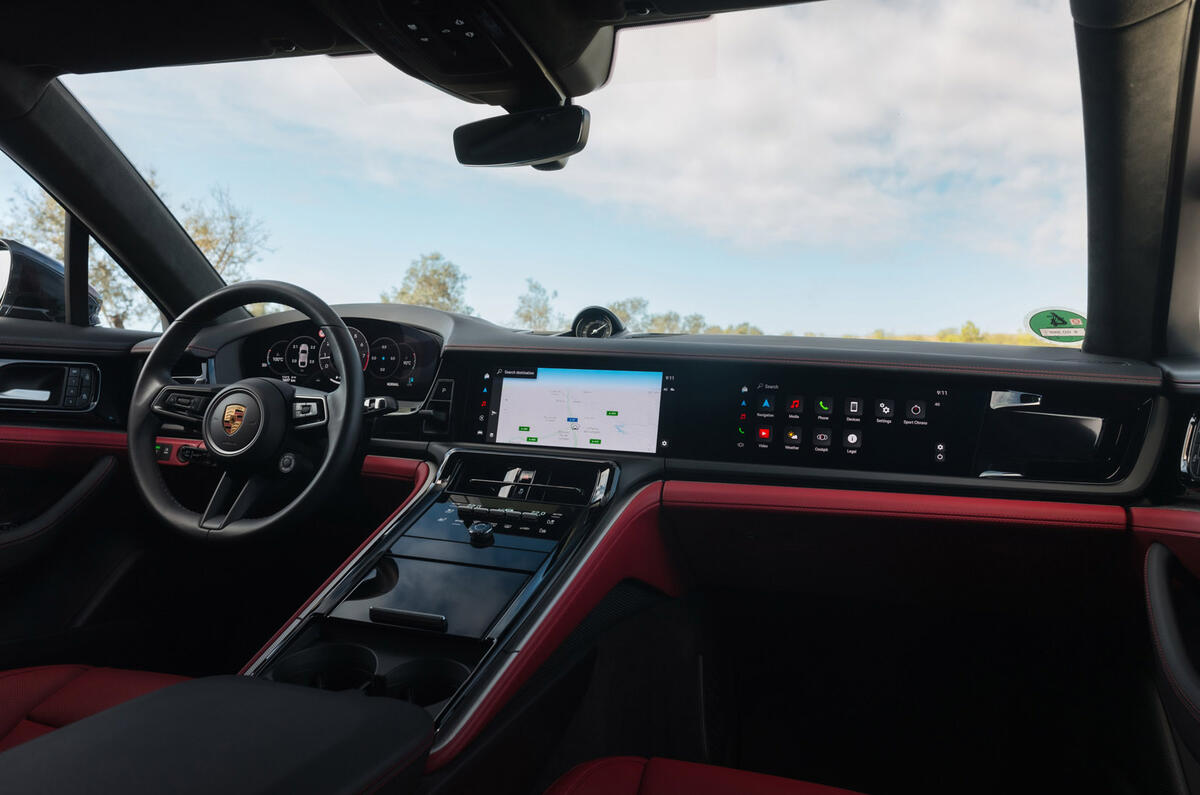
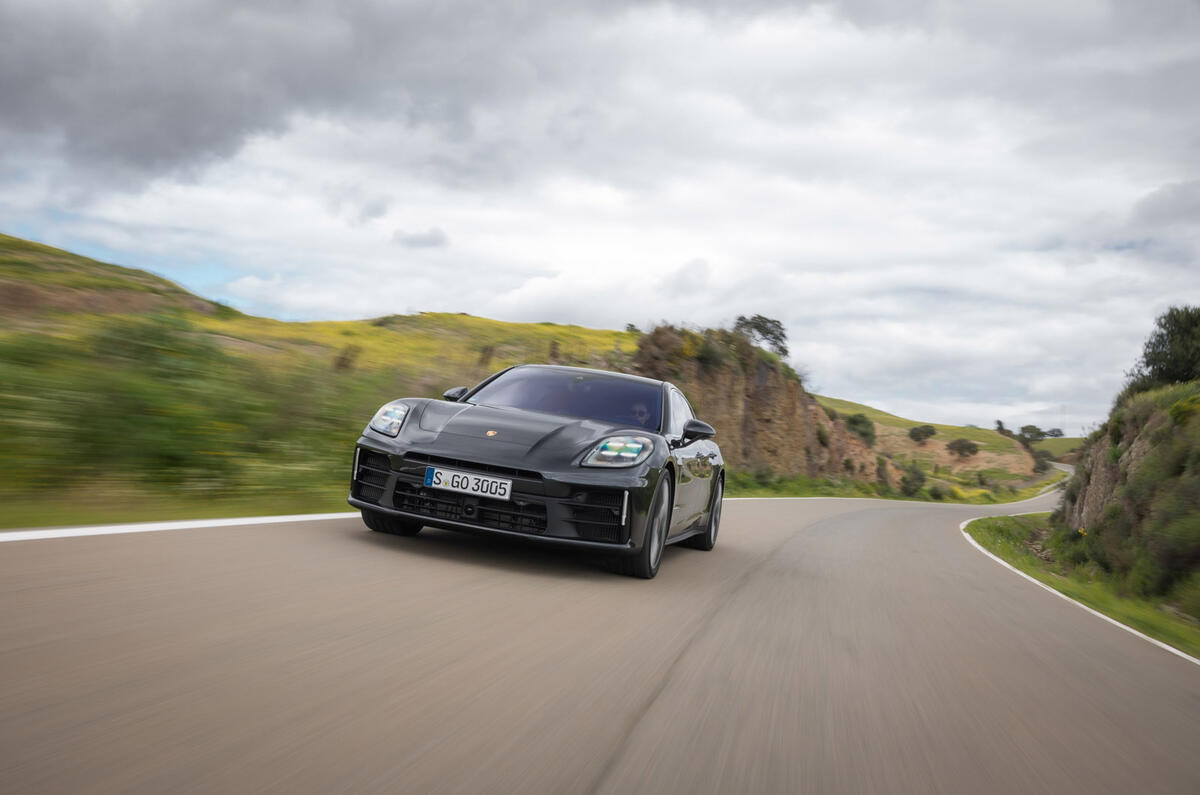
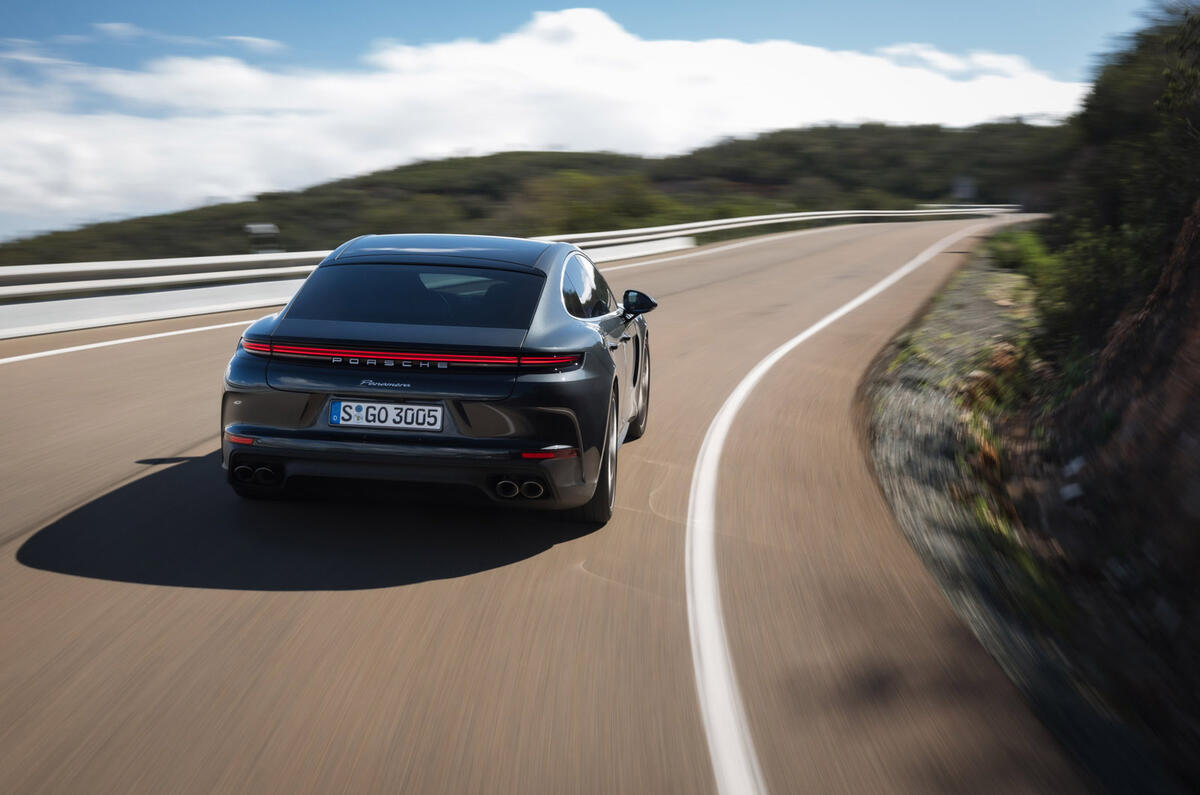
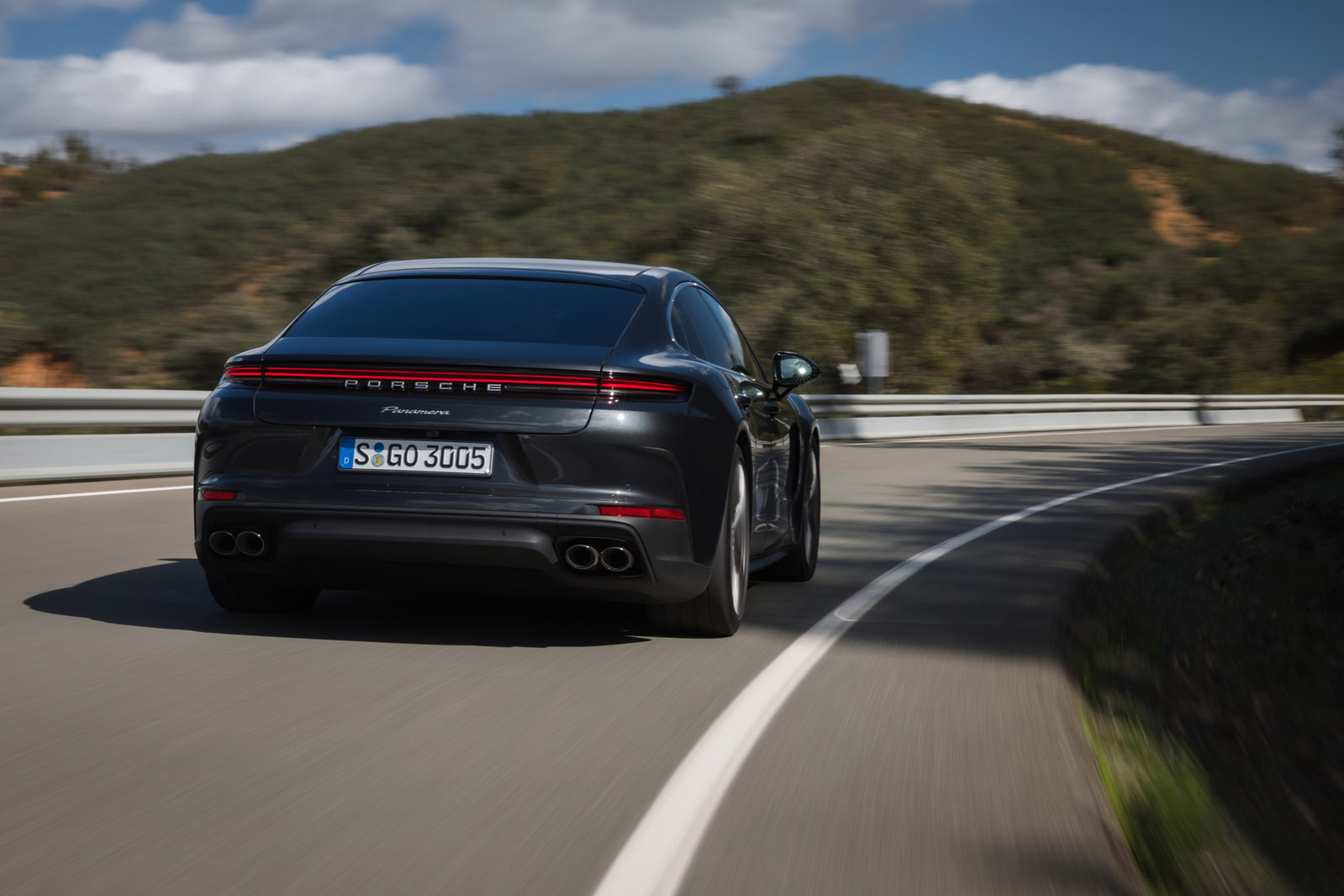
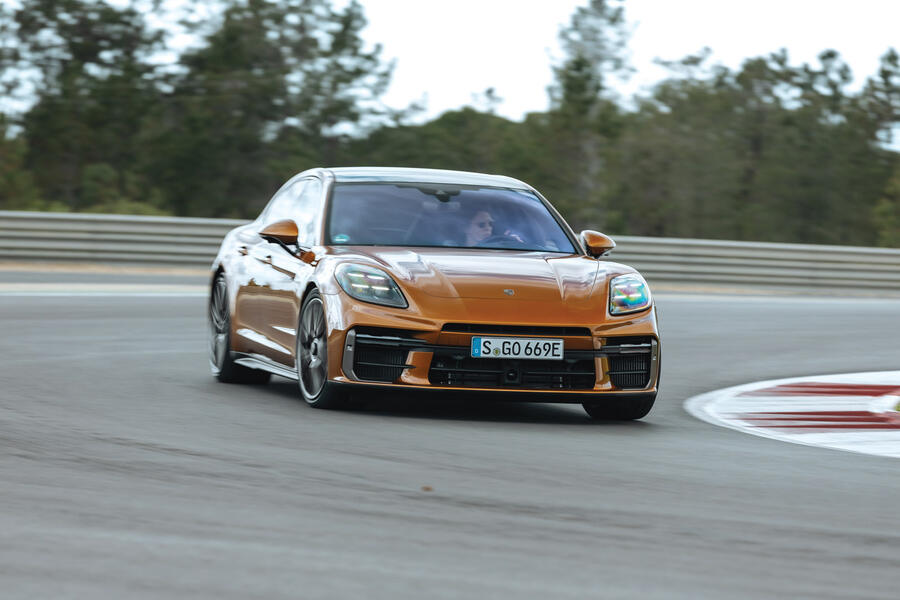
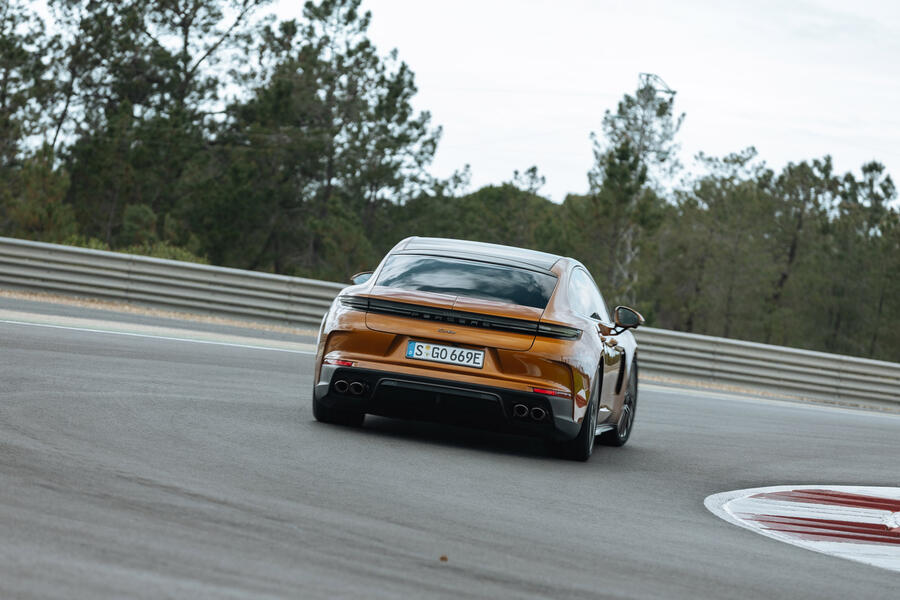
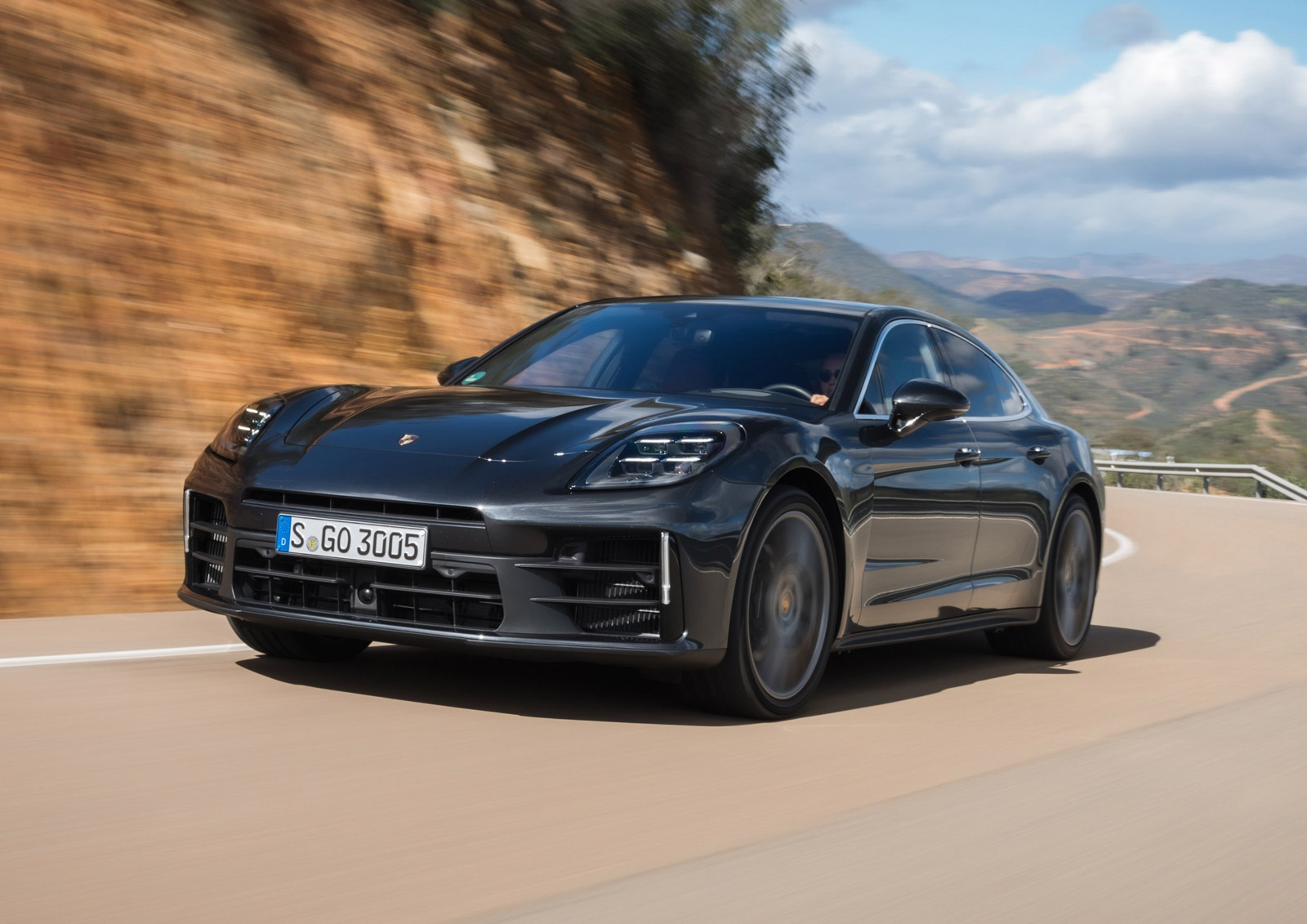
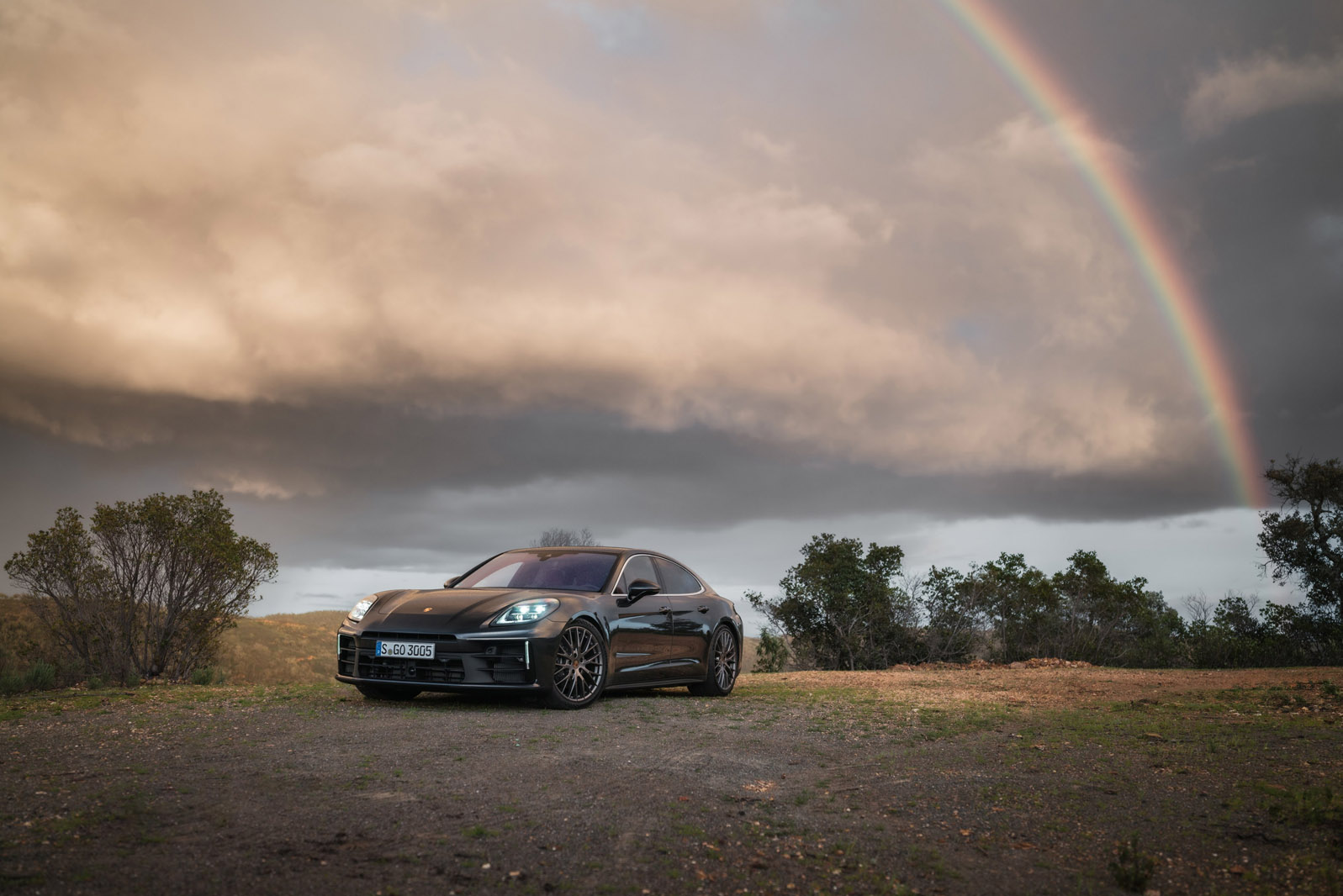
Finally, the Turbo E-Hybrid (which is badged simply ‘Turbo’) uses the same electric components but with a twin-turbocharged 4.0-litre V8. This engine has been significantly upgraded compared to the outgoing version, mainly so it can continue to comply with emissions demands. It swaps its twin-scroll turbos for single-scroll items, because the latter are physically smaller lumps of metal and thus warm up faster. In turn, they draw less heat from the exhaust system and allow the catalysts to warm up quicker – a requirement for Euro 7. Additional turbo lag is rendered moot by the hybrid system’s torque fill.
The big battery enables a company car tax-friendly electric-only range (47 to 59 miles, depending on the version), and thanks to advances in technology, it doesn’t take up any more space or weigh significantly more than the old unit.
Still, even the most basic rear-driven Panamera is quite a heavy car, at about 1.9 tonnes, and to manage that and make sure the Panamera drives like a Porsche, every version now features air suspension as standard.
The standard air suspension set-up now adaptive dampers with separate valves for the bump and rebound, so they can be independently adjusted. These more sophisticated dampers have allowed Porsche to change from three-chamber air springs to lighter, simpler two-chamber items.
The truly exciting advances are reserved for the hybrids, however, since the 400V system can be employed to do more than just drive the car. On the optional Porsche Active Ride (PAR) system, it powers four hydraulic pumps – one for each corner. These in turn provide the pressure for hydraulic actuators in the air suspension that can stiffen, soften, lift or lower each corner of the car independently, thus enabling all manner of magic tricks. The air springs themselves go down to one big chamber to make them very soft – most of the stiffness can come from the actuators. PAR also does away with anti-roll bars.
The system draws its data from the steering, accelerator, brakes, accelerometers and, most importantly, sensors in the suspension itself. It doesn’t use cameras to monitor the surface, because they’re unreliable when obscured. Given the suspension can adjust 13 times per second, it doesn’t need to be proactive anyway.
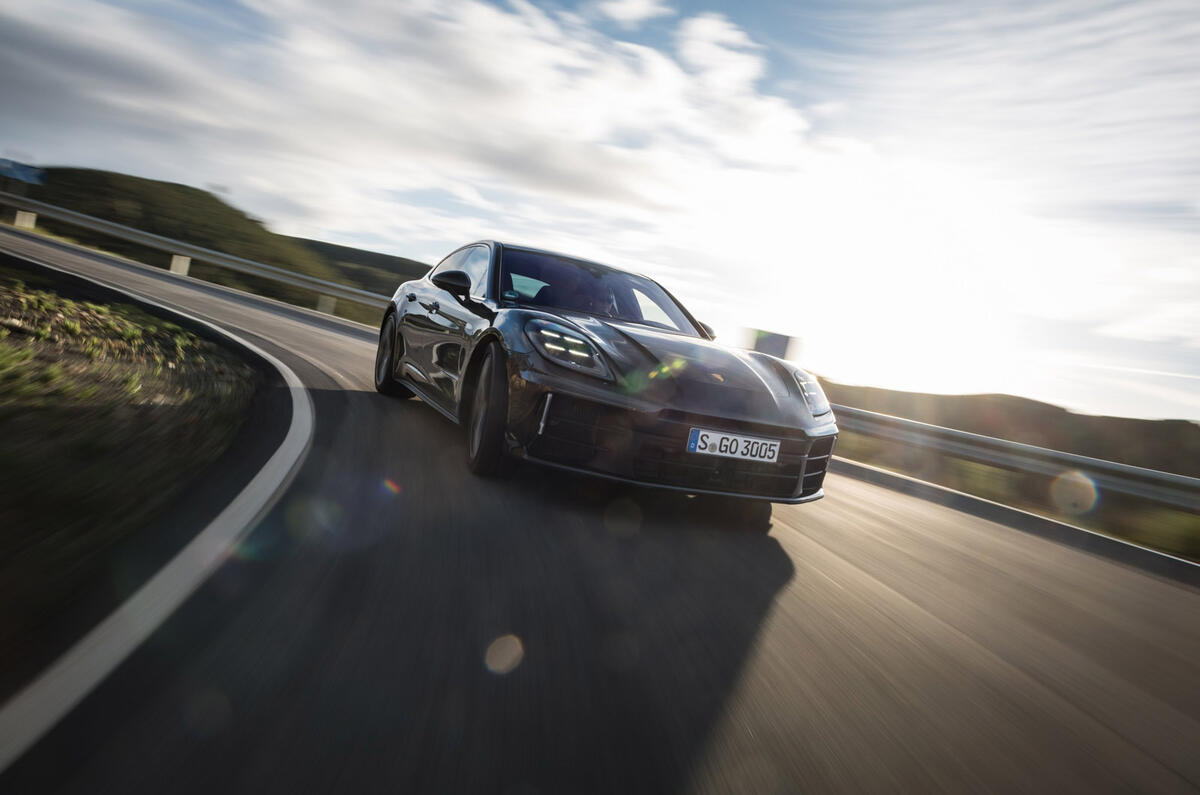
Porsche had a static demonstrator that could dance on its suspension like one of those American low-riders. More usefully, PAR can cancel out nearly all body roll, or even overcompensate and lean the car into corners, and counteract pitching under acceleration and braking. And on rough roads it can lift up the wheel for bumps and push it down into potholes.