








What is it?
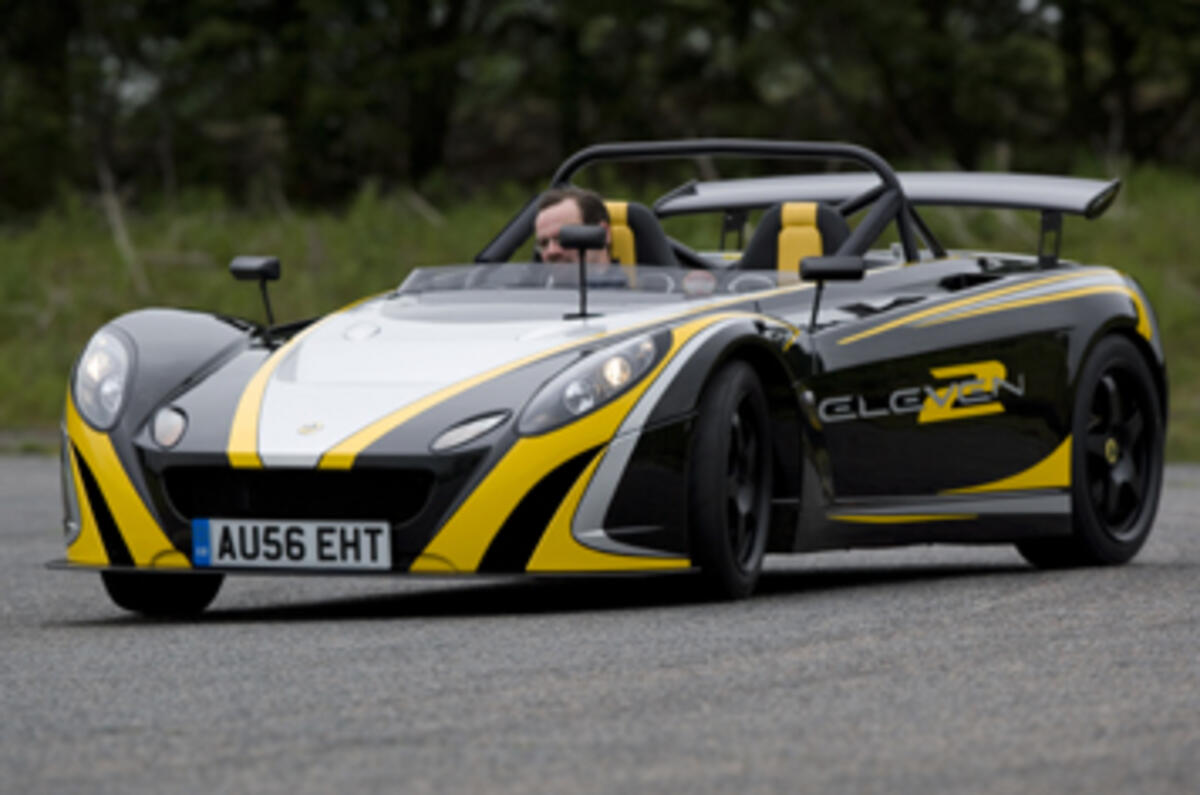
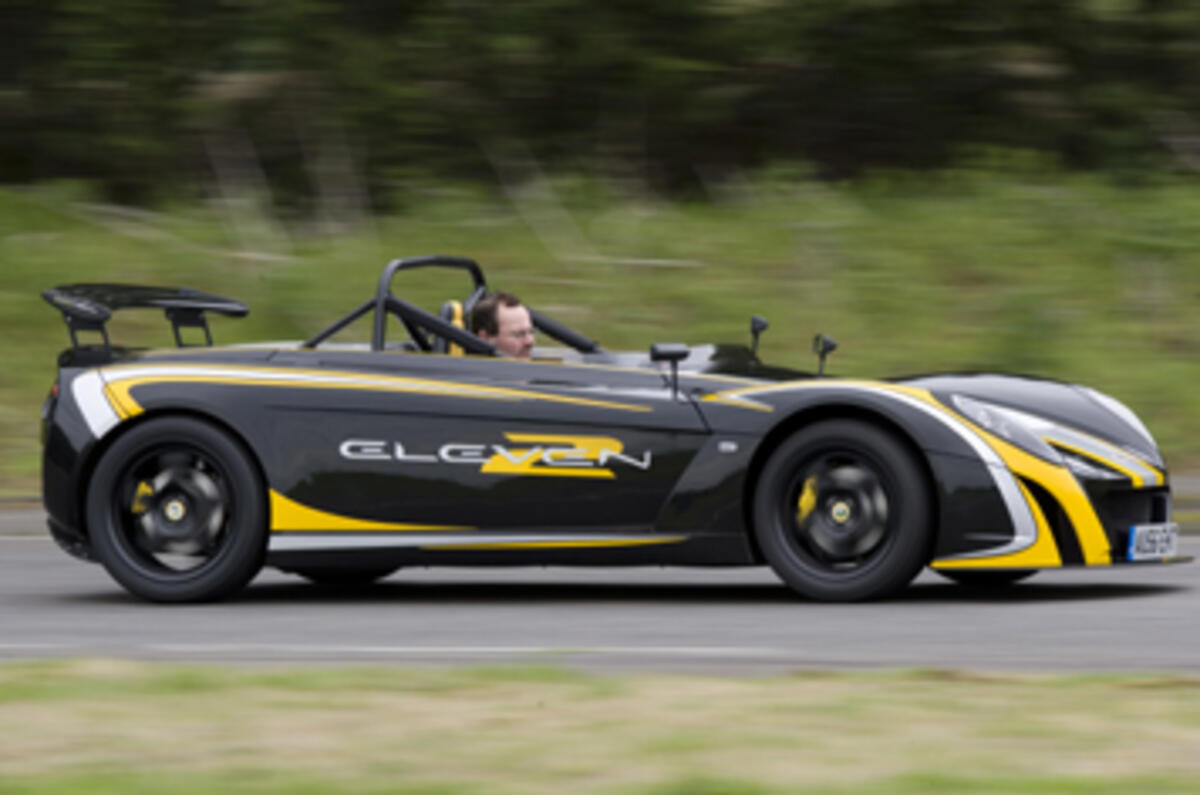
It's the Lotus 2-Eleven, and it's the car the Lotus 340R so nearly was.
"It's an engineer's response to the 340R," admits Lotus's Head of Development Nick Adams. "That was a styling led car. The 2-Eleven is a track day enthusiasts' idea of a track car."
So first and foremost it's light: the simple body panels are glassfibre, embedded with a core-mat to reduce resin use/weight, and all are bolted, not bonded, to the chassis for easier repair.
The chassis itself is a hybrid of a Mk1 Elise cabin section (with higher and stiffer sills than the latest model), mated to the latest Toyota-engined rear subframe. And at 745kg, the 2-Eleven somehow carries 190kg less than even a non-optioned Exige S.
Power comes from the supercharged version of the Toyota 1.8-litre engine in track-only Exige 225 Cup form. The wick's turned up to 252bhp at 8000rpm. Normally it's not road-legal but the 2-Eleven can be put through the low-volume SVA test, so it is.
At the minute, all 2-Elevens are what Lotus calls Launch Edition – same colour, same trim, same chassis settings and same equipment. It's very much in the middle of what this car can be. Lotus will see which way customer demand takes the 2-Eleven: softer, or more extreme.
What's it like?
A bit spartan inside. There are seats, harnesses, driving controls and a fire extinguisher, and that's about it. The track car gets an FIA-approved six-point harness and driver's seat. The road car gets a four-point harness and comfier seat – the same as for the passenger on both cars.
There is no windscreen, hood or doors. It is a spacious cabin though and there's a tinted Perspex aero-screen that could do with being a touch higher (you could get one of your kids to knock one up in CDT). It affords a view over the raised wings that's normally the reserved for the likes of McNish.
To drive, the 2-Eleven is absolutely brilliant. Lithe, agile, communicative and apocalyptically fast. Performance is as hilarious as you'd imagine. Any speed, any gear, it doesn't matter. The 2-Eleven's got an enormous powerband, huge performance and the rortiest exhuast I've heard in an Elise-based car.
On a track it's fantastic. Adams admits that a well-driven Radical might be quicker overall, but argues, reasonably, that's not just what this car is about. The 2-Eleven is approachable in a way a Lotus should be, and he's right.
The steering is exquisitely weighted (it's actually lighter at low speeds than an Elise's because of the reduced mass), it's responsive, communicative and as linear as they come.
Drive gently up to its limits and the 2-Eleven nudges into gentle understeer, but you can drive round it - trailing the brakes or lifting into a bend makes it neutral or induces mild, catchable oversteer.
I think the balance is about right, but if you'd rather the back always let go first, Launch Editions of the 2-Eleven get two-way adjustable Ohlins dampers and there's a tweakable front anti-roll bar.
The car comes with an electronic owner's manual that includes tips on how to set up the suspension, and even some recommended settings for different race tracks. There's an 18-step adjustable traction control system and a launch-control device.





Add your comment