







What is it?
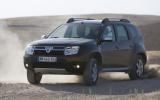
The new Dacia Duster is the car with which Renault will relaunch its meteoric Romanian car brand in the UK market in 2012. As such, it’s a vitally important model; the Duster must be good enough to impress some of the most discerning customers in Europe – us Brits.
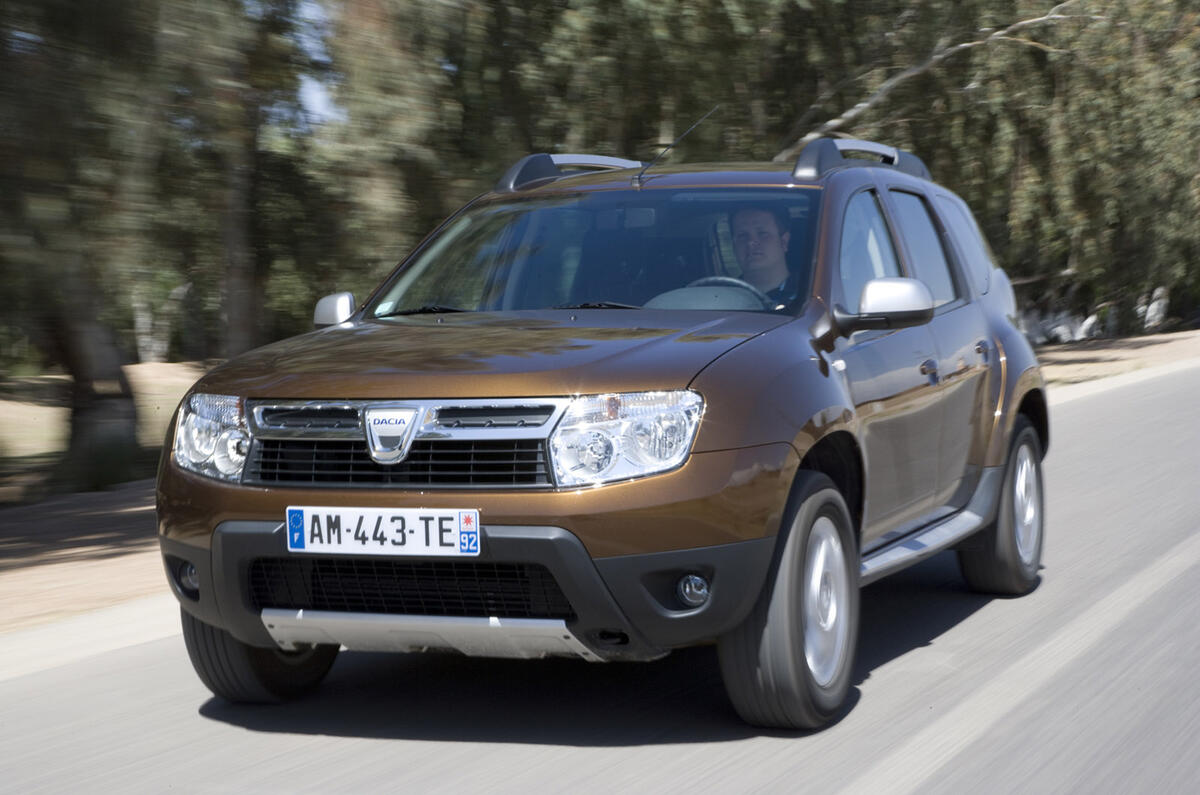
Based on the same platform that underpins the current Logan saloon, the new Duster is a compact crossover 4x4 that, at roughly 4.3-metres long and 1.8-metres wide, takes up about as much roadspace as a Golf-sized family hatchback. As such, it’s aimed squarely at someone who might be tempted by a Nissan Qashqai, Peugeot 3008 or Skoda Yeti.
But it won’t be priced like a Qashqai – or even like the Skoda, come to mention it. Because it’s built on a platform recycled, in part, from Renault’s last-generation Clio, and in a factory in low-cost Eastern Europe, the Duster should start from less than £11,000 when it goes on sale in Britain in a couple of years’ time.
Right now, £11k won’t even buy you a boggo Ford Fiesta – and the Duster is a rugged, roomy and reasonably attractive new quasi-offroader from the class above that. Doesn’t take a genius to see why Renault suspects this car, and its immediate siblings, could be quite popular in post-credit-crunch Britain, does it?
What’s it like?
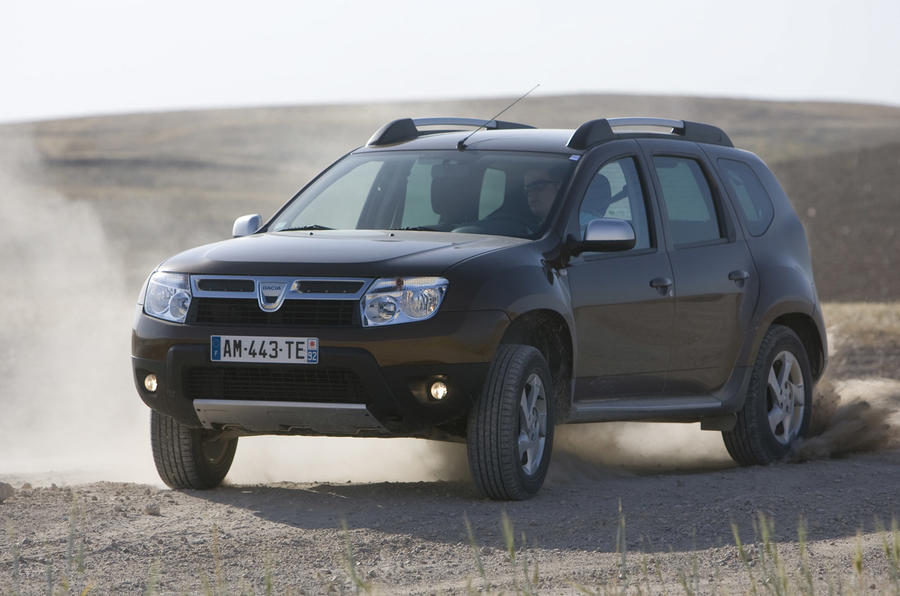
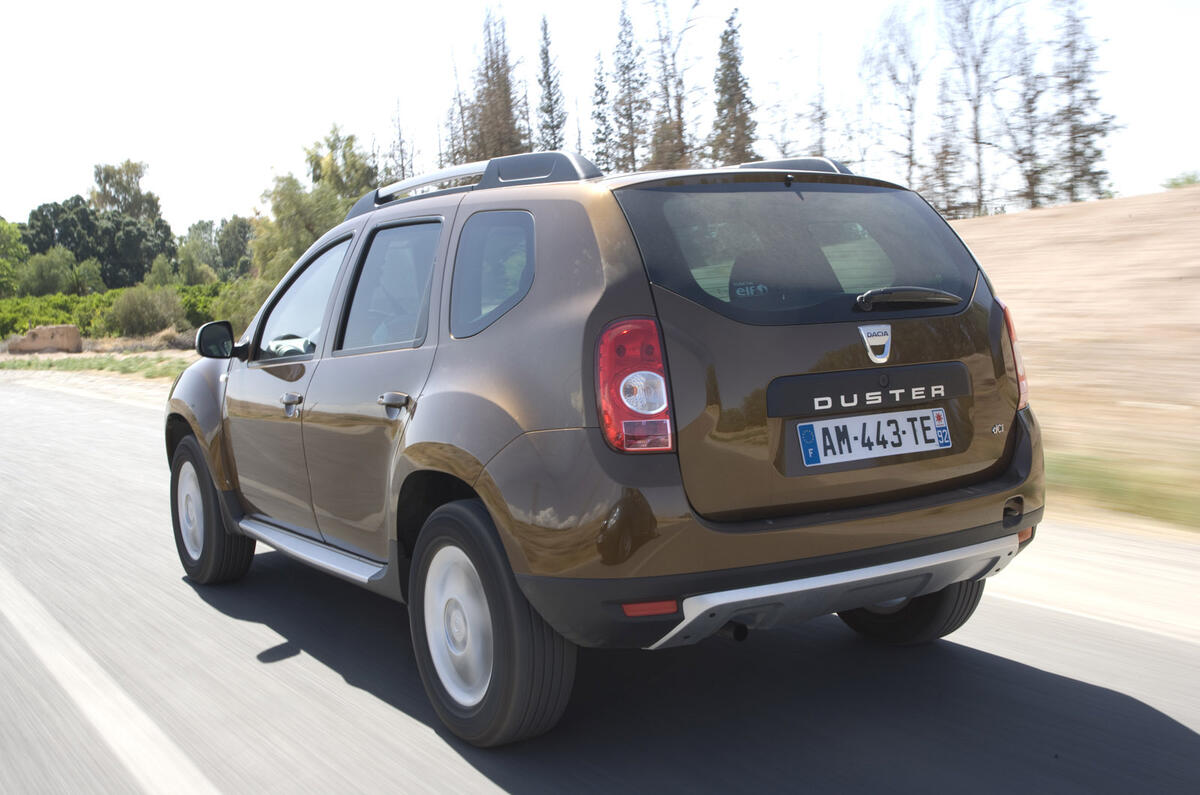
Damned hard to criticise. Alright, so the Duster isn’t going to win any awards for originality or meticulous build quality, but to these eyes it’s a stout, handsome and distinctive car, and certainly doesn’t look as if it’s been designed on a shoestring.
The Duster’s cabin looks a little more obviously ‘no-frills’ than its exterior. We drove a range-topping model fitted with body-coloured fascia trims, but they did little to jazz up the interior. Plastics are hard to the touch in places, flimsy and coarsely finished in others, and instruments and switchgear look and feel out of date here and there. At least it’s all hard-wearing.
There are three powertrain options: a 1.6-litre petrol engine with 114bhp, or a 1.5-litre dCi commonrail turbodiesel with either 84- or 108bhp. The 84bhp diesel is only available with front-wheel drive and a five-speed manual ‘box; the two more powerful options are offered with a switchable four-wheel drive system that works via an electronically actuated torque converter.
The 108bhp oil-burner is arguably the most capable option in the range, coming with a six-speed ‘box with an extra-short first gear ratio for use offroad. Dacia opted not to fit a low range transfer ‘box to the Duster on the grounds that it would add weight, cost and complexity. As it is, the range-topping Duster tips the scales at 1250kg, making it quite agile over very challenging terrain.
Independent suspension all-round helps the all-wheel driven Dusters keep four wheels on the ground over steep tumps and through troughs, while the front-driven ones have an H-shaped torsion bar suspension system at the rear.
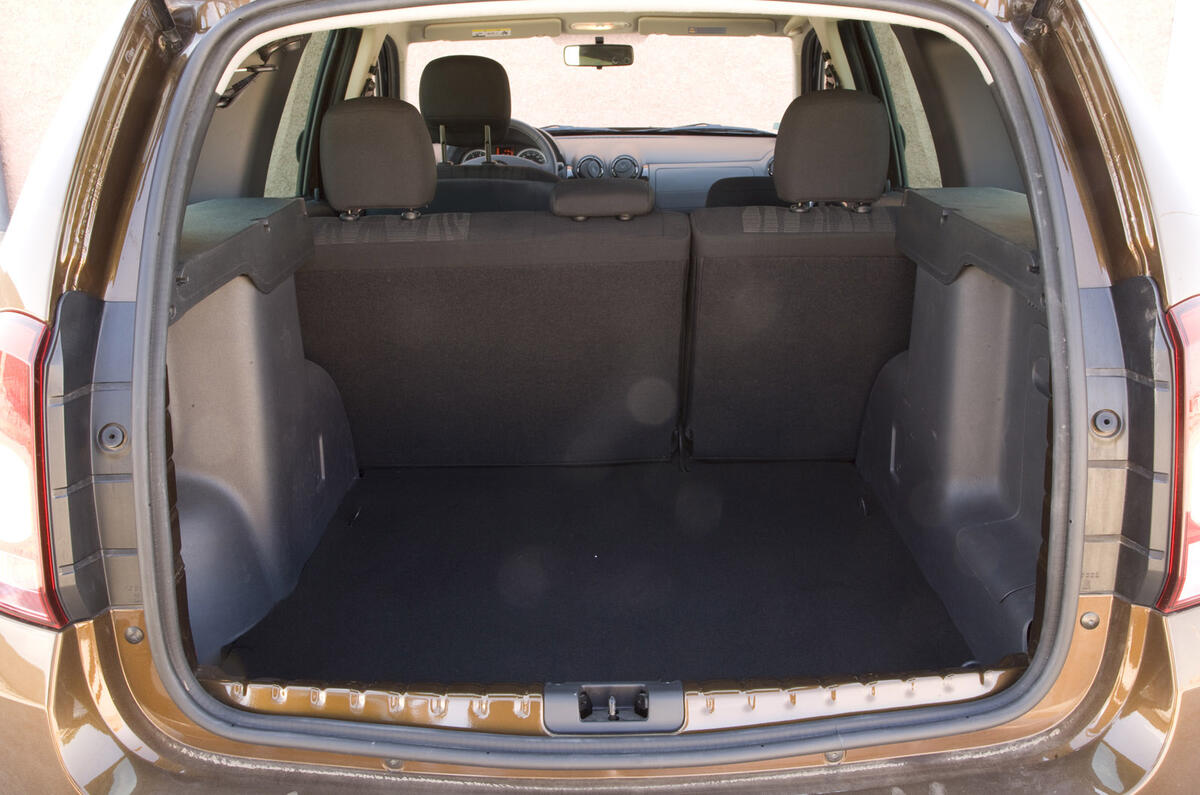
The latter makes them marginally less capable off road, but also allows for more boot space. And yet with approach and departure angles of better than 30 degrees, more than 200mm of ground clearance, and a chassis and underbody that’s been reinforced in case it should come into contact with passing topography, even the two-wheel driven Dusters are capable of clambering much further offroad that you’d think.





Join the debate
Add your comment
Duster vs X5
An X5 has trouble getting around town, because it is too big. It has trouble driving the motorway because it's handles like a hot air balloon. It has trouble getting about on a muddy track because it only looks like an off roader but really isn't. It has trouble with sticky litlle kiddies fingers in the back seat because any stain on the upholstery will mean a 1000 of the re-sale value and it has a serious image-issue as one of the original Chelsea tractors. It probably weighs more then two Dusters and is a notorious binge drinker when it comes to petrol.
I'd take one Duster over a whole BMW dealership... Why would you want a second hand X5? Only to pretend you bought it new...
Great car
I live in the Czech Republic where we have had the duster for more than 2 years now. I decided to buy one recently a 1.5 deisel 4x4 108 ..in Arctica spec. I had read numerous road tests beforehand, so didn't expect the earth..but I have to say I have been very pleasantly surprised. Economy on the deisel variants is very good at around 5.4 litres per 100km. Driving on A roads is its forte..very relaxing and comfortable. Last week I did a 400 mile run and it behaved very well. I love the chunky look and despite all the negative remarks about the interior..am I alone in thinking that it is actually quite good, plastics seem to me completely normal and little different from much more expensive brands. Switches have come in for the 'out of date' tag...yes they are much the same as on the previous Clio..and they were..excellent. I've driven' much more modern cars' with far inferior switchgear.
Basically I love this car..I recommend it to anyone. On the negative side I do detect envy from more upmarket SUV owners because they know that basically it does the same job without the frills...and without the excessive price tag. Well done Renault-Dacia
Re: Dacia Duster 1.5 dCi 85 4x2
I agree. I currently live in Germany and the Duster is knocking around already. They look the part of a working vehicle (I don't mean that in a bad way). I really like them. Weirdly, it wouldnt bother me to let the dog run all over an 11k new Dacia but would be mortified if it ran all over an 11k second hand BMW. The Dacia would be ideal for me because it would be a tool and nothing more; dog, kid, wife, muddy boots, country lanes, whatever. It takes the emotion out of buying a car and stops you worrying about marking the leather, kerbing an alloy, repairing the electronic fling-flang and oodjamaflip etc. Enjoy going out without worrying about leaving your car in a remote car park. Less chance of a spotty oik joy-riding a Dacia!