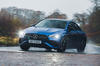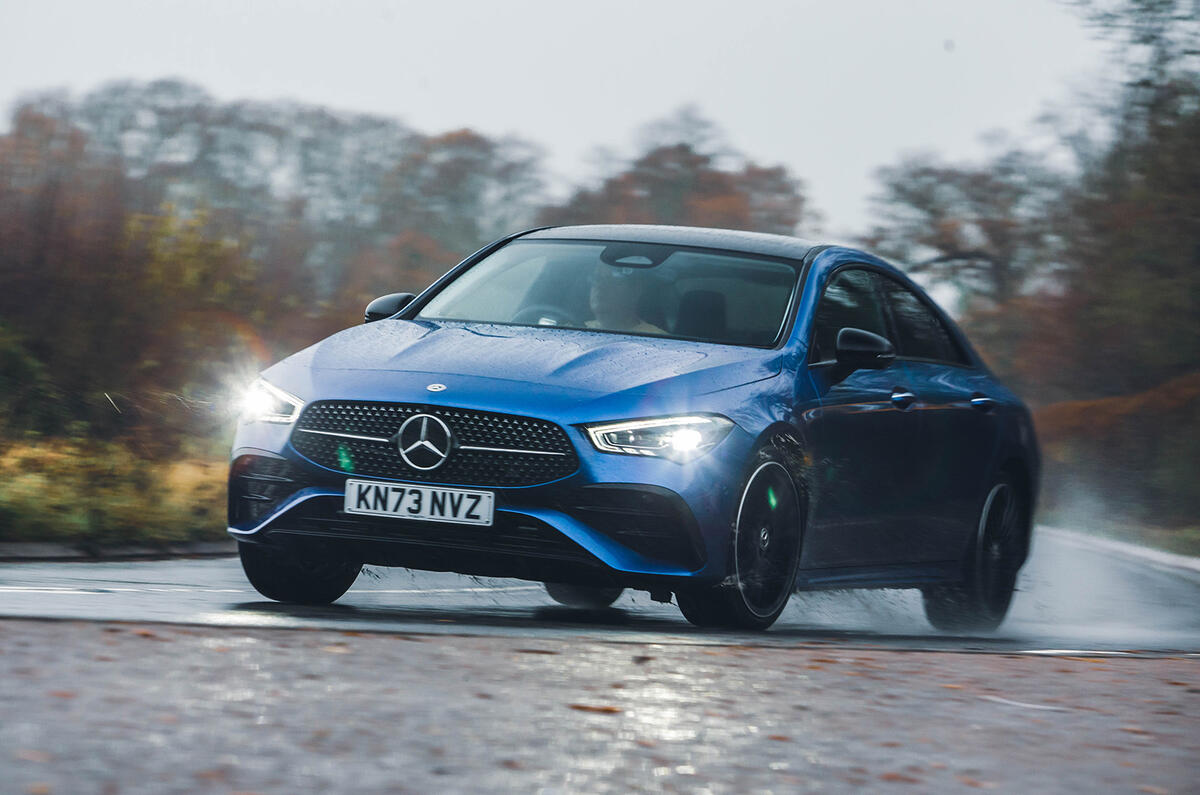
The Mercedes CLS showed the world that four doors could offer supercar levels of driveway appeal. The Mercedes CLA has been developed to replicate that success. 

Based on the Mercedes A-class, the CLA is designed to attract new buyers to the brand, and bosses say their number one target is to poach customers from BMW. The four-door coupé offers an appealing blend of sleek looks, reasonable levels of practicality and pokey engines.

Stuart
Milne

Digital editor
The CLA's lack of engagement or dynamic polish won't put off many buyers

Mercedes says the CLA is the most aerodynamic car in its class, with a drag coefficient as low as 0.22Cd. To put that in perspective, a decrease of 0.04Cd offers the same fuel economy benefits as reducing the kerb weight by 100kg.

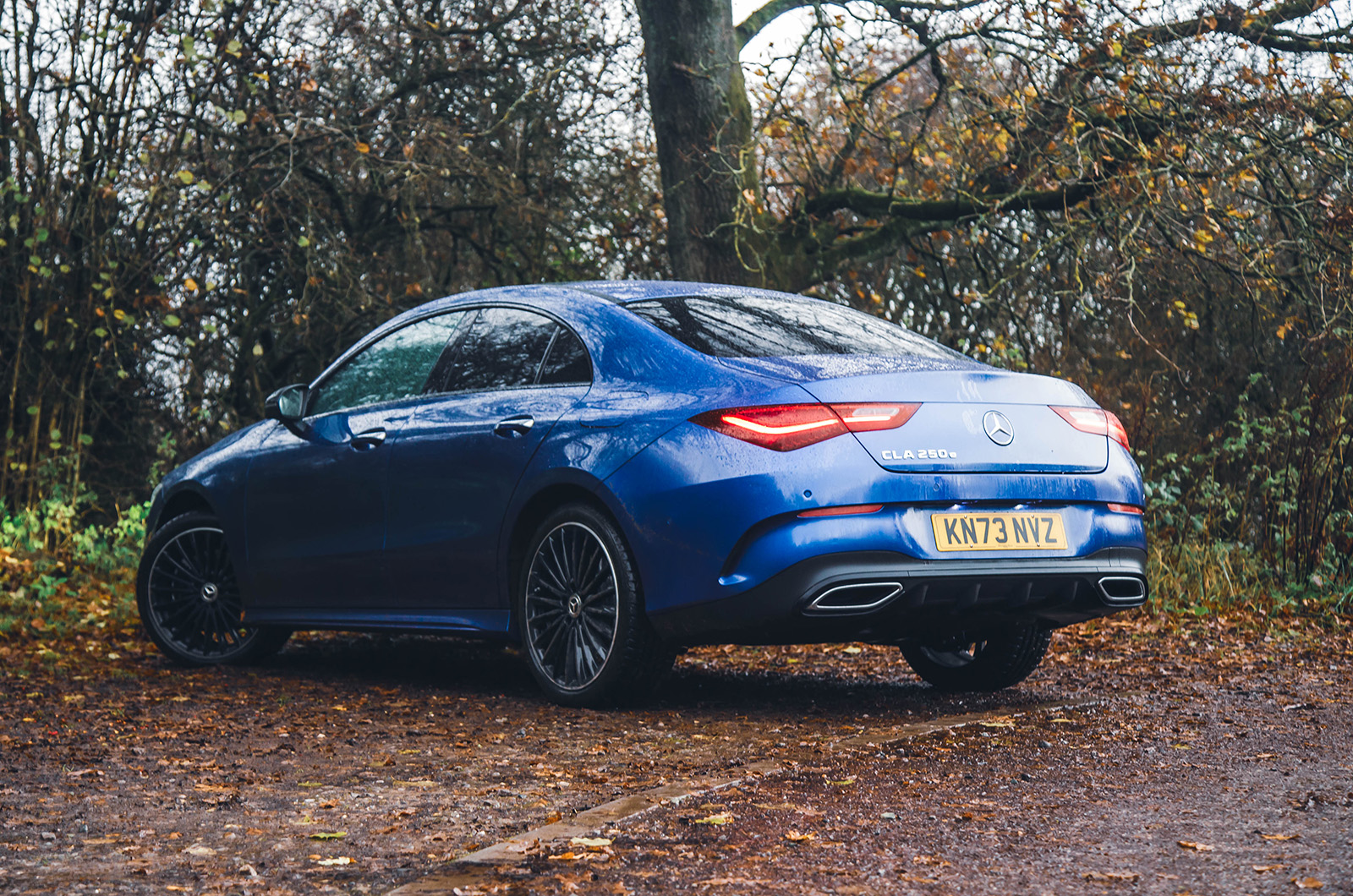
Aiding that figure is a front grille with shutters that close at speed, aerodynamically optimised door mirrors, fins in the rear lights and vents in the wheel arch linings. An elegantly contoured coupé shape presumably helps, too.

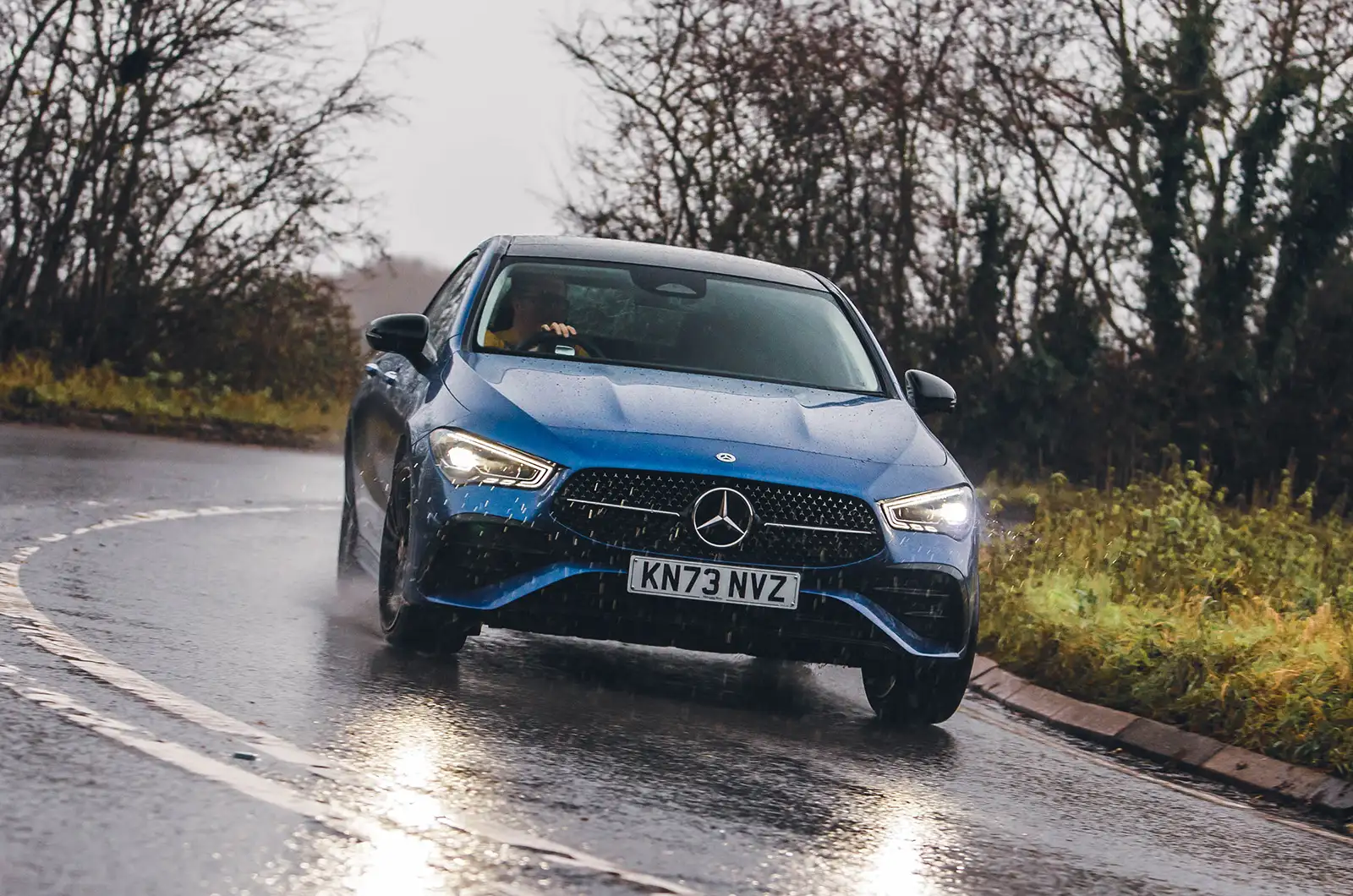
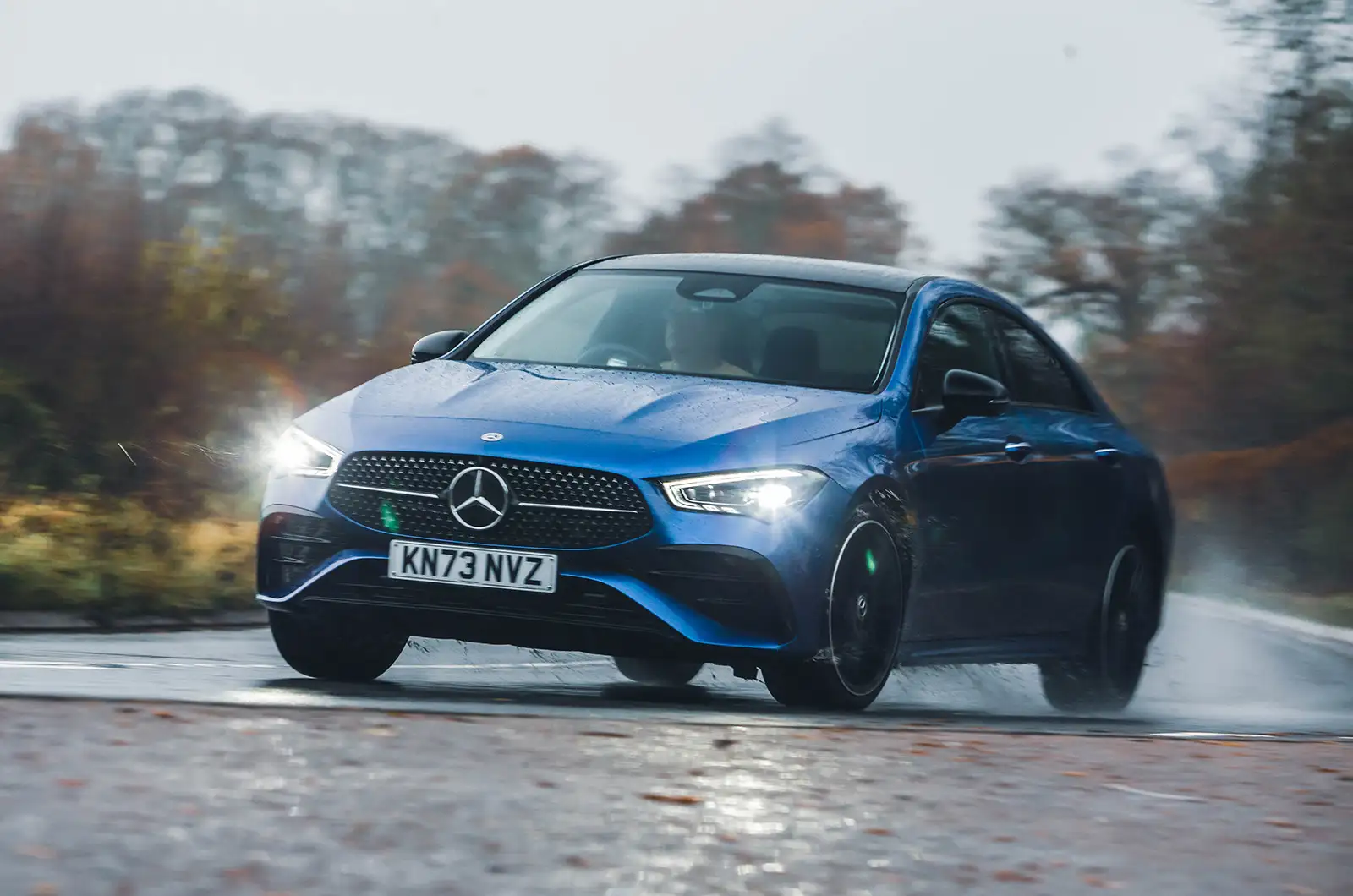
And it’s that shape that defines the CLA. It sits alone in its segment, offers a visual appeal that few manufacturers can match and delivers on its promise of appearing like a mini CLS.

Predictably that swooping shape has an impact on usability. Rear visibility is limited with a small rear window. It's not a car that will see regular adult passengers in the back: rear headroom is poor and narrow side windows make it feel claustrophobic and compromised rear legroom doesn’t help its case.

Better is its 470-litre boot – just five litres less than the C-class saloon – and the offer of a split-fold rear seat.

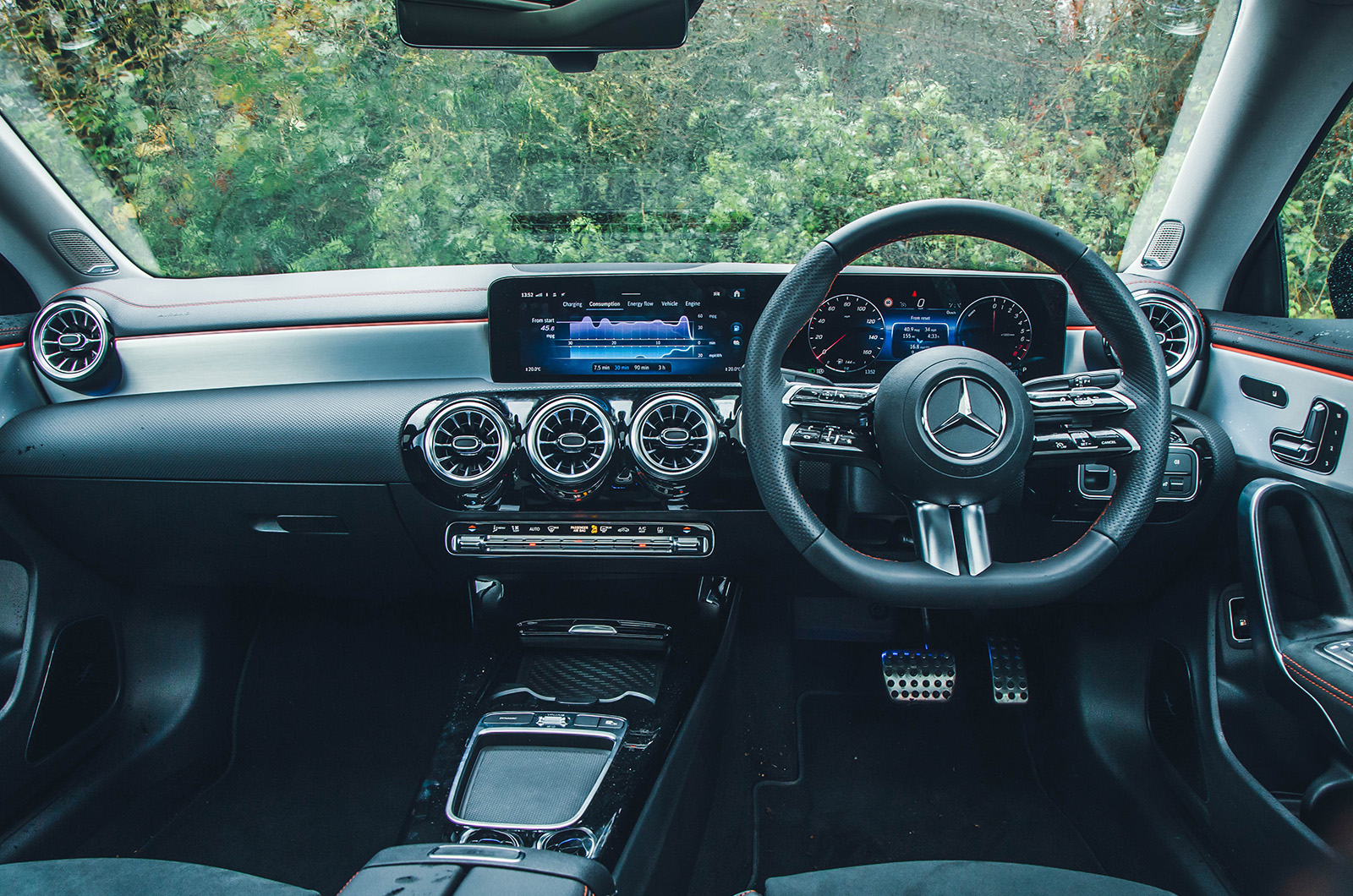
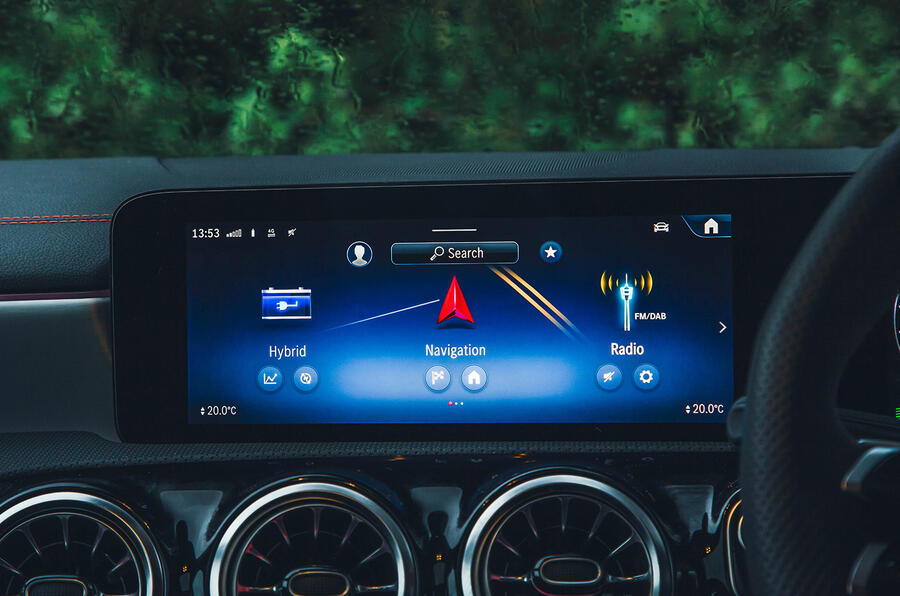
The front environment impresses more. The dashboard is shared with its MFA platform brethren – the A-class and B-class – and provides the same premium look and feel. Equipment levels across the two trims, Sport and AMG Sport, also live up to the premium billing.

That comprehensive roll-call of kit extends to safety equipment. Like the A-class, Collision Prevention Assist radar-based braking system is standard.

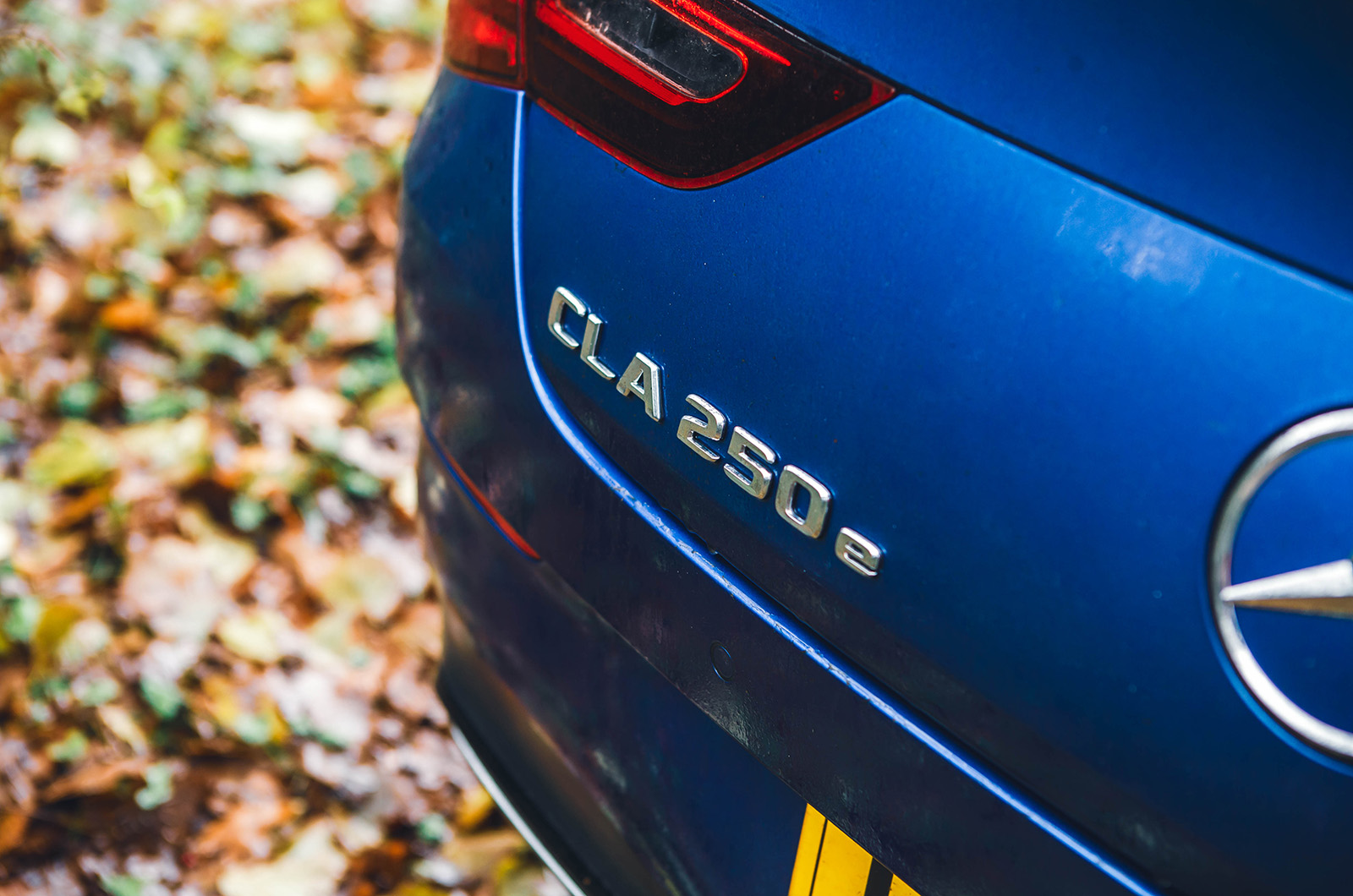
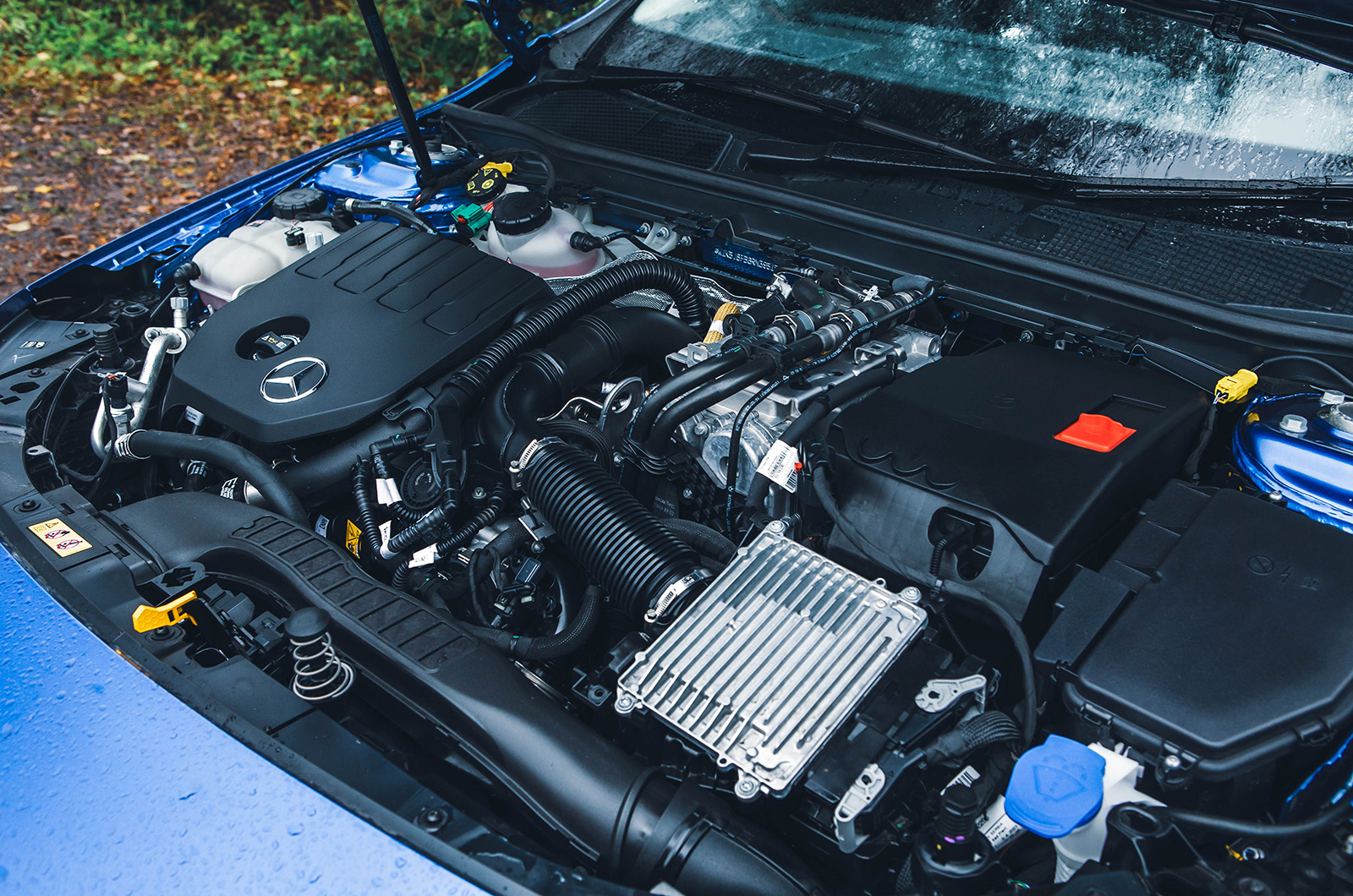
Two engines make the launch line-up: the 1.6-litre, petrol-powered CLA180 and the 2.1-litre turbodiesel CLA220 CDI. A lower-power CLA200 CDI will join the range later, alongside a CLA250 and four-wheel drive CLA250 4Matic. Performance fans will be most interested in the CLA45 AMG sports saloon, also to follow later this year.

From launch, the CLA220 CDI will be the big seller. Its torquey 2.1-litre engine is flexible, punchy and refined until the rev needle passes the 4000rpm mark. It records an adequate 8.2sec 0-62mph time and a 143mph top speed. Its torquey nature makes short work of overtaking, especially when mated to its smooth-shifting 7G-DGT seven-speed automatic gearbox with software derived from the SLS AMG supercar.

The diesel offers competitive running costs, too. Mercedes claims it will manage 62.8mpg on the combined cycle with emissions rated at 117g/km.

The CLA180 is powered by a 120bhp engine developed in partnership with Renault, and offers a slightly less than impressive 9.2sec 0-62mph time. Official economy figures rate the CLA180 at 50.4mpg and 126g/km of CO2.

A hotter CLA250, to appear later this year, will be the fastest model until the AMG variant arrives. It records a 6.7sec 0-62mph time, but never really feels as quick. The engine lacks the rorty soundtrack oft-expected from the hotter models in attractive Mercedes model ranges. In the 250, the same seven-speed automatic feels markedly more ponderous than the diesel.

This engine records 46.3mpg and emits 142g/km, with a small penalty for 4Matic models.

The Mercedes CLA is available with the choice of two chassis setups: Comfort and Sport. Sport sees the car sit lower to the tune of 20mm at the front and 15mm at the rear. On the road there is a pronounced difference in ride quality.

Don’t be fooled by the Comfort tag applied to the softer setup: it is just on the sporting side of firm, but rides imperfect Tarmac far better than the full-on Sport configuration. That model crashed and rocked over bumps on the usually-smooth roads of our French test route, which doesn’t bode well for performance in the UK.

Either way, chassis control is generally good even if the natural progression to understeer occurs rather more quickly than expected – particularly in the CLA250 4Matic. But most drivers are unlikely to get that far because this isn’t a drivers’ car. The steering lacks the sporting intent illustrated by those coupé looks and it simply doesn’t offer enough communication.

For many potential buyers, the lack of dynamic polish won’t matter much. The promise of the first car in this segment with Hollywood A-list looks will appeal far more. A likely starting price of around £25,000 should make it a hit with private buyers and company car drivers.

Despite its faults, the Mercedes-Benz CLA is a car that offers visual appeal in spades, but is far more attainable than the CLS which inspired it. Love the looks, and you’ll love the car.